1080 poison dogs symptoms typically manifest between 30 minutes and four hours after ingestion. The most critical signs include erratic behavior, frenzied running or circling, howling, vomiting, and uncontrollable seizures. These severe neurological and cardiac distress signals indicate a life-threatening emergency, as dogs are extremely sensitive to Sodium Fluoroacetate with no specific antidote available.
Understanding 1080 Poison and Its Risk to Dogs
Sodium fluoroacetate, commonly known as 1080, is a pesticide heavily utilized in New Zealand for the control of invasive pests such as possums, rats, and stoats. While it plays a pivotal role in conservation efforts to protect native flora and fauna, it poses a lethal threat to domestic dogs. Unlike other mammals, dogs (and other canids) have a unique metabolic sensitivity to fluoroacetate, making even minute amounts fatal.
The poison works by disrupting the Krebs cycle (citric acid cycle) within the body’s cells. This disruption deprives cells of energy, leading to rapid failure of the central nervous system and the heart. Because 1080 is water-soluble and biodegradable, it eventually breaks down in the environment, but the window of danger immediately following a drop—and for months afterward regarding carcasses—is critical for pet owners to understand.
For dog owners who enjoy the outdoors, particularly in New Zealand’s vast conservation estates, ignorance is not bliss; it is dangerous. Understanding the mechanism of the poison helps owners appreciate why speed is of the essence and why prevention is the only true cure.
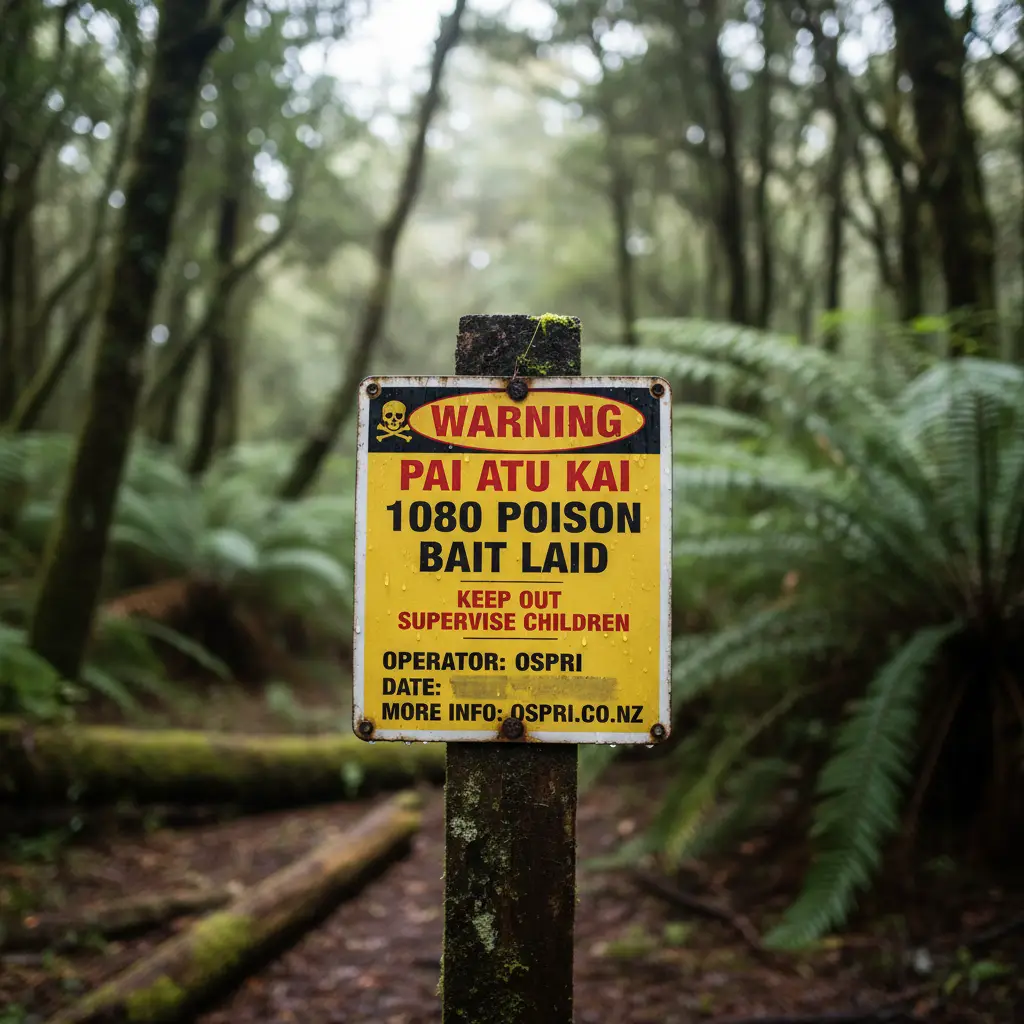
1080 Poison Dogs Symptoms: Recognizing the Warning Signs
Recognizing 1080 poison dogs symptoms immediately can be the difference between life and death, although survival rates are tragically low once symptoms appear. The clinical signs are distressing to witness and progress rapidly. They generally fall into two categories: neurological and cardiac.
The Latency Period
After a dog ingests 1080 bait or a poisoned carcass, there is a “latency period” typically lasting between 30 minutes to 4 hours. During this time, the dog may appear completely normal. This is the most dangerous phase because the owner is often unaware that poisoning has occurred. If you suspect ingestion, do not wait for symptoms to appear; treat it as an emergency immediately.
Early Neurological Signs
The first visible symptoms are usually behavioral changes driven by the central nervous system:
- Anxiety and Restlessness: The dog may seem suddenly agitated, pacing, or unable to settle.
- Frenzied Behavior: This is a hallmark of 1080 poisoning. Dogs may run blindly into objects, circle continuously, or sprint uncontrollably.
- Vocalization: Owners often report a specific type of high-pitched barking, howling, or whining that indicates distress.
- Hyper-sensitivity: The dog may react violently to touch or sound.
Advanced Progression
As the poison fully interrupts cellular energy production, symptoms escalate:
- Vomiting and Defecation: Often uncontrolled and may happen while the dog is moving.
- Seizures: Grand mal seizures (convulsions) are common. The dog may paddle its legs, foam at the mouth, and lose consciousness.
- Coma and Death: Eventually, the respiratory muscles fail, or the heart goes into ventricular fibrillation, leading to death.
Primary vs. Secondary Poisoning: The Hidden Dangers
Many dog owners are vigilant about looking for the bait pellets themselves, but they underestimate the risk of secondary poisoning. Understanding the difference is vital for bush safety.
Primary Poisoning
Primary poisoning occurs when a dog directly eats the bait pellets. In New Zealand, cereal baits dyed green are the most common form used in aerial drops. These pellets are often cinnamon-lured, which is attractive to possums but can also be inquisitive to dogs. While manufacturers attempt to make baits less palatable to carnivores, a hungry or food-motivated dog may still consume them.
Secondary Poisoning
Secondary poisoning is arguably the greater risk for dogs in the bush. This occurs when a dog scavenges the carcass of an animal (usually a possum or rat) that has died from 1080 poisoning. The toxin remains active in the stomach and muscle tissue of the dead animal for months, especially in cold or dry conditions.
A single dead possum can contain enough residual poison to kill a medium-sized dog. Because dogs are natural scavengers, they may find a carcass in the undergrowth long before the owner sees it. This is why “bait shyness” is not enough; dogs must be prevented from scavenging entirely in risk areas.
How to Check for 1080 Drops Before Hiking
Preparation is the most effective tool in your arsenal. Before heading out on a hike, hunt, or walk, you must verify the status of the land.
Consult Official Maps
In New Zealand, the Department of Conservation (DOC) provides up-to-date pesticide summaries. You should always check the Department of Conservation pesticide map before leaving home. These maps detail where pesticides have been laid, the type of pesticide, and the date of application. Remember that caution periods can extend for months after the drop date.
Look for Signage
By law, warning signs must be erected at all normal entry points to an area where 1080 has been applied. These signs will include:
- The name of the poison (1080/Sodium Fluoroacetate).
- The date of application.
- Instructions explicitly warning dog owners (e.g., “Dogs Prohibited” or “Dogs on Leash”).
- Contact details for the pest control operator.
However, signs can be vandalized, blown down, or missed if you enter the bush via an informal track. Never rely solely on the presence of signs at the trailhead; always check the online alerts first.
Identify the Bait
If you see green, cylindrical cereal pellets on the ground, assume it is 1080. While non-toxic pre-feed baits are sometimes used, they look identical to the toxic baits (though usually not dyed green, the dye is the visual warning). Do not touch the bait with bare hands, and immediately leash your dog and leave the area.
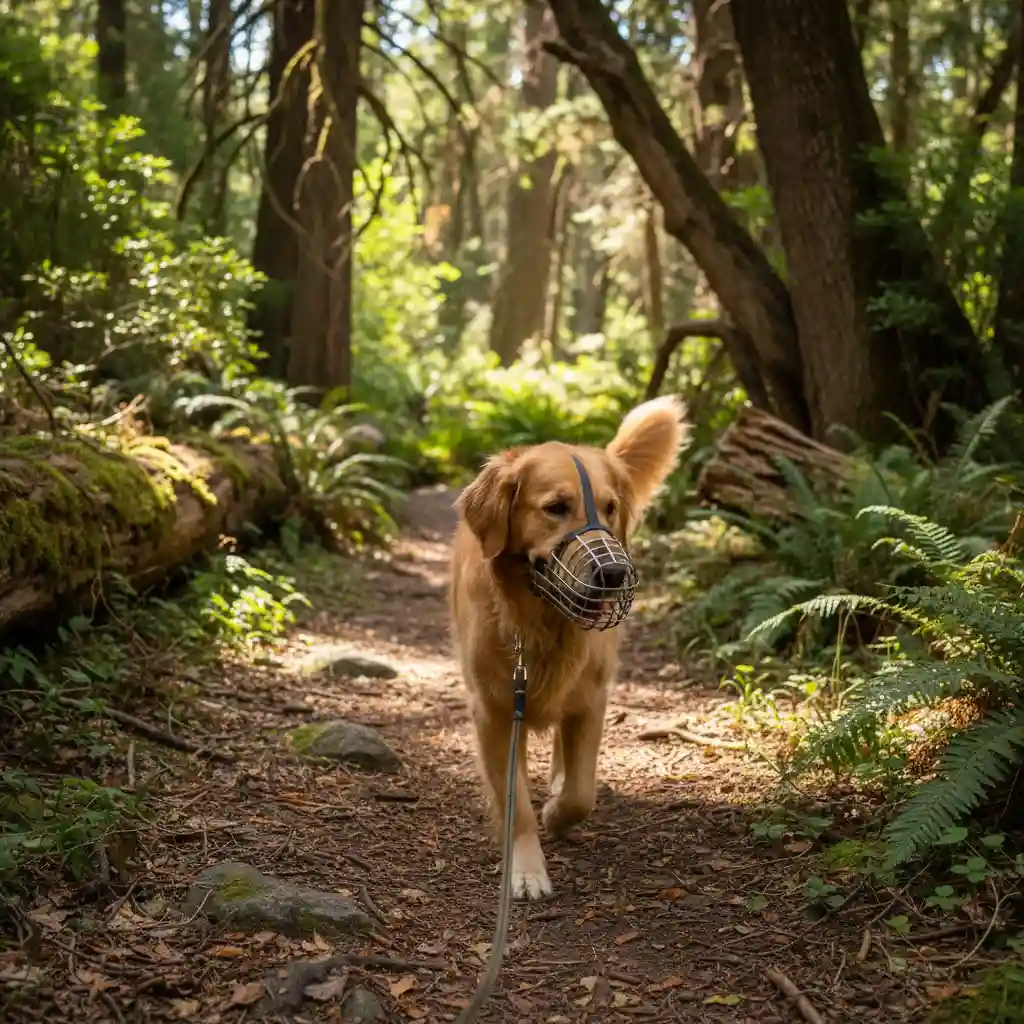
Prevention Strategies: Muzzles, Leashes, and Training
If you live in or near areas with active pest control operations, physical barriers are your dog’s best defense against 1080 poisoning.
The Importance of Muzzles
A muzzle is the only guarantee that your dog cannot ingest a toxic pellet or a poisoned carcass while off-leash (where permitted). However, not all muzzles are suitable for hiking.
- Basket Muzzles: These are the gold standard for safety in the bush. They allow the dog to pant, drink water, and accept treats, but the grid prevents them from picking up objects from the ground.
- Cloth/Tube Muzzles: These restrict the jaw and prevent panting. They are dangerous for dogs exercising in the bush as they can cause overheating. Do not use these for hiking.
Leash Rules in Conservation Areas
In many areas managed by DOC or regional councils, dogs are legally required to be on a leash. Even where they are technically allowed off-leash, if 1080 is present, the leash is mandatory for safety. A long line (5-10 meters) can give your dog freedom of movement while allowing you to instantly retract them if they show interest in a bush or carcass.
Aversion Training
Some trainers offer aversion training specifically for kiwi (to stop dogs attacking birds) and occasionally for bait. However, aversion training for 1080 is complex. Training a dog to avoid pellets does not necessarily train them to avoid the smell of a rotting possum carcass, which smells like food to a dog. Therefore, reliance on training alone is risky compared to the physical security of a muzzle.
Emergency Veterinary Treatment Protocols
It is crucial to state clearly: There is no antidote for 1080 poisoning. Treatment is supportive and focuses on controlling seizures and maintaining heart function until the body can metabolize the poison. However, the mortality rate is extremely high.
Immediate Field Action
If you see your dog eat a green pellet or a carcass in a 1080 zone, you must act within minutes.
- Induce Vomiting (Emesis): This is only effective if done immediately (within 30 minutes) and before symptoms start. Once neurological symptoms (seizures) begin, inducing vomiting can cause aspiration pneumonia or suffocation. You can use washing soda crystals (sodium carbonate) if you carry them in your first aid kit. Place a small crystal at the back of the throat. Note: Always consult a vet by phone immediately if possible before doing this.
- Rush to the Vet: Drive to the nearest veterinarian immediately. Call them on the way so they can prepare seizure medication (diazepam/barbiturates).
Veterinary Care
Upon arrival, the vet will likely:
- Administer anesthesia or heavy sedation to control seizures.
- Perform gastric lavage (stomach pumping) if ingestion was recent.
- Administer activated charcoal to absorb remaining toxins in the gut.
- Provide IV fluids and cardiac monitoring.
According to veterinary toxicology resources, dogs that survive the initial 24 hours have a better prognosis, but permanent cardiac or neurological damage is possible. For detailed medical data, refer to authoritative sources like the American Veterinary Medical Association or local NZ veterinary guidelines.

Conclusion: Vigilance Saves Lives
The beauty of the bush should not be overshadowed by the tragedy of losing a pet. 1080 is a potent tool for conservation, but it requires dog owners to be hyper-aware. By recognizing the 1080 poison dogs symptoms—frenzied running, howling, and seizures—you understand the severity of the threat. However, the goal is never to see these symptoms.
Check the maps, look for signs, use a basket muzzle, and keep your dog on a leash in high-risk areas. Your vigilance is the only barrier between your loyal companion and a lethal toxin.
Frequently Asked Questions
How long does it take for 1080 to kill a dog?
Clinical signs usually appear within 30 minutes to 4 hours after ingestion. Once symptoms like seizures begin, death can occur rapidly, often within a few hours, due to respiratory failure or cardiac arrest.
Is there an antidote for 1080 poison in dogs?
No, there is no specific antidote for 1080 (sodium fluoroacetate). Treatment is purely supportive, focusing on stopping seizures and supporting heart function, but the mortality rate is very high.
Can a dog survive 1080 poisoning?
Survival is rare and depends entirely on the amount ingested and how quickly vomiting is induced. If a dog vomits the poison before it is absorbed, they may survive. Once severe neurological symptoms start, the prognosis is grave.
What does 1080 bait look like?
In New Zealand, 1080 cereal baits are cylindrical pellets, typically dyed green to deter birds and identify them as toxic. They are about 2cm long. However, dogs are also at risk from eating un-dyed carcasses of poisoned animals.
How long does 1080 stay in a dead possum?
1080 can remain active in a carcass for months, especially in cold or dry conditions where decomposition is slow. The poison breaks down faster in warm, wet conditions due to bacterial activity.
What should I do if my dog eats 1080?
If you see ingestion happen, induce vomiting immediately (within 15-20 minutes) using washing soda crystals if available, then rush to a vet. If symptoms have already started, do not induce vomiting; go straight to the vet.