A complete cat care guide for New Zealanders provides comprehensive information for responsible cat ownership, covering everything from initial setup and essential supplies to understanding feline behaviour, preventative health, and navigating the unique considerations of owning a cat in Aotearoa. This resource ensures new and experienced owners alike can provide optimal care.
Essential Cat Supplies and Setup
Bringing a new cat into your New Zealand home is an exciting time, but proper preparation is key to a smooth transition for both you and your new feline friend. Setting up your home with the right essential supplies not only ensures their comfort and safety but also lays the foundation for a healthy, happy life together. This section outlines the crucial items every cat owner in NZ should consider.
Food and Water Stations
Choosing the right food and water bowls is more important than you might think. Stainless steel, ceramic, or glass bowls are ideal as they are easy to clean and less likely to harbour bacteria than plastic. Ensure bowls are wide and shallow to prevent whisker fatigue, which can be uncomfortable for cats. Place food and water bowls in separate, quiet areas away from the litter box. Consider a water fountain to encourage hydration, as many cats prefer running water.
Litter Box Essentials
The litter box is a fundamental necessity. Opt for an uncovered litter box initially, as many cats prefer an open design for better visibility and easier escape. The general rule is one litter box per cat, plus one extra, strategically placed in quiet, accessible locations throughout your home. Choose a high-quality, unscented clumping litter, as strong scents can deter cats. Scoop the litter box at least once daily and thoroughly clean it weekly with mild soap and water.
Comfortable Sleeping Areas
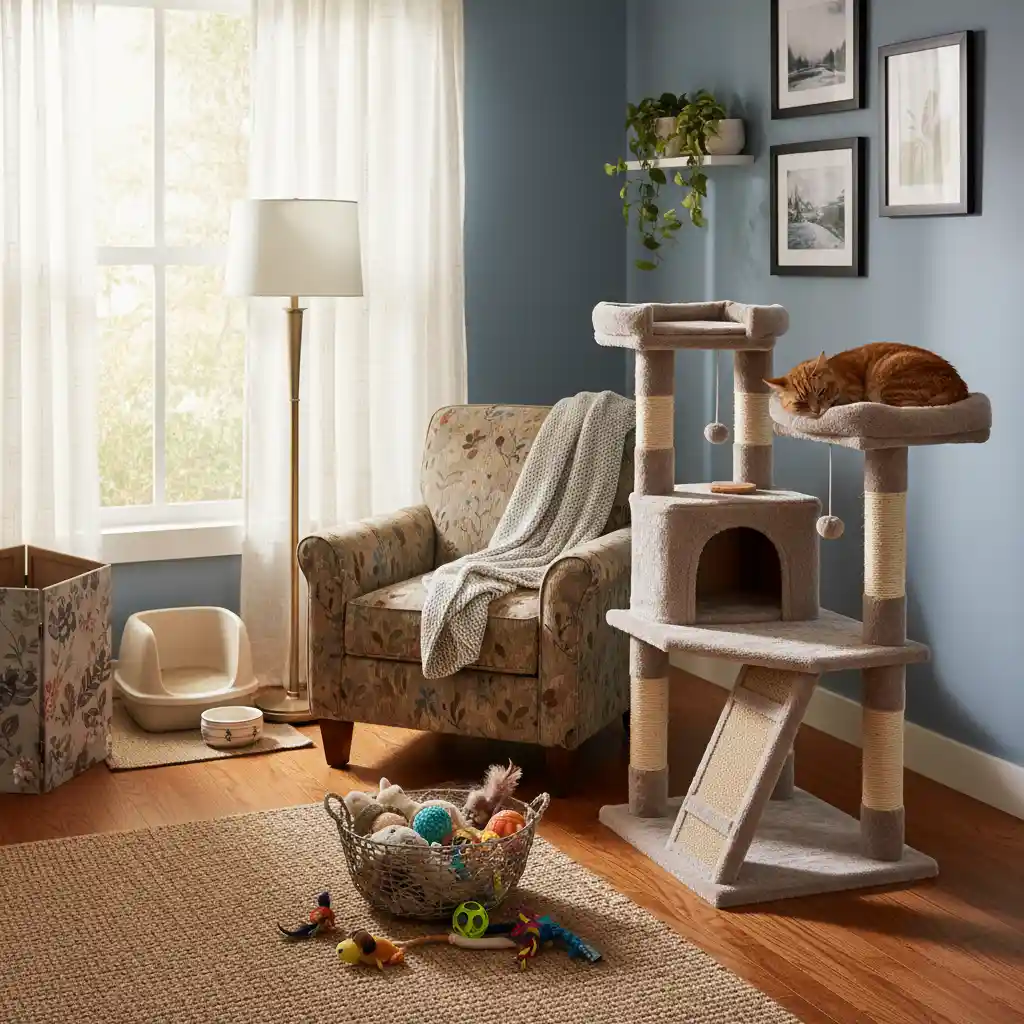
Cats spend a significant portion of their lives sleeping, so providing comfortable and secure sleeping spots is crucial. Offer a variety of options: a soft bed in a quiet corner, a window perch for sunbathing and bird-watching, or even a cardboard box which many cats find irresistibly cozy. Elevated sleeping spots are often preferred as they offer a sense of security and a vantage point.
Scratching Posts and Surfaces
Scratching is a natural and necessary feline behaviour for claw maintenance, stretching, and marking territory. To protect your furniture, provide multiple scratching options in various materials (sisal rope, cardboard, carpet) and orientations (vertical posts, horizontal scratchers). Place them in prominent areas where your cat likes to lounge or stretch. Encourage use by sprinkling catnip or playing near them.
Understanding Feline Behavior
Understanding your cat’s unique behaviours is key to building a strong bond and addressing any potential issues before they escalate. Cats communicate through a complex mix of vocalizations, body language, and scent marking. By learning to interpret these signals, you can better meet their needs and ensure a harmonious household.
Feline Communication
Cats communicate in various ways. Their vocalizations range from purrs (contentment, seeking attention, or self-soothing) to meows (demanding attention, greetings, or distress) and hisses/growls (fear or aggression). Body language is equally important: a tail held high signals confidence, a twitching tail indicates irritation, flattened ears suggest fear, and slow blinks are a sign of trust and affection. Learning to ‘read’ your cat’s cues will prevent misunderstandings.
Socialization and Play
While often perceived as solitary, cats are social creatures, albeit on their own terms. Early socialization is crucial for kittens, exposing them to various people, sights, and sounds. Play is vital for all cats, mimicking their natural hunting instincts and providing essential mental and physical stimulation. Use interactive toys like wand toys to encourage pouncing and chasing, and ensure daily play sessions to prevent boredom and potential behavioural problems.
Common Behavioral Issues and Solutions
Even with the best care, behavioural issues can arise. Inappropriate urination or defecation outside the litter box often signals stress, a dirty litter box, or a medical issue – always rule out health problems first with a vet visit. Aggression can stem from fear, pain, or overstimulation; understanding the trigger is key to resolution. Excessive scratching can be redirected with appropriate scratching posts. Patience, positive reinforcement, and sometimes professional veterinary or behavioural consultation are essential.
Preventative Health and Vaccinations
Proactive preventative healthcare is the cornerstone of a long and healthy life for your cat. Regular veterinary check-ups, appropriate vaccinations, effective parasite control, and a balanced diet are critical components of ensuring your feline companion thrives in New Zealand.
Regular Veterinary Check-ups
Even if your cat appears healthy, annual veterinary check-ups are vital. These visits allow your vet to detect potential health issues early, provide preventative treatments, and administer necessary vaccinations. For senior cats or those with chronic conditions, twice-yearly check-ups may be recommended. Your vet will also advise on diet, weight management, and dental care.
Essential Vaccinations for NZ Cats
Vaccinations protect your cat from common, often fatal, diseases. In New Zealand, core vaccinations typically include protection against Feline Panleukopenia (feline distemper), Feline Calicivirus, and Feline Herpesvirus (cat flu). Depending on your cat’s lifestyle (e.g., if they interact with other cats or go outdoors), your vet may recommend additional non-core vaccines like Feline Leukaemia Virus (FeLV). Follow your vet’s recommended vaccination schedule for optimal protection.
Parasite Control
Fleas, worms, and ticks are common parasites that can affect cats in New Zealand. Regular deworming, usually every three months for adult cats, is crucial. Your vet will recommend a broad-spectrum product effective against common intestinal worms (roundworms, hookworms, tapeworms). Flea prevention should be administered monthly, especially for outdoor cats, using vet-prescribed spot-ons or oral medications. Though less common than in other countries, some areas of NZ can have ticks, so discuss local risks with your vet.
Nutrition and Dental Care
A high-quality, balanced diet specifically formulated for your cat’s age, activity level, and health status is paramount. Avoid feeding human food scraps, which can be harmful. Ensure constant access to fresh water. Dental care is often overlooked but critical; poor dental hygiene can lead to serious health problems. Discuss options like dental diets, dental treats, and regular professional dental cleaning with your vet. Brushing your cat’s teeth daily, if introduced early, is the gold standard.

Indoor vs. Outdoor Cat Considerations
The decision of whether to keep your cat indoors or allow them outdoor access is significant and comes with various implications for their health, safety, and the local environment, particularly in New Zealand.
The Indoor Cat Lifestyle
Keeping a cat exclusively indoors offers several advantages, primarily safety from traffic accidents, fights with other animals, exposure to diseases, and ingestion of poisons. Indoor cats typically live longer, healthier lives. However, an indoor environment requires significant enrichment to prevent boredom and behavioural issues. This includes interactive play, vertical climbing spaces, window perches, food puzzles, and possibly ‘catios’ (secure outdoor enclosures) to provide safe outdoor experiences. Owners must be diligent with litter box hygiene and ensure regular mental stimulation.
The Outdoor Cat Lifestyle in NZ
Allowing cats outdoor access provides natural enrichment, exercise, and mental stimulation. However, it also exposes them to significant risks. In New Zealand, outdoor cats face dangers like busy roads, encounters with aggressive dogs or other cats, and exposure to parasites and diseases. Furthermore, responsible cat ownership in New Zealand includes a strong emphasis on protecting native wildlife. Cats are natural predators, and their impact on NZ’s unique bird species and other fauna is a serious concern. Many councils and conservation groups advocate for keeping cats contained, especially at night, or transitioning them to an indoor-only lifestyle.
For owners considering outdoor access, it is imperative that your cat is microchipped, desexed, vaccinated, and routinely treated for parasites. Consider using a bell on their collar (breakaway safety collar only) to reduce their hunting success. Always ensure your cat has a safe, warm place to retreat indoors.
Microchipping and Registration
In New Zealand, microchipping your cat is a legal requirement in many areas, and it is strongly recommended nationwide. A microchip is a permanent form of identification that significantly increases the chances of being reunited with your cat if they become lost. Once microchipped, you must register your cat with a national database. Some local councils also have their own registration requirements or bylaws, so check with your local authority regarding specific obligations for cat owners in your area. This ensures responsible pet ownership and contributes to animal welfare efforts.
For more detailed information on responsible pet ownership in New Zealand, including microchipping and local bylaws, you can consult the SPCA New Zealand website. Additionally, the Ministry for Primary Industries (MPI) provides guidelines and regulations concerning animal welfare across the country.
People Also Ask
What essential supplies do I need for a new cat in NZ?
For a new cat in New Zealand, you’ll need food and water bowls, a litter box with appropriate litter, comfortable beds or resting spots, scratching posts, a variety of toys, grooming tools, and a secure carrier for transport. Always consider safety by cat-proofing your home.
How often should my cat visit the vet in New Zealand?
Adult cats in New Zealand should have at least one annual veterinary check-up. Kittens require a series of initial vaccinations and check-ups, while senior cats or those with health conditions may benefit from bi-annual visits to monitor their health more closely.
Is it better to have an indoor or outdoor cat in NZ?
While outdoor access offers enrichment, keeping cats indoors in New Zealand provides greater safety from traffic, fights, and diseases, and significantly protects native wildlife. If allowing outdoor access, ensure your cat is microchipped, desexed, vaccinated, and consider supervised outings or a ‘catio’.
What vaccinations are essential for cats in New Zealand?
Core vaccinations for cats in New Zealand typically protect against Feline Panleukopenia (distemper), Feline Calicivirus, and Feline Herpesvirus (cat flu). Your vet may recommend additional non-core vaccines like Feline Leukaemia Virus (FeLV) depending on your cat’s lifestyle and risk factors.
How do I microchip and register my cat in New Zealand?
To microchip your cat, visit your veterinarian; they will implant a tiny chip under the skin. After microchipping, register your cat’s details with a national database. Additionally, check with your local council, as many areas in New Zealand have specific bylaws requiring cat registration.
How can I protect New Zealand’s native wildlife from my cat?
To protect New Zealand’s native wildlife, consider keeping your cat indoors, especially at night. If outdoor access is provided, ensure your cat is desexed, wears a bell on a quick-release collar, and is well-fed. Engaging in plenty of indoor play also helps satisfy their hunting instincts.