Pet first aid NZ refers to the immediate, provisional care administered to an injured or suddenly ill animal before professional veterinary attention can be secured. Effective pet first aid involves stabilizing the animal’s vital signs, managing acute pain or bleeding, and preventing the condition from worsening during transport to an emergency clinic.
The Importance of Pet First Aid Preparedness in NZ
In New Zealand, our unique geography and lifestyle often mean that we are exploring remote bush walks, beaches, or living on lifestyle blocks far from the nearest 24-hour veterinary clinic. Whether you are in central Auckland or rural Southland, the time between an accident and professional medical treatment is the most critical window for survival. Understanding the basics of pet first aid allows owners to act as the first line of defense against trauma, toxicity, and sudden illness.
Many preventable fatalities occur because owners panic or lack the necessary tools to stabilize their pet. From heatstroke during a Kiwi summer to accidental ingestion of rat bait, emergencies strike without warning. Being prepared involves two distinct components: having the right equipment on hand and possessing the knowledge to use it effectively. This guide is designed to empower New Zealand pet owners with authoritative, actionable steps to manage crises until a veterinarian can take over.
Essential Pet First Aid Kit Items Checklist
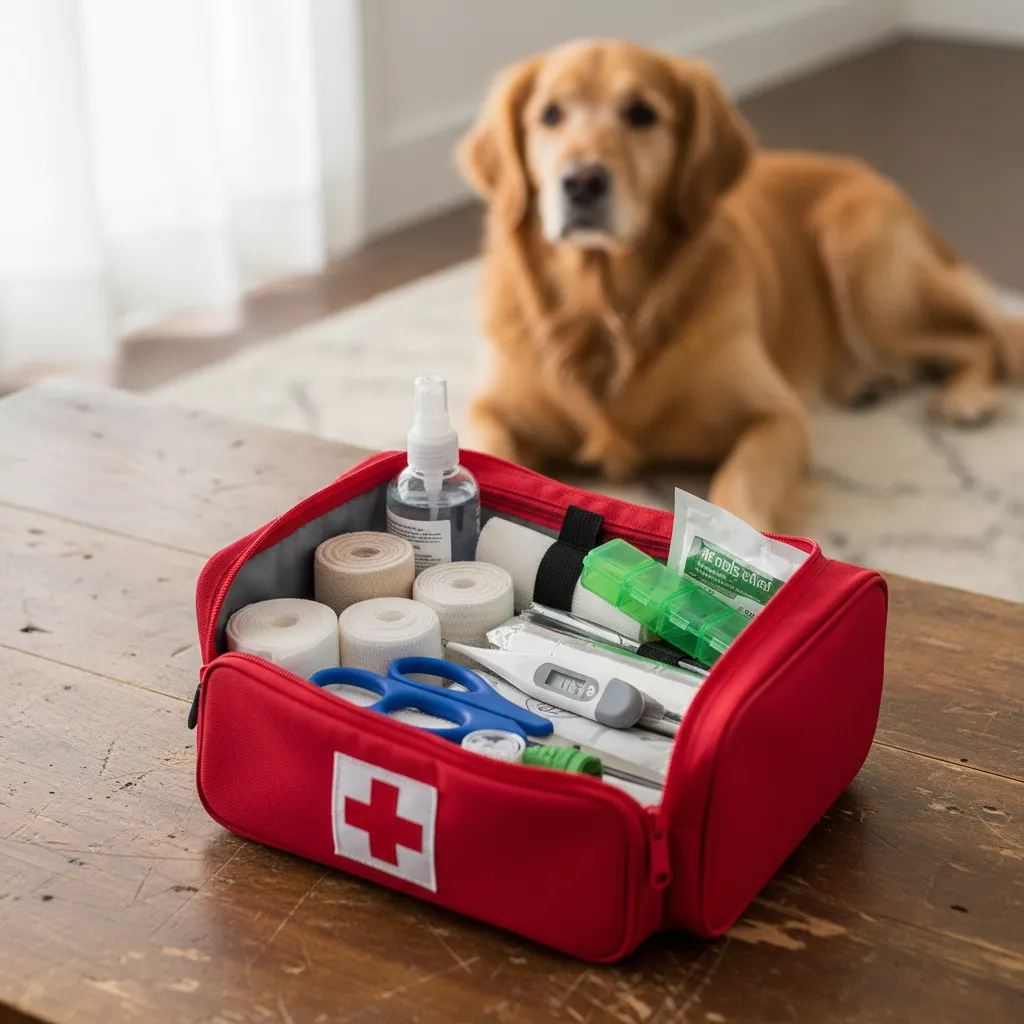
Every pet owner should maintain a dedicated first aid kit. Do not rely on your human first aid kit alone, as pets have specific needs. You can buy pre-made kits from organizations like the SPCA New Zealand or assemble your own using the checklist below.
Bandaging and Wound Care
- Self-adhesive bandages (Vet Wrap/Cohesive Bandage): These stick to themselves but not to fur, making them essential for wrapping limbs.
- Sterile gauze pads: For cleaning wounds and applying pressure to stop bleeding.
- Conforming cotton bandages: To hold gauze in place under the vet wrap.
- Micropore tape: For securing bandages to the skin/fur where necessary.
- Blunt-ended scissors: To cut bandages without risking injury to the animal’s skin.
Tools and Instruments
- Digital Thermometer: You must use a rectal thermometer for accuracy. A dog’s normal temperature is between 38.3°C and 39.2°C.
- Tweezers or Forceps: Essential for removing thorns, glass, or ticks.
- Tick Remover Tool: While ticks are less common in some parts of NZ, they are prevalent in others and can cause significant irritation.
- Syringes (without needles): For flushing wounds with saline or administering oral fluids.
Medications and Solutions
- Saline Solution: For flushing debris from eyes or cleaning wounds.
- Antiseptic Cream/Wash: Chlorhexidine or Betadine (diluted) is safer than Dettol, which can be toxic to cats.
- Activated Charcoal: Only strictly upon veterinary advice to absorb ingested poisons.
- Diphenhydramine (Antihistamine): For allergic reactions, but never administer without consulting a vet regarding dosage.
Responding to Common Pet Emergencies
Panic is the enemy of safety. When an emergency occurs, take a deep breath, assess the situation, and ensure your own safety before approaching an injured animal. Even the most docile pets can bite when in pain.
Managing Bleeding
If your pet is bleeding heavily, apply direct pressure to the wound using a sterile gauze pad or a clean cloth. Maintain pressure for at least 3 minutes continuously without lifting the cloth to check. If blood soaks through, add more layers rather than removing the initial layer, which might disturb clotting. If the bleeding is on a limb and is arterial (spurting), you may need to apply a tourniquet above the wound, but this is a last resort and must be released every 15-20 minutes for a few seconds to prevent tissue death.
Heatstroke
Heatstroke is a major killer in New Zealand summers. Signs include excessive panting, drooling, bright red gums, and collapse. If you suspect heatstroke:
- Move the pet to a shaded, cool area immediately.
- Pour cool (not freezing) water over their body, focusing on the head, stomach, and feet.
- Use a fan to increase airflow.
- Offer small amounts of water to drink, but do not force it.
- Transport them to the vet immediately, even if they seem to recover, as internal organ damage can occur hours later.
Choking
If your pet is pawing at their mouth, choking, or has blue-tinged gums, check the airway. Open the mouth and look for a foreign object. If you can see it and grasp it easily, remove it with tweezers or pliers. Do not push blindly, as you may lodge the object deeper.
If you cannot remove the object, perform the Heimlich maneuver:
- Small Dogs/Cats: Pick them up with their back against your chest. Place your fist below the rib cage and push inward and upward rapidly.
- Large Dogs: Stand behind the dog. Wrap your arms around their waist. Make a fist and place it just below the rib cage. Thrust sharply forward and upward.
CPR and Artificial Respiration Techniques for Pets
Cardiopulmonary Resuscitation (CPR) is required if your pet is unconscious, has no heartbeat, and is not breathing. It is physically demanding and stressful, but it can save lives. ABC stands for Airway, Breathing, and Circulation.
Step 1: Check Vital Signs
Check for a heartbeat by placing your hand on the left side of the chest, just behind the elbow. Check for breathing by watching for chest rise or feeling for air at the nose. If absent, begin CPR.
Step 2: Compressions
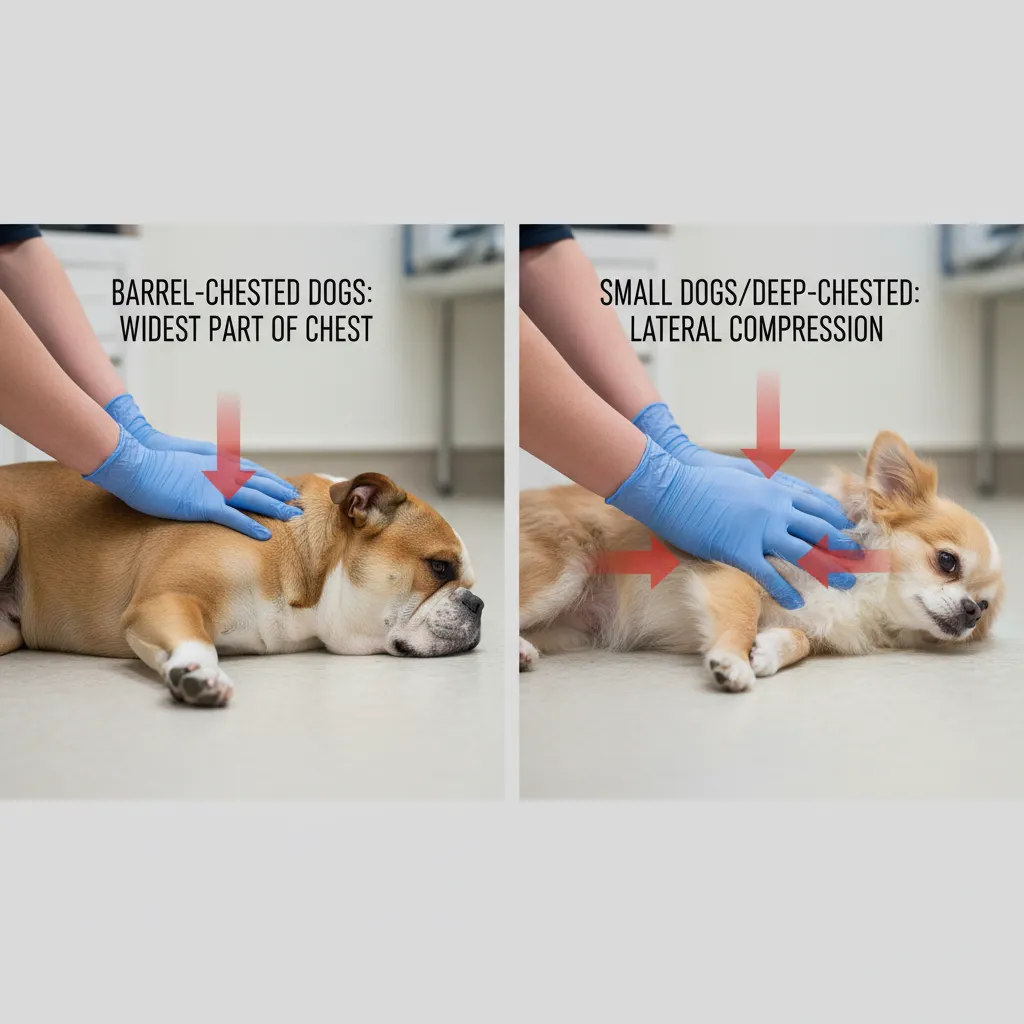
Lay the animal on their right side on a firm surface.
- Cats and Small Dogs (<10kg): Place one hand around the chest so your thumb is on one side and fingers on the other (encircling the heart). Squeeze the chest to compress it by 1/3 to 1/2 of its width. Aim for 100-120 compressions per minute.
- Medium to Large Dogs (>10kg): Place hands one on top of the other over the widest part of the chest. Lock your elbows and use your body weight to compress the chest by 1/3 to 1/2 width. Aim for 100-120 compressions per minute (to the beat of “Stayin’ Alive”).
Step 3: Rescue Breaths
If you are alone, do 30 compressions followed by 2 breaths. If two people are present, one should do compressions while the other gives a breath every 6-8 seconds without stopping compressions.
To give a breath: Close the animal’s mouth tightly with your hand. Ensure the neck is extended to open the airway. Place your mouth over the animal’s nose and blow until you see the chest rise. Allow the air to exhale passively.
When to Rush to the Vet vs. Home Monitoring
Deciding whether to visit the emergency vet can be difficult, especially after hours when fees are higher. However, certain symptoms are non-negotiable red flags requiring immediate veterinary intervention.
Immediate Vet Attention Required
- Difficulty Breathing: Choking, shallow breathing, or gasping.
- Seizures: Especially if they last more than 2 minutes or occur in clusters.
- Uncontrolled Bleeding: Or bleeding from nose, mouth, or rectum.
- Bloat (GDV): Swollen, hard abdomen, retching without vomiting (common in large breeds). This is fatal without surgery.
- Trauma: Being hit by a car, even if the animal looks fine (internal bleeding is common).
- Eye Injuries: Squinting, cloudiness, or bulging eyes are emergencies.
- Inability to Urinate: Especially in male cats, this is a life-threatening blockage.
Situations for Home Monitoring
Minor issues like a single episode of vomiting (with normal energy levels), minor scrapes that stop bleeding quickly, or a broken nail can often be monitored overnight. However, if the animal appears lethargic, refuses food, or seems in pain, always err on the side of caution and call your vet.
New Zealand Specific Hazards: Plants and Poisons
New Zealand has specific environmental hazards that pet owners must be vigilant about. Awareness of these toxins can prevent fatal poisonings.
Karaka Berries
Found throughout NZ, the orange berries of the Karaka tree contain karakin, a potent toxin. Consumption causes severe neurological symptoms, convulsions, and death. If you see your dog eating these, go to the vet immediately.
1080 Poison
Used for pest control in NZ conservation areas. Dogs are highly susceptible to 1080, often by scavenging possum carcasses killed by the poison. There is no antidote. Keep dogs on leads in areas where 1080 has been dropped and use a muzzle if they are scavengers.
Sea Slugs and Pufferfish
Beaches in Auckland and Coromandel often have toxic sea slugs (pleurobranchs) or pufferfish washed ashore. These contain tetrodotoxin, which is rapidly fatal. Keep a close eye on what your dog investigates on the beach.
For more information on animal health and veterinary standards in New Zealand, refer to the New Zealand Veterinary Association (NZVA).

Frequently Asked Questions (PAA)
What should be in a pet first aid kit in NZ?
A comprehensive NZ pet first aid kit should include cohesive bandages (Vet Wrap), sterile gauze, saline solution for flushing wounds, blunt-ended scissors, tweezers for tick/thorn removal, a digital rectal thermometer, and emergency contact numbers for your local and after-hours veterinarian.
How do you perform CPR on a dog?
To perform CPR on a dog, lay them on their right side. Check for a heartbeat and breathing. If absent, perform 100-120 chest compressions per minute. For every 30 compressions, provide 2 rescue breaths by closing the mouth and breathing into the nose. Continue until the dog revives or you reach a vet.
What are the signs of poisoning in dogs?
Signs of poisoning include vomiting, diarrhea, excessive drooling, seizures, tremors, lethargy, pale gums, and unsteadiness. In NZ, be particularly aware of Karaka berries, rat bait, and chocolate ingestion. Immediate veterinary care is crucial.
Can I give my dog human painkillers like Paracetamol?
No, you should never give human painkillers to pets without specific veterinary instruction. Paracetamol and Ibuprofen can be fatal to cats and dogs, causing liver failure or stomach ulcers. Always consult a vet for pain relief options.
What is the emergency vet number in NZ?
There is no single national emergency number for pets in NZ like 111. You must contact your local veterinary clinic. Most clinics have an after-hours message directing you to the nearest emergency facility. It is vital to save your local emergency vet’s number in your phone beforehand.
How do you treat a bee sting on a dog?
Remove the stinger by scraping it off with a credit card (do not squeeze it). Apply a cool compress to reduce swelling. Monitor for allergic reactions like facial swelling or difficulty breathing. If these occur, seek vet attention immediately.