Reactive dog training is a systematic behavior modification process designed to change a dog’s emotional response to specific triggers, such as other dogs, strangers, or vehicles. To successfully train a reactive dog, you must identify their threshold distance, utilize counter-conditioning techniques like the “Engage-Disengage” game, and employ positive reinforcement to reward calm behavior before a reaction occurs.
Walking a reactive dog can feel like navigating a minefield. One moment, you are enjoying a peaceful stroll; the next, your canine companion has transformed into a lunging, barking frenzy at the sight of another dog across the street. The embarrassment, stress, and physical strain can leave owners feeling isolated and hopeless. However, reactivity is not a life sentence, nor is it a sign of a “bad” dog. It is simply a sign of a dog having big feelings that they do not yet have the skills to manage.
In the world of Pet Rescue & Education, particularly here in New Zealand where our outdoor lifestyle is central to our culture, understanding how to advocate for your dog is paramount. This guide will move beyond basic obedience and delve into the psychology of reactivity, providing you with actionable, force-free strategies to turn chaotic walks into calm connections.
Understanding the Root Cause: Fear vs. Frustration
Before we can fix the behavior, we must understand the emotion driving it. Reactivity is rarely true aggression; it is almost always a symptom of an underlying emotional state. In the context of reactive dog training, we generally categorize these drivers into two main camps: Fear and Frustration.
Fear-Based Reactivity
A dog acting out of fear follows the philosophy of “the best defense is a good offense.” When a fearful dog sees a trigger (like a stranger or another dog), their brain screams that they are in danger. By barking, growling, and lunging, they are attempting to increase the distance between themselves and the scary thing. If the stranger walks away (which they usually do), the dog learns that their display worked, reinforcing the behavior.
Frustration-Based Reactivity (Barrier Frustration)
Conversely, the frustrated greeter is usually a social butterfly who lacks impulse control. These dogs want to say hello desperately. When the leash prevents them from rushing over to greet, frustration builds until it boils over into a display that looks remarkably similar to aggression. The key difference is the goal: the fearful dog wants distance away from the trigger, while the frustrated dog wants to close the gap.
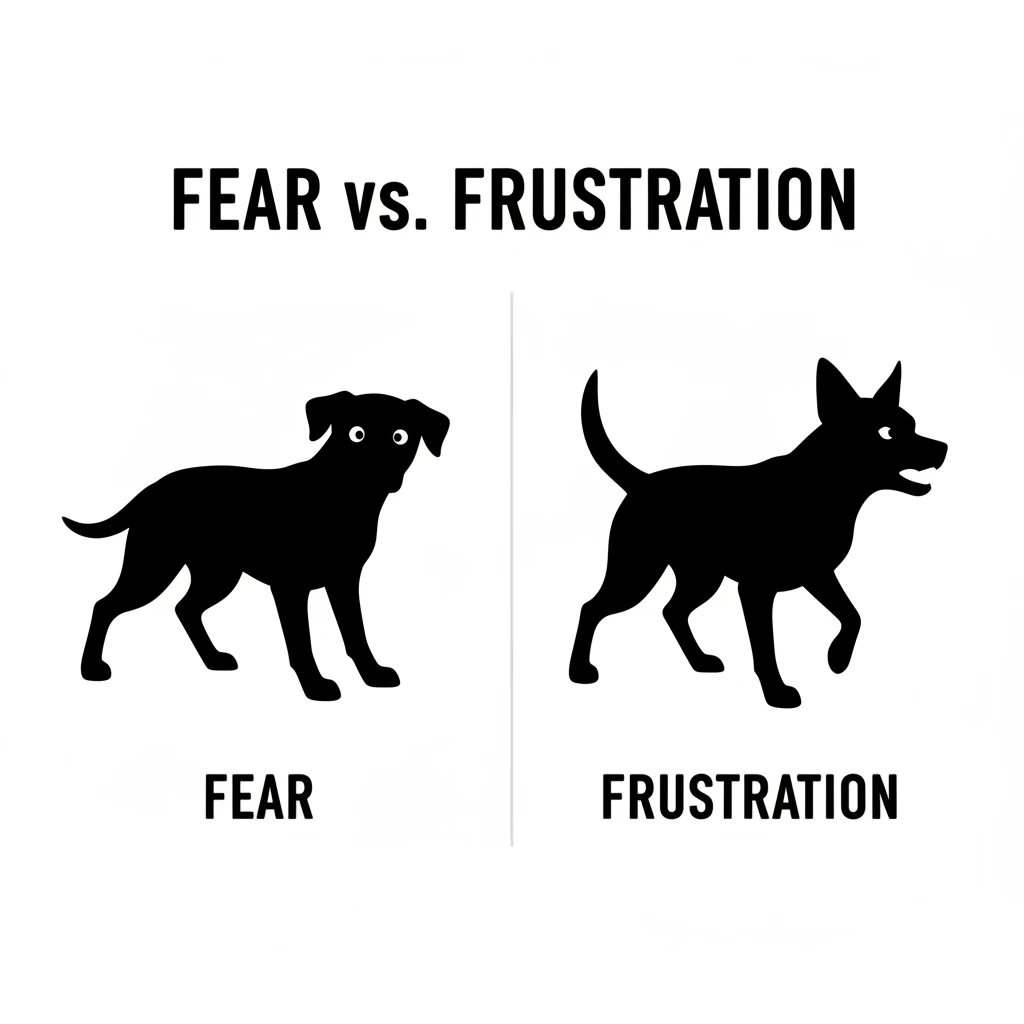
Identifying which camp your dog falls into is crucial for your training plan, though the management techniques often overlap. Fearful dogs need confidence building and desensitization, while frustrated dogs need impulse control and focus work.
The Science of Thresholds and Trigger Stacking
To make progress, you must become an expert on your dog’s “Threshold.” This is the distance at which your dog notices a trigger but can still think, eat treats, and listen to you. We often visualize this using a traffic light system:
- Green Zone: The dog is relaxed. Triggers are far away or non-existent. Learning happens here.
- Yellow Zone: The dog notices the trigger. They might stiffen, close their mouth, or stare, but they can still disengage if asked. This is the “Training Zone.”
- Red Zone: The reaction has started. Barking, lunging, and inability to hear you. No learning happens here; only survival.
Trigger Stacking
Reactivity is also cumulative. Imagine your dog has a stress bucket. A loud truck in the morning adds a cup of water. A mailman at the door adds another. By the time you go for a walk, their bucket is nearly full. It might only take seeing a cat from 50 meters away to cause the bucket to overflow (a reaction). This is known as trigger stacking. Recognizing that your dog may have “off days” due to accumulated stress is vital for realistic training expectations.
The Engage-Disengage Game: A Step-by-Step Guide
The Engage-Disengage game is the gold standard in reactive dog training. It uses counter-conditioning to change the dog’s emotional response from “Oh no!” to “Hey, that predicts a treat!” This game must be played in the Yellow Zone—close enough to see the trigger, but far enough away to remain under control.
Level 1: The Engage Phase
In this phase, we are simply teaching the dog that looking at the trigger predicts food. You are not asking for eye contact yet; you are capturing the moment they spot the distraction.
- Spot: Your dog looks at the trigger (another dog, person, etc.).
- Mark: Immediately click your clicker or say your marker word (e.g., “Yes!”).
- Reward: Deliver a high-value treat to your dog’s mouth.
Repeat this constantly. Trigger appears -> Dog looks -> Mark -> Treat. Eventually, you will notice your dog look at the trigger and immediately whip their head around to look at you, expecting the treat. This is the signal to move to Level 2.
Level 2: The Disengage Phase
Now that the dog understands the game, we add an element of operant conditioning. We want the dog to voluntarily choose to look away from the trigger.
- Spot: Your dog looks at the trigger.
- Wait: Do not mark immediately. Wait 1-3 seconds.
- Disengage: The dog, anticipating the treat, will turn their head to look at you.
- Mark & Reward: The moment they look at you, mark (“Yes!”) and reward heavily.
If the dog stares at the trigger for more than 3 seconds without looking back at you, you are likely too close (too deep in the Yellow Zone). Increase distance and try again.
Management Techniques: Surviving the Surprise Encounter
Training changes the brain over time, but management keeps everyone safe in the moment. You cannot train when a loose dog runs around a corner into your face. In these moments, you need emergency maneuvers.
The Emergency U-Turn
Teach this skill in your living room first, then the backyard, then a quiet street.
1. Say a cue like “Let’s Go!” in a happy voice.
2. Pivot 180 degrees instantly.
3. Run a few steps in the opposite direction while luring your dog with a handful of treats.
4. Throw the treats on the ground to keep their head down and focused on sniffing (a calming activity) rather than scanning for the threat.
Magnet Hand
If you have to pass a trigger and cannot turn around (e.g., a narrow trail), use the Magnet Hand. Place a handful of high-value treats (boiled chicken, cheese) right on your dog’s nose. Lure them past the trigger, feeding continuously as you walk. You are essentially blinding them with food. This isn’t “training” in the sense of teaching a behavior, but it prevents a reaction, which stops the neural pathways of reactivity from being reinforced.
Equipment Essentials: Harnesses vs. Head Halters
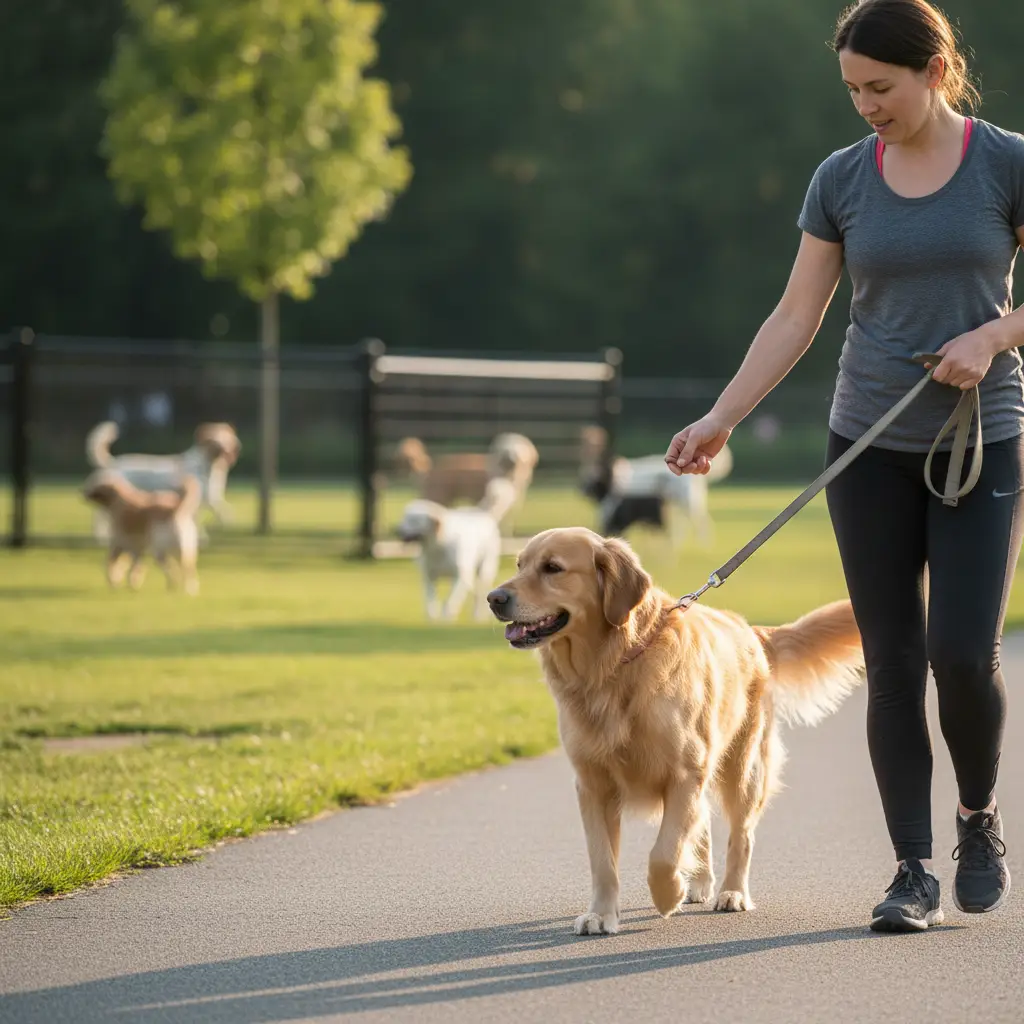
The equipment you use can significantly impact your success in reactive dog training. At Pet Rescue & Education NZ, we advocate for tools that provide control without causing pain or fear. Pain-based tools (prong collars, choke chains) may suppress behavior temporarily but often increase the dog’s underlying anxiety, leading to worse fallout later.
Front-Clip Harnesses
A Y-shaped harness with a front attachment point (at the chest) is often the best starting point. When a dog lunges, the front clip utilizes physics to turn the dog’s body back toward you, rather than allowing them to pull forward with all their might. This breaks their fixation and makes it easier to engage the U-Turn.
- Pros: Comfortable, low risk of injury, good for mild to moderate pullers.
- Cons: Extremely powerful dogs may still be able to pull an owner off balance.
Head Halters (Gentle Leaders/Haltis)
For large, powerful reactive dogs where safety is a concern (e.g., the owner risks being pulled into traffic), a head halter can be a game-changer. It controls the head, much like a halter on a horse. Where the head goes, the body follows.
- Pros: Maximum control with minimal strength required.
- Cons: Most dogs hate them initially. They require distinct conditioning (desensitization) over weeks before they can be worn on a walk. Never yank on a head halter, as it can cause neck injury.
For more detailed information on animal welfare and appropriate training tools, the SPCA New Zealand offers excellent resources on force-free equipment.
The Role of Human Emotion and Consistency
Perhaps the hardest part of reactive dog training is managing your own leash reactivity. It is natural to tense up, shorten the leash, and hold your breath when you see a trigger. However, this tension travels straight down the leash to your dog, confirming their suspicion: “Mom/Dad is nervous, so that thing over there must be dangerous.”
You must become your dog’s calm anchor. Breathe. Keep the leash loose (a tight leash creates tension and removes the flight option, leaving only fight). Advocate for your dog by telling strangers, “Sorry, we are in training, please give us space.”
Consistency is key. If you let your dog react and lunge 50% of the time, the behavior will persist. If you manage the environment so they practice calm behavior 90% of the time, the brain rewires. Recovery takes time. Celebrate the small wins—a look without a lunge, a quicker recovery after a bark, or a loose leash walk in a quiet park.
Frequently Asked Questions
Can a reactive dog ever be cured?
While “cured” implies the dog will never react again, most reactive dogs can be rehabilitated to a point where walks are calm and manageable. With consistent training, their threshold decreases, and they learn coping mechanisms, though they may always require some level of management.
How long does it take to train a reactive dog?
There is no set timeline. It depends on the severity of the reactivity, the dog’s history, genetics, and the consistency of training. Some dogs show improvement in weeks, while others take months or years of ongoing work.
Should I punish my dog for growling at other dogs?
No. Growling is a warning signal. If you punish the growl, the dog may stop giving warnings and go straight to biting. Instead, increase distance from the trigger and reward the dog for disengaging.
Is my reactive dog aggressive?
Not necessarily. Reactivity is often based on fear or frustration, not the intent to harm. However, unchecked reactivity can escalate into aggression if the dog feels forced to defend themselves.
What treats are best for reactive dog training?
Use high-value treats that your dog rarely gets otherwise. Boiled chicken, hot dogs, cheese, or freeze-dried liver are excellent choices. The treat must be more interesting than the trigger.
Can I socialize a reactive dog?
Yes, but traditional dog parks are usually a bad idea. Socialization for reactive dogs means learning to be calm near others, not necessarily meeting them. Pack walks with calm, neutral dogs are a great way to socialize safely.