Rehoming a pet is one of the most difficult decisions an owner can face. Whether due to changes in housing, financial hardship, or health issues, the process is fraught with emotional weight. However, beyond the emotions, there is a strict framework of legal obligations and ethical responsibilities in New Zealand that must be navigated to ensure the safety of the animal and compliance with the law.
Pet rehoming laws in New Zealand are primarily governed by the Animal Welfare Act 1999, which mandates that all animals must be treated with a duty of care ensuring their physical and behavioral needs are met during transfer. Additionally, the Dog Control Act 1996 requires mandatory microchip updates and registration transfers with local councils to legally finalize ownership changes.
The Legal Framework: Animal Welfare Act 1999
In New Zealand, the cornerstone of all animal interactions is the Animal Welfare Act 1999. This legislation does not just apply to keeping an animal; it extends strictly to the process of transferring ownership. When you rehome a pet, you remain legally responsible for that animal’s welfare until the transfer of ownership is explicitly and legally completed.
Under the Act, the concept of “Duty of Care” is paramount. This means that during the rehoming process, you cannot abandon the animal or leave it in a situation where its needs will not be met. Abandonment is a criminal offense in New Zealand. Simply leaving a cat behind when moving house or dropping a dog off in a remote area is illegal and punishable by significant fines or imprisonment.
The Five Freedoms in the Context of Rehoming
The Act is built upon the physical, health, and behavioral needs of animals, often summarized as the “Five Freedoms.” When vetting a potential new home, you are ethically and, to a degree, legally obligated to ensure the new owner can provide:
- Proper and sufficient food and water: The new owner must have the financial means to feed the pet.
- Adequate shelter: The environment must be suitable (e.g., fencing for dogs).
- The opportunity to display normal patterns of behavior: The animal must not be permanently caged or restricted unduly.
- Physical handling in a manner which minimizes the likelihood of unreasonable or unnecessary pain or distress.
- Protection from, and rapid diagnosis of, any significant injury or disease.
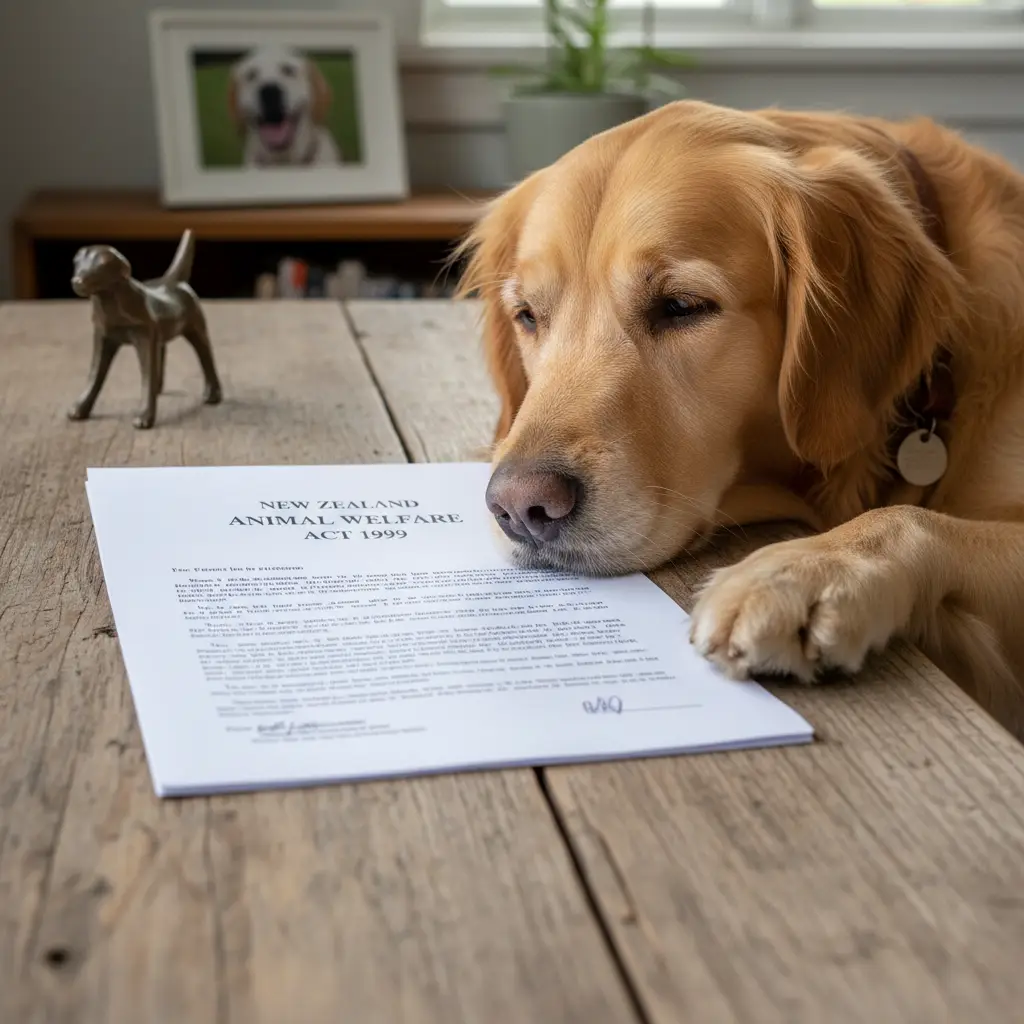
If you knowingly rehome an animal to an individual who has a history of animal abuse or who clearly cannot meet these needs, you may be scrutinized under the Act for failing your duty of care. For authoritative text on these obligations, you can review the legislation directly at Legislation.govt.nz.
Microchipping, Registration, and Database Updates
One of the most common legal pitfalls in New Zealand pet rehoming is the failure to update bureaucratic records. This is not just “paperwork”; it is a legal requirement, particularly for dogs.
The Dog Control Act 1996
For dogs, the Dog Control Act 1996 requires that all dogs over the age of three months be registered with their local city or district council. When a dog is rehomed:
- Transfer of Ownership Form: The current owner and the new owner must complete a change of ownership form. This is usually available on your local council’s website (e.g., Auckland Council, Wellington City Council).
- Timeframe: Legally, you must notify the council within 14 days of the change of ownership. Failing to do so can result in infringement fines for the previous owner if the new owner fails to register the dog.
- Microchipping: All dogs registered for the first time after 1 July 2006 (except working farm dogs in some districts) must be microchipped. The microchip number must be linked to the new owner in the National Dog Database (NDD).
The New Zealand Companion Animal Register (NZCAR)
While council registration covers dogs, the NZCAR is the primary database for cats and a secondary safety net for dogs. It is privately run but widely used by the SPCA, vets, and shelters.
When rehoming a cat or dog:
- The microchip registration on NZCAR does not automatically update when you change council details. They are separate systems.
- You must log in to the NZCAR and initiate a transfer. The new owner usually needs to accept this transfer.
- Ethical rehoming requires that you do not hand over the animal until you have initiated this digital handshake. This prevents disputes later regarding who legally owns the animal.
Private Rehoming vs. Surrender: Legal Distinctions
There are two primary pathways for rehoming: surrendering to an organization (like the SPCA, Huha, or local rescue) or a private transfer (direct to a new owner).
Surrendering to a Shelter
When you surrender a pet to a shelter, you legally sign over all rights to the animal. The shelter becomes the legal owner. This is often the safest legal route because these organizations have the resources to vet new owners and ensure the Animal Welfare Act is followed. However, shelters are often at capacity. If you sign a surrender form, you generally lose the right to know where the animal goes or to reclaim it later.
Private Rehoming
Private rehoming allows you to choose the new family, but it carries higher liability. In a private arrangement, the “contract” is often verbal, which is legally binding but difficult to prove in court. To protect yourself and the pet, you should draft a simple Rehoming Agreement that includes:
- The date of transfer.
- The names and addresses of both parties.
- A statement that the new owner agrees to provide care in accordance with the Animal Welfare Act 1999.
- Details of any rehoming fee paid.
- A stipulation that if the new owner can no longer keep the pet, it must be returned to you (optional but recommended for ethical peace of mind).
Ethical Best Practices for Private Transfers
Legal compliance is the baseline, but ethical rehoming goes further to ensure the animal thrives. In New Zealand, the community places a high value on animal welfare, and failing to adhere to these practices can lead to reputational damage and poor outcomes for the pet.
Full Disclosure of Medical and Behavioral History
Ethically, you must disclose everything. If a dog has a bite history, or if a cat has chronic kidney issues, the new owner must know. Hiding a history of aggression can lead to legal liability if the dog injures someone shortly after rehoming. Under the Dog Control Act, if a dog attacks a person or animal, the owner is liable. If you transferred ownership without disclosing known aggression, you could potentially be drawn into civil disputes regarding negligence.
Home Checks and Vetting
You should never hand a pet over to someone you have not met in person. Ethical rehoming involves:
- The Meet and Greet: Seeing how the animal interacts with the potential new owner.
- Property Inspection: Checking that the property is fully fenced (for dogs) and safe.
- Vet References: Asking for the name of their current vet to verify they care for their existing animals properly.

Preventing Pet Scams and Exploitation
New Zealand is not immune to the darker side of pet trading. When rehoming a pet, you become a target for scammers and individuals looking for animals for nefarious purposes.
The Dangers of “Free to Good Home”
Listing a pet as “Free to Good Home” is one of the most significant risks in private rehoming. While the intention is benevolent, these listings attract:
- Dog Fighters: Looking for “bait animals” (often cats or small dogs) to train fighting dogs.
- Hoarders: Individuals with a psychological compulsion to collect animals despite an inability to care for them.
- Class B Dealers (rare in NZ but possible): People who gather free animals to sell for research or other exploitative purposes.
- Dog Flippers: People who take a free dog and immediately sell it for profit, often fabricating a sob story.
Implementing a Rehoming Fee
To mitigate this, it is standard ethical practice to charge a rehoming fee. This is not about making a profit; it is about assigning value to the animal. A person unwilling to pay a nominal fee (e.g., $50-$150) may also be unwilling or unable to pay for vaccinations, flea treatments, or emergency vet bills. If you are uncomfortable keeping the money, you can donate it to a registered charity like the SPCA or SAFE.
Consumer Laws and Selling vs. Rehoming
It is crucial to distinguish between a private individual rehoming a family pet and a breeder or trader selling animals.
The Consumer Guarantees Act (CGA)
If you are deemed to be “in trade” (i.e., you breed animals or frequently buy and sell them), you are bound by the Consumer Guarantees Act. This means the animal must be of “acceptable quality.” If you sell a puppy that turns out to have a genetic defect, you may be legally required to provide a refund or pay for vet bills.
For a one-off private rehoming, the CGA generally does not apply. However, the Contract and Commercial Law Act 2017 (specifically regarding misrepresentation) can still be relevant. If you explicitly state “this dog is great with kids” to induce someone to take the dog, and you know the dog has bitten a child previously, you have committed fraudulent misrepresentation.
Desexing Requirements
While there is no national law in New Zealand mandating desexing for all pets, many local councils have bylaws regarding this, and it is a strict policy for all reputable rescue organizations. Ethically, you should ensure your pet is desexed before rehoming to prevent contributing to the overpopulation crisis. If the animal is not desexed, this should be a condition of the transfer, potentially supported by a refundable bond held until proof of surgery is provided.
Frequently Asked Questions (PAA)
Below are common questions regarding the legalities of rehoming pets in New Zealand.
Is it illegal to give away a pet for free in NZ?
No, it is not illegal to give away a pet for free in New Zealand. However, it is strongly discouraged by animal welfare experts. Charging a rehoming fee acts as a deterrent against individuals looking for bait animals or those who cannot afford the ongoing costs of pet ownership.
Do I have to vaccinate my dog before rehoming?
There is no specific law mandating vaccination before a private rehoming, but under the Animal Welfare Act, you must ensure the animal is in good health. Ethically, you should provide up-to-date vaccination records. If the animal is unvaccinated, this must be disclosed to the new owner so they can seek immediate veterinary care.
Can I legally take my pet back if the new owner mistreats it?
Once ownership is legally transferred (via council registration or a signed agreement), you generally cannot simply take the pet back, as this could be considered theft. If you suspect mistreatment, you must report it to the SPCA or the local council’s animal control, who have the legal authority to investigate and seize animals under the Animal Welfare Act.
What happens if I don’t change the microchip details?
If you fail to update the microchip details on the NZCAR and the council registry, you remain the legal point of contact. If the animal is found wandering, you will be contacted and liable for impound fees. If the animal causes damage or injury, you could technically be held liable as the registered owner.
Are there laws against selling puppies online in NZ?
Selling puppies online is legal, but platforms like Trade Me have specific codes of conduct requiring adherence to the Animal Welfare Act. Sellers “in trade” must identify themselves as such. Selling sick or underage puppies (under 8 weeks) is a breach of welfare codes and can be prosecuted.
Who is responsible for the council registration fee during a transfer?
This is negotiated between the buyer and seller. Usually, if the registration is current for the year, it transfers with the dog at no extra cost. If the registration has expired, the new owner typically pays to renew it upon transfer. The transfer form itself must be filed regardless of payment status.