Dog separation anxiety training is a systematic behaviour modification process designed to desensitise a canine to being left alone. It involves gradually exposing the dog to departure cues and increasing isolation duration while keeping the dog below their stress threshold, often utilising counter-conditioning techniques to change their emotional response to solitude.
Adopting a rescue dog is one of the most rewarding experiences a pet owner can have. However, many rescue dogs arrive with invisible baggage, the heaviest of which is often separation anxiety. For a dog that has experienced abandonment, the shelter system, or multiple rehoming events, the fear of being left alone can be debilitating. This guide provides a comprehensive, authoritative approach to managing and treating this condition, tailored specifically for the context of rescue animals.
Identifying the Root Cause: Anxiety vs. Boredom
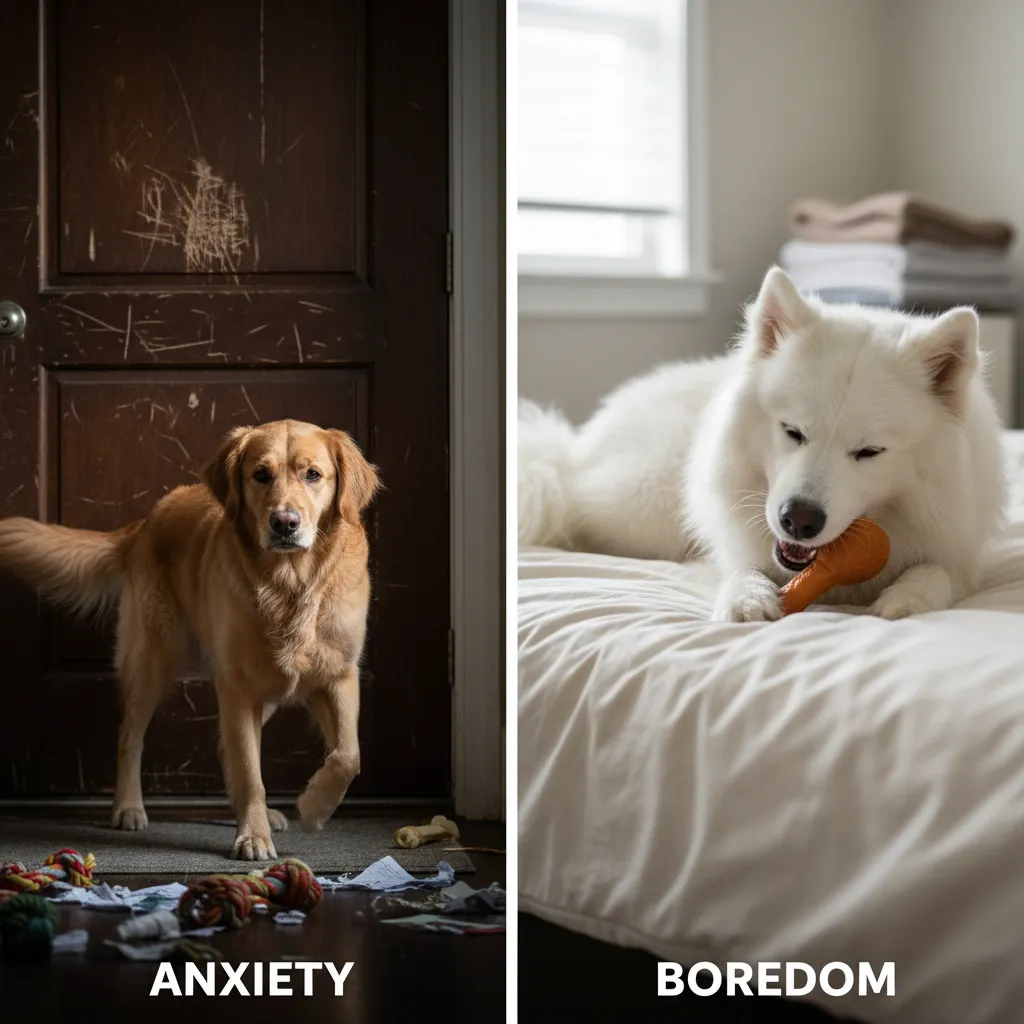
Before embarking on an intensive dog separation anxiety training programme, it is critical to differentiate between clinical separation anxiety and simple boredom or lack of training. Rescue dogs, particularly working breeds often found in NZ shelters (such as Huntaways or Collies), may exhibit destructive behaviour simply because they are under-stimulated.
True Separation Anxiety Symptoms:
- Distress upon Departure: The dog begins pacing, panting, or whining the moment you pick up your keys or put on shoes.
- Exit-Seeking Behaviour: Destruction is focused around doors, windows, and entry points where you left. Scratched doorframes and torn curtains are common.
- Physiological Responses: Drooling, trembling, or accidents (urination/defecation) indoors despite being house-trained.
- Vocalisation: Howling or barking that is persistent and rhythmic, often starting within minutes of your departure.
- Anorexia: The dog refuses high-value treats or food when left alone.
Boredom Symptoms:
- General Destruction: Chewing on furniture, shoes, or rubbish bins, usually occurring long after you have left.
- Inconsistent Vocalisation: Barking at passers-by or noises, rather than a continuous distress howl.
- Sleeping: The dog eventually settles down and sleeps for large portions of the day.
To confirm the diagnosis, use a video camera or a pet monitoring app to record your dog for 30 minutes after you leave. If the distress is immediate and persists, you are dealing with separation anxiety.
Desensitisation to Departure Cues
Dogs are masters of pattern recognition. Over time, your rescue dog has learned that specific actions predict your absence. Putting on a coat, grabbing keys, or packing a bag become “pre-departure cues” that trigger an anxiety spike before you even open the door.
To combat this, you must decouple these cues from the act of leaving. This process is known as desensitisation.
The “False Alarm” Technique
Perform your departure routine without actually leaving. Repeat these steps randomly throughout the day when your dog is relaxed:
- Pick up your keys, walk to the couch, and sit down to watch TV.
- Put on your shoes, walk to the kitchen, make a tea, and take your shoes off.
- Open the front door, close it immediately, and return to your chores.
The goal is to make these cues meaningless (or “neutral”) to the dog. Initially, the dog may alert or follow you. Continue these repetitions over several weeks until the dog no longer reacts to the sound of keys or the sight of your jacket. This lowers their baseline arousal levels, making the actual training sessions more effective.
The Core Dog Separation Anxiety Training Protocol
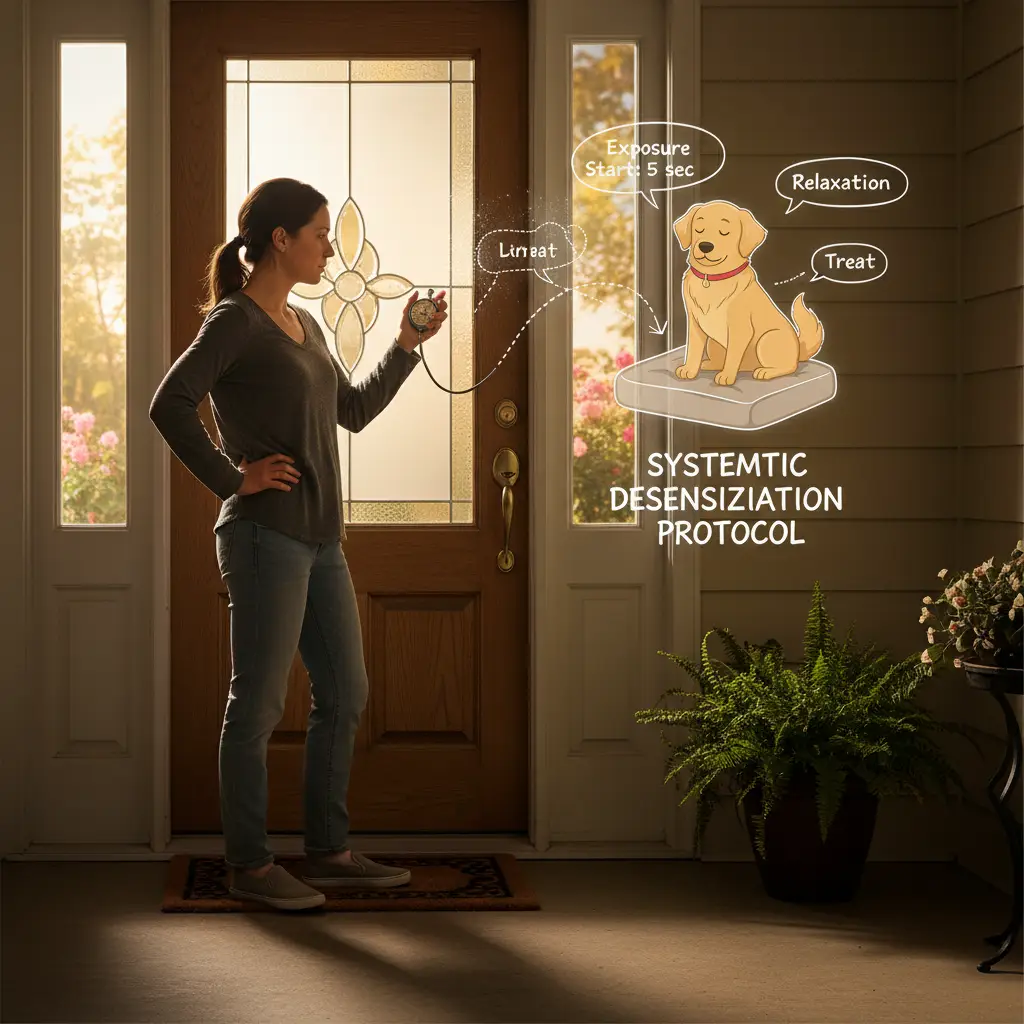
The gold standard for treating this condition is systematic desensitisation combined with counter-conditioning. The golden rule of this training is: Always keep the dog sub-threshold.
“Sub-threshold” means the dog must never experience panic during the training. If the dog whines, paces, or pants, you have pushed too far, and the training session has failed. You must regress to an easier step.
Phase 1: The Door is a Bore
Start with the door itself. Many dogs panic as soon as the handle turns.
- Walk to the door, touch the handle, and walk away. Reward the dog for staying calm.
- Turn the handle (click), but do not open. Walk away.
- Open the door an inch, close it, and walk away.
Phase 2: Duration Training (Seconds to Minutes)
Once the door triggers no reaction, begin stepping outside.
- Step 1: Step out, close the door, wait 1 second, return. Do not make a fuss when you return. Ignore the dog until they are calm.
- Step 2: Increase time to 3 seconds.
- Step 3: Increase to 5 seconds, then 10, then back down to 2. (Varying the duration prevents the dog from anticipating the difficulty).
This process is slow. It may take weeks to reach 10 minutes. However, once a dog can tolerate 30-40 minutes alone, the progress usually accelerates exponentially.
Using Enrichment Toys and Calming Aids
While training modifies the brain’s response, enrichment and calming aids manage the emotional state. These tools can help lower the dog’s general anxiety levels, making them more receptive to learning.
Food Enrichment
Food is a powerful counter-conditioner. Using long-lasting chews or puzzle toys can create a positive association with your departure. However, for dogs with severe anxiety, they will often ignore food. This is why food is best used for mild cases or after some desensitisation has occurred.
- Frozen Kongs: Stuffed with high-value wet food or peanut butter (xylitol-free).
- Lickimats: Licking releases endorphins which are naturally soothing for dogs.
- Snuffle Mats: Foraging engages the nose and brain, tiring the dog out mentally.
Calming Pheromones and Supplements
Many rescue organisations in New Zealand recommend the use of Dog Appeasing Pheromones (DAP). These synthetic pheromones mimic the comforting scent released by a mother dog to her puppies.
- Diffusers: Plugged into the wall near the dog’s safe space.
- Collars: Worn by the dog to provide constant support.
- Compression Wraps: Products like “Thundershirts” apply gentle, constant pressure, which has a calming effect on the nervous system, similar to swaddling an infant.
Management Strategies While Training
One of the hardest truths about dog separation anxiety training is that you cannot leave the dog alone longer than they can handle while the training is ongoing. Every time the dog panics, the neural pathways of fear are reinforced, undoing your progress.
During the rehabilitation phase, you must manage your absences:
- Doggy Daycare: Utilise a reputable daycare for days you work.
- Pet Sitters: Friends, family, or professional sitters who can stay with the dog.
- Take Them With You: If safe and permitted, bring the dog on errands.
This “suspension of absences” is often the missing link for owners who feel their training isn’t working. According to the SPCA New Zealand, managing the environment to prevent distress is just as vital as the active training sessions.
When to Seek Professional Help
If you are consistent with the protocols above for 4-6 weeks and see no progress, or if the dog is injuring themselves (breaking teeth on cages, jumping through glass windows), it is time to escalate.
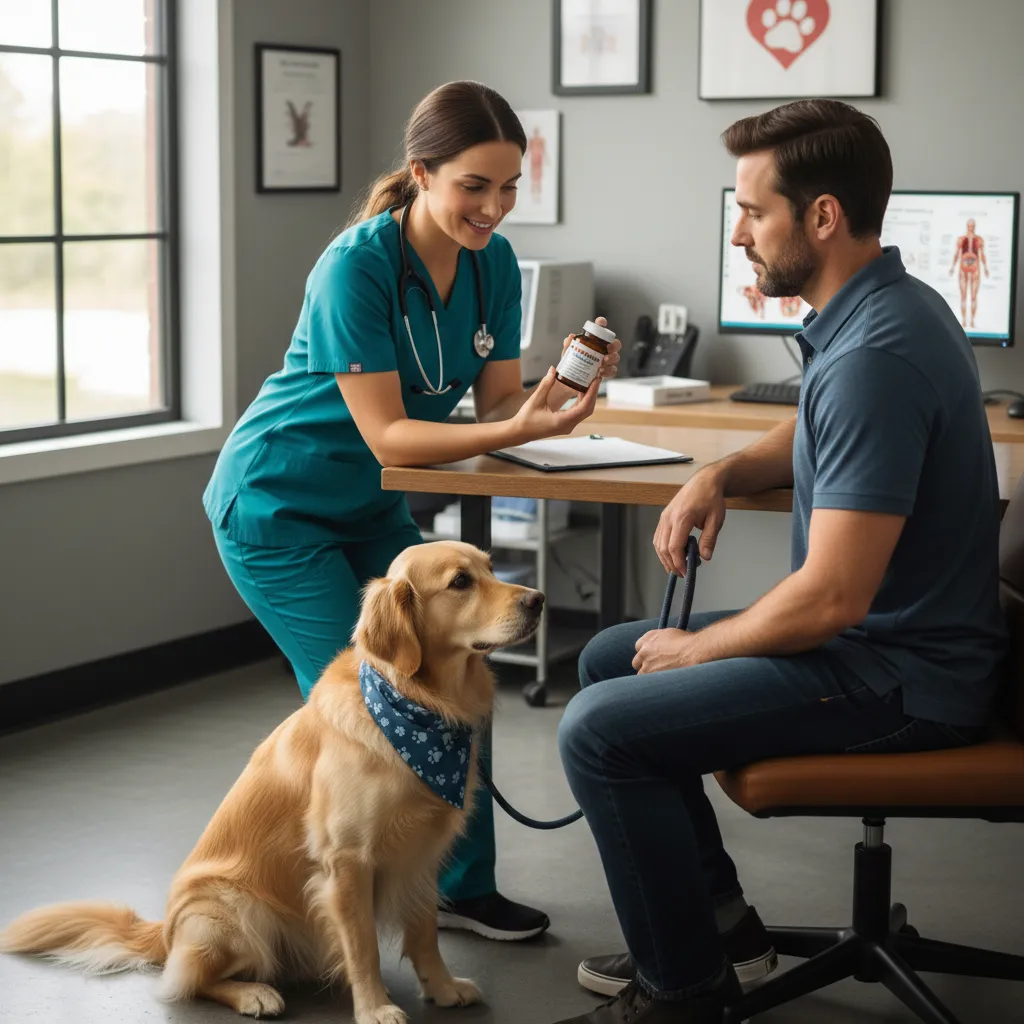
Veterinary Intervention
Do not fear medication. For many rescue dogs, their baseline anxiety is so high that they are chemically incapable of learning. Anti-anxiety medication (such as Fluoxetine or Clomipramine) prescribed by a veterinarian is not a “sedative” to knock them out; it is a tool to normalise their neurotransmitters so that training can actually take hold.
Certified Behaviourists
Seek out a Certified Clinical Animal Behaviourist (CCAB) or a trainer who specialises in separation anxiety (CSAT). They can provide customised plans and daily feedback. Avoid trainers who suggest punishment, bark collars, or “cry it out” methods. These outdated techniques will invariably make separation anxiety worse by adding fear to an already panicked animal.
For further reading on the physiological aspects of canine anxiety, resources like Wikipedia’s entry on Separation Anxiety in Dogs offer detailed background on the condition’s etiology.
Frequently Asked Questions
How long does it take to fix separation anxiety in dogs?
There is no set timeline. Mild cases may resolve in a few weeks, while severe cases in rescue dogs can take months or even a year of consistent training. Success depends on the severity of the anxiety, the dog’s history, and the owner’s consistency with the sub-threshold training protocol.
Should I crate a dog with separation anxiety?
Generally, no. For many dogs with separation anxiety, a crate causes “confinement distress,” intensifying their panic. They may injure themselves trying to escape. Unless the dog voluntarily loves their crate and sees it as a safe haven, it is better to use a dog-proofed room or baby gates to restrict access without total confinement.
Will getting a second dog help with separation anxiety?
Rarely. Separation anxiety is usually attached to a specific human, not just the state of being alone. Getting a second dog often results in having one anxious dog and one calm dog, or worse, the second dog may learn anxious behaviours from the first. It is not a recommended cure.
Is it okay to let the dog “cry it out”?
No. Letting a dog cry it out is a technique called “flooding,” which is psychologically damaging. It teaches the dog that they have no control over their environment and can lead to “learned helplessness.” It increases cortisol levels and usually makes the anxiety significantly worse over time.
Do calming treats really work for anxiety?
Calming treats containing ingredients like L-theanine, tryptophan, or hemp can take the edge off mild anxiety, but they are rarely sufficient for moderate to severe separation anxiety. They work best when used as part of a multimodal approach involving desensitisation training and environmental management.
Why is my rescue dog suddenly developing separation anxiety?
Rescue dogs often follow the “3-3-3 rule.” They may not show their true personality until 3 months in, once they feel safe enough to bond. Suddenly developing anxiety months after adoption often means they have finally bonded to you and are now terrified of losing that security. Changes in routine or traumatic events can also trigger regression.