Under current pet microchip NZ law, specifically the Dog Control Act 1996, all dogs registered for the first time after 1 July 2006 must be implanted with a microchip. This mandatory requirement applies to dogs over three months of age. While microchipping is currently voluntary for cats and other companion animals, it is universally recommended by welfare agencies to ensure safe repatriation.
Understanding Pet Microchip NZ Law
Navigating the legal landscape of pet ownership in New Zealand is crucial for every responsible guardian. The primary legislation governing this area is the Dog Control Act 1996, which was amended in 2006 to introduce mandatory microchipping for dogs. This legislation was enacted not only to assist in the recovery of lost animals but also to aid authorities in managing dog control issues and tracking dangerous dogs.
It is a common misconception that a simple tag on a collar is sufficient for legal compliance. However, collars can break or be removed. A microchip provides a permanent, tamper-proof form of identification. According to the law, if you are the owner of a dog, you have a legal obligation to ensure it is microchipped within two months of its first registration. Failure to comply can result in significant infringement fees and potential prosecution.
Exemptions for Working Dogs
New Zealand law recognizes the unique role of working farm dogs. Under the Act, working dogs kept solely or principally for herding or driving stock are generally exempt from the mandatory microchipping requirement. However, this exemption is specific. If a farm dog is lost and impounded, the lack of a microchip can significantly delay their return. Furthermore, if a working dog is classified as dangerous or menacing, the exemption is voided, and the animal must be microchipped immediately.
The Difference Between Council Registration and NZCAR
One of the most critical points of confusion for New Zealand pet owners is the difference between local council registration and the New Zealand Companion Animal Register (NZCAR). Many owners believe that once they have paid their annual council fees, their pet is automatically protected nationwide. This is incorrect.
Local Council Registration
Council registration is a legal tax requirement under the Dog Control Act. It funds animal control services, dog parks, and community safety initiatives. When you register your dog with your local council (e.g., Auckland Council, Wellington City Council), your dog’s details are entered into the National Dog Database (NDD). This database is primarily used by animal control officers for regulatory purposes.
The New Zealand Companion Animal Register (NZCAR)
The New Zealand Companion Animal Register (NZCAR) is a separate, charity-run database dedicated to animal welfare and repatriation. It is accessible by vets, the SPCA, and approved rescue organizations nationwide.
If your dog is lost and found by a member of the public who takes it to a local vet, the vet will scan the chip and check the NZCAR. If your details are only with the council and not on the NZCAR, the vet may not be able to access your contact information immediately, delaying the reunion. Therefore, a comprehensive safety strategy involves a two-step process: registering with the council (for law) and registering with NZCAR (for love and safety).
The Microchipping Process: What to Expect
For new pet owners, the concept of implanting a device into their beloved animal can be daunting. However, the procedure is quick, safe, and relatively painless—comparable to a standard vaccination.
How the Implant Works
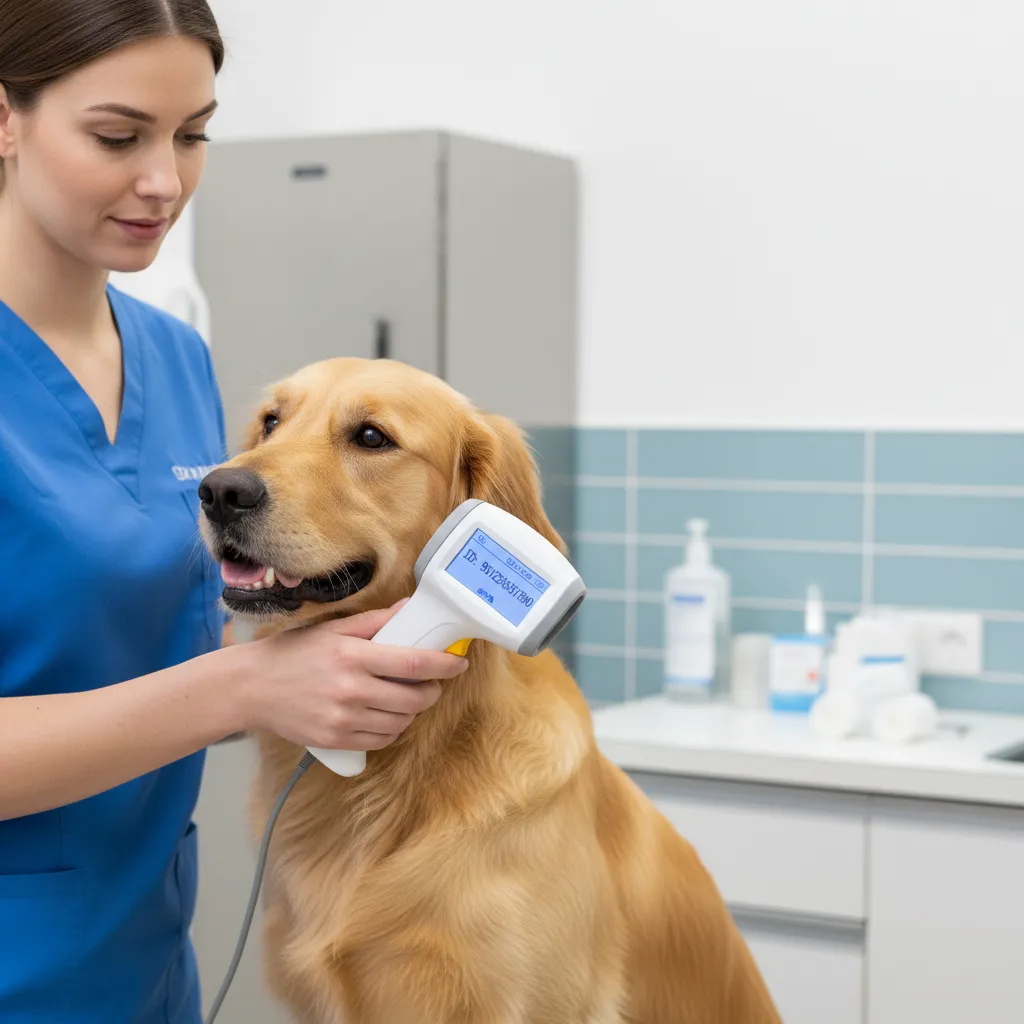
A microchip is a transponder roughly the size of a grain of rice. It is enclosed in bio-compatible glass to prevent allergic reactions. The chip is injected under the loose skin between the shoulder blades using a sterile needle. The device is “passive,” meaning it does not contain a battery or transmit a GPS signal. Instead, it remains dormant until activated by a scanner, which emits a radio wave that energizes the chip to transmit a unique 15-digit number.
When to Microchip
Puppies and kittens can be microchipped as early as 8 weeks old. In New Zealand, breeders often arrange for microchipping before the animal goes to its new home. If you are adopting from a reputable rescue organization, the animal will almost certainly be microchipped prior to adoption. For dogs, the law requires the chip to be implanted before they are registered at three months of age.
How to Register Your Pet in New Zealand
Ensuring your pet is legally compliant and safe involves specific administrative steps. Here is the definitive workflow for New Zealand pet owners.
Step 1: Implantation
Visit your local veterinarian, SPCA, or a specialized microchipping event. The professional will implant the chip and provide you with a certificate containing the unique barcode and number.
Step 2: Council Registration (Dogs Only)
Take your microchip certificate to your local council office or complete the registration online. You will need to pay the annual registration fee. The council will issue a plastic tag that must be attached to your dog’s collar. This tag changes color every year to indicate current registration.
Step 3: NZCAR Registration (All Animals)
Usually, your vet will register the microchip on the NZCAR at the time of implantation for a one-off fee (typically between $15 and $30). However, you should always verify this. You will receive a confirmation, often via email or post. If you are unsure if your pet is registered, you can check the chip number on the NZCAR website.

Requirements for Cats and Other Companion Animals
While the pet microchip NZ law focuses heavily on dogs, the conversation is shifting regarding cats. Currently, there is no national legislation mandating microchipping for cats. However, the Dog Control Act 1996 does not cover felines, meaning cat management is largely left to local bylaws.
Local Council Bylaws
Some progressive councils in New Zealand have introduced bylaws requiring cats to be microchipped and registered, specifically in ecologically sensitive areas to manage predation on native wildlife. For example, Wellington City Council requires all cats over 12 weeks old to be microchipped and registered on the NZCAR. It is vital to check your specific local council bylaws to ensure you are not inadvertently breaking local rules.
The Rescue Standard
Virtually all animal welfare groups in NZ, including the SPCA, SAFE, and private rescues, enforce a mandatory microchip policy for all adopted animals. This industry standard helps mitigate the high number of stray cats in New Zealand and facilitates the rapid return of lost pets.
Updating Microchip Details and Records
A microchip is useless if the data linked to it is obsolete. One of the biggest tragedies in animal rescue is scanning a lost pet, finding a chip, and discovering the phone number has been disconnected for three years.
When to Update
You must update your pet’s details on both the Council database and the NZCAR whenever:
- You move house (even if it’s just down the street).
- You change your phone number or email address.
- Transfer of ownership occurs (rehoming the pet).
- The pet passes away (to keep records clean).
How to Update
For the NZCAR, updates can be done online via their “Guardian” portal. There is no fee for updating your contact details, though a small fee may apply for transferring ownership. For council registration, you must contact your local territorial authority directly. If you move from one city to another (e.g., from Christchurch to Auckland), you must register your dog with the new council, though you generally won’t have to pay the full fee again until the next registration year.
Benefits of Microchipping Beyond Compliance
Beyond adhering to pet microchip NZ law, the practical benefits of this technology are immense. It provides a layer of security that collars and tags simply cannot match.
Disaster Recovery
New Zealand is prone to natural disasters. During the Christchurch earthquakes and the Cyclone Gabrielle floods, thousands of pets were displaced. Animals with microchips registered on the NZCAR were reunited with their owners at a significantly higher rate than those without. In times of chaos, a microchip is often the only link between a terrified animal and their family.
Proof of Ownership
In disputes over ownership—such as in cases of theft or relationship breakups—the person registered on the microchip database is legally presumed to be the owner (or at least the primary guardian). A microchip provides definitive proof of identity that is difficult to contest in a legal setting.

Frequently Asked Questions
Is it illegal not to microchip your dog in NZ?
Yes, for most dogs. Under the Dog Control Act 1996, all dogs registered for the first time after 1 July 2006 must be microchipped. Failure to comply can result in an infringement fee. Working farm dogs are the primary exemption.
How much does it cost to microchip a dog in NZ?
The cost of microchipping in New Zealand typically ranges from $40 to $80 depending on the veterinary clinic. This usually includes the implantation and the registration on the NZCAR database. Some councils and charities offer discounted microchipping events.
Do cats have to be microchipped in NZ?
There is no national law mandating cat microchipping in NZ yet. However, some local councils (like Wellington) have bylaws requiring it. It is highly recommended by the SPCA and veterinarians for all cats to ensure they can be returned if lost.
How do I check my pet’s microchip details NZ?
You can check your pet’s details by visiting the New Zealand Companion Animal Register (NZCAR) website. You will need your pet’s microchip number. If you don’t have the number, a vet can scan your pet to retrieve it.
Can I track my dog with a microchip?
No. Standard pet microchips do not have GPS capabilities. They are passive Radio Frequency Identification (RFID) devices that only transmit a number when scanned by a microchip scanner. They cannot be used to track your pet’s location in real-time.
What happens if I don’t register my dog NZ?
If you fail to register your dog with your local council, you can be issued a significant fine (infringement notice). Unregistered dogs are also at higher risk of being seized or impounded by animal control officers.