The Animal Welfare Act 1999 is New Zealand’s primary legislation governing the treatment of animals. It establishes a legal “duty of care” for owners, requiring them to meet an animal’s physical, health, and behavioural needs based on the “Five Freedoms,” while defining severe penalties for neglect, cruelty, and failure to provide adequate provision.
Overview of the Animal Welfare Act 1999
New Zealand has long been regarded as a world leader in agricultural and domestic animal standards, and the cornerstone of this reputation is the Animal Welfare Act 1999. Unlike previous legislation that focused primarily on punishing cruelty after it occurred, this Act represented a paradigm shift towards a proactive “duty of care.”
The primary objective of this animal welfare act NZ summary is to demystify the legal jargon and explain exactly what is expected of anyone in charge of an animal. Whether you are a farmer, a researcher, or a pet owner, the law applies to you. The Act covers all animals, including mammals, birds, reptiles, amphibians, fish, and even certain invertebrates like octopuses, crabs, and lobsters.
At its heart, the legislation moves beyond the simple absence of cruelty. It mandates that anyone in charge of an animal must take all reasonable steps to ensure that the animal’s physical, health, and behavioural needs are met. This places the onus on the human to provide a positive environment, rather than just avoiding negative interactions.
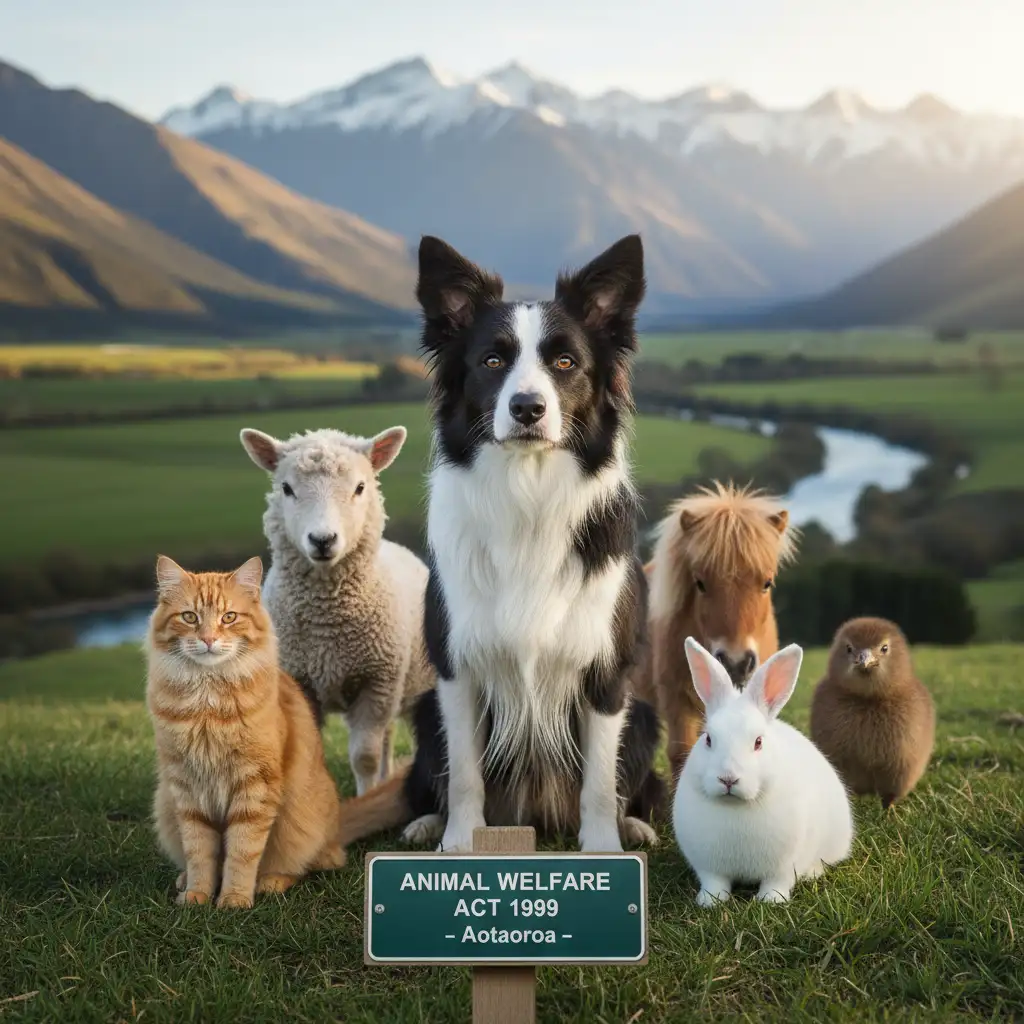
The Five Freedoms: The Core Philosophy
To understand the obligations laid out in the Act, one must understand the concept of the “Five Freedoms.” While the Act itself lists specific physical, health, and behavioural needs, these are internationally recognized as being derived from the Five Freedoms framework. These principles serve as a checklist for basic animal well-being.
- Freedom from Hunger and Thirst: Animals must have ready access to fresh water and a diet to maintain full health and vigour.
- Freedom from Discomfort: This requires providing an appropriate environment, including shelter and a comfortable resting area.
- Freedom from Pain, Injury, or Disease: Prevention is the priority, followed by rapid diagnosis and treatment if issues arise.
- Freedom to Express Normal Behaviour: The animal must have sufficient space, proper facilities, and company of the animal’s own kind (where appropriate).
- Freedom from Fear and Distress: Ensuring conditions and treatment which avoid mental suffering.
Under the Act, “physical, health, and behavioural needs” are legally defined to correspond with these freedoms. If you own a dog that is kept in a small crate 23 hours a day, you are likely failing to meet its need to express normal behaviour, even if it is well-fed. This holistic approach ensures that mental health is considered alongside physical health.
Your Legal Duties as a Pet Owner
For the average Kiwi pet owner, the Act translates into specific, daily responsibilities. Ignorance of the law is not a defence. When you acquire an animal, you assume the legal role of the “person in charge,” regardless of whether you are the registered owner or simply looking after the pet temporarily.
Provision of Essentials
You must provide proper food and water. This seems obvious, but the law requires the food to be of sufficient quality and quantity to maintain the animal in good health. Water must be clean and accessible at all times.
Shelter and Environment
You are legally obligated to provide shelter that is clean, dry, and provides protection from extreme heat or cold. For a dog, this might mean a kennel that is raised off the ground and draft-free. For a horse, it might mean a cover or a line of trees for wind protection.
Veterinary Care
If your animal is sick or injured, you cannot simply “wait and see” indefinitely. You have a duty to alleviate pain and distress. This means seeking veterinary attention or, in severe cases where recovery is impossible, humanely euthanizing the animal to end suffering.
Understanding Codes of Welfare
The Animal Welfare Act is the “parent” legislation, but it is supported by specific “Codes of Welfare.” These codes provide detailed minimum standards and recommended best practices for different types of animals (e.g., dogs, cats, dairy cattle, layer hens).
While failing to meet a recommendation in a Code of Welfare is not a direct offence, failing to meet a minimum standard can be used as evidence to support a prosecution under the Animal Welfare Act. For example, the Code of Welfare for Dogs specifies that a dog’s collar must not be so tight that it causes skin abrasion or restricts breathing. If a dog is found with an embedded collar, the owner can be prosecuted under the Act, with the Code cited as the standard that was breached.
It is vital for pet owners to read the specific Code of Welfare relevant to their animal to ensure they are compliant with the nuances of the law.
Prohibited Activities and Penalties
The Act outlines two main categories of offences: strict liability offences (regulatory breaches) and offences requiring proof of intent (cruelty). The penalties in New Zealand are significant and reflect the society’s intolerance for animal abuse.
Willful Ill-Treatment
This is the most serious class of offence. It involves intentional acts that cause pain or distress, such as beating an animal, organizing animal fighting, or deliberate starvation.
Penalty: Individuals can face imprisonment for up to 5 years or a fine not exceeding $100,000. Corporations can be fined up to $500,000.
Reckless Ill-Treatment
This covers situations where a person did not necessarily intend to cause harm but acted with recklessness resulting in suffering. An example might be leaving a dog in a hot car, resulting in heatstroke.
Penalty: Imprisonment for up to 3 years or a fine not exceeding $75,000.
Failure to Comply with Inspectors
Animal Welfare Inspectors (from the SPCA or MPI) have specific powers. Obstructing an inspector or failing to comply with an enforcement order is a criminal offence.
Surgical Procedures
Significant restrictions exist regarding surgical procedures. For instance, tail docking of dogs is prohibited unless performed by a veterinarian for therapeutic reasons. Ear cropping is entirely banned. Performing these procedures as a layperson is a direct violation of the Act.

The Animal Welfare Amendment Act 2015
In 2015, the Act underwent a major overhaul to modernize New Zealand’s approach to animal rights. This amendment was groundbreaking for several reasons, most notably the legal recognition of animal sentience.
Recognition of Sentience
New Zealand became one of the first countries to explicitly recognize animals as “sentient” in its primary legislation. This means the law acknowledges that animals can feel pain, distress, and positive emotions. This shift reinforces the ethical obligation to attend to their mental experiences, not just their physical utility.
Enforceable Regulations
Prior to 2015, the Codes of Welfare were guidelines that could be used as evidence but were not directly enforceable as instant fines. The Amendment allowed for the creation of regulations that sit alongside the Act. Breaching these regulations can result in immediate infringement fees (instant fines) without a lengthy court process. This gave inspectors more teeth to deal with low-to-medium level offending, such as failing to provide shelter or transporting dogs on the back of utes without securing them.
Enforcement: Who Polices the Act?
New Zealand has a unique dual-agency approach to enforcing the Animal Welfare Act. The responsibility is shared primarily between the Ministry for Primary Industries (MPI) and the Society for the Prevention of Cruelty to Animals (SPCA).
The Role of the SPCA
The SPCA is an approved organization under the Act. They are the primary responders for complaints regarding companion animals (pets) and hobby farm animals. SPCA Inspectors are appointed under the Act and have the power to enter property, inspect animals, issue compliance notices, and seize animals in distress. It is important to note that the SPCA is a charity, yet it carries out this statutory enforcement role.
The Role of MPI
MPI focuses largely on commercial livestock, farm animals, and animals used in research, testing, and teaching. They monitor compliance in the agricultural sector, transport, and slaughterhouses. For more information on their specific compliance roles, you can visit the official legislation page.
Compliance Notices
Inspectors often use “Compliance Notices” before seizing animals. These are legal instructions requiring an owner to fix a problem (e.g., “Provide a weatherproof kennel within 48 hours”). Failure to comply with the notice is an offence in itself.
The Future of Animal Welfare in NZ
The landscape of animal welfare is constantly evolving. As public perception shifts regarding what is acceptable, the law tends to follow. Currently, there is significant focus on:
- Greyhound Racing: Intense scrutiny is being placed on the welfare of racing dogs, with calls for stricter regulation or bans.
- Intensive Winter Grazing: New regulations are being rolled out to protect livestock from mud and inadequate shelter during winter.
- Live Export: New Zealand has moved to ban the export of livestock by sea, a decision driven largely by welfare concerns during transport.
For pet rescuers and owners, staying informed about these changes is vital. The definition of “adequate care” is rising, and the Animal Welfare Act remains the shield that protects those who cannot speak for themselves.
Frequently Asked Questions
Can you go to jail for animal cruelty in NZ?
Yes, under the Animal Welfare Act 1999, individuals convicted of willful ill-treatment of an animal can face imprisonment for up to 5 years. For reckless ill-treatment, the maximum prison term is 3 years.
What are the 5 freedoms in NZ?
The 5 Freedoms are: 1. Freedom from hunger and thirst; 2. Freedom from discomfort; 3. Freedom from pain, injury, or disease; 4. Freedom to express normal behaviour; and 5. Freedom from fear and distress.
Is it illegal to hit your dog in NZ?
Yes, if the action causes pain or distress, it constitutes ill-treatment. The law prohibits any act that causes unreasonable or unnecessary pain or distress to an animal.
Who enforces the Animal Welfare Act?
The Act is enforced primarily by the SPCA (for companion animals) and the Ministry for Primary Industries (MPI) (for production/farm animals). The NZ Police also have enforcement powers.
What is the penalty for animal neglect NZ?
Penalties vary by severity. Failure to meet the physical, health, and behavioural needs of an animal can result in fines up to $50,000 for an individual or imprisonment up to 12 months.
Are animals considered sentient in NZ?
Yes, the Animal Welfare Amendment Act 2015 explicitly recognizes animals as sentient. This means the law acknowledges their capacity to feel pain, distress, and positive emotions.