
Pet scams in New Zealand: 100 tricks to spot before you pay
Most pet scams ask for money before you meet the animal, as a deposit, a courier fee or a “vet” bill. If you can’t meet the pet in person, or at least on a live video call, don’t pay.

Quick check
The 8 red flags
Almost every one of the 100 scams below uses at least one of these.
- 1A deposit before you meetAny request to pay before you’ve seen the pet in person. This is the big one.
- 2No live video callExcuses about cameras, signal or “they’re asleep”. Genuine owners are happy to show you.
- 3A price that’s too goodPurebreds for a few hundred dollars, or “free” pets that suddenly need fees.
- 4Rush and pressure“Other people are interested, pay today to hold her.”
- 5Odd ways to payGift cards, crypto, money apps or overseas bank accounts.
- 6Courier or “quarantine” feesSurprise transport, crate, insurance or vet fees after you’ve paid.
- 7Too far to visitThe pet is always somewhere remote, or the seller is “overseas for work”.
- 8Papers that don’t matchPhotos found elsewhere online, or registration and microchip numbers that don’t check out.
The full list
All 100 pet scams, and how to avoid each one
#1Phantom Puppy Ad
How it works
Scammers steal high-quality images from professional breeder websites in the US or UK and list them on Facebook Marketplace or Trade Me. They intentionally choose remote NZ locations like the Far North or deep Southland to make physical viewing difficult for most buyers. They often use 'Google-translated' English that feels slightly off, though many have now adopted local slang to appear authentic.
The risk
You pay a substantial 'holding deposit' (often $500–$1000) for a dog that does not exist. Once the payment is made, the scammer either demands more money for 'processing' or completely disappears, deleting their profile.
How to avoid it
Insist on a live video call where the seller shows the puppy moving and interacting with them. Ask them to say your name or hold up a specific object. If they refuse or have technical excuses, walk away.
#2Forged Pedigree Papers
How it works
The scammer creates highly convincing digital copies of Dogs NZ (New Zealand Kennel Club) pedigree certificates using graphic design software. They often use legitimate registration numbers from deceased dogs or other litters to pass a basic check if the buyer doesn't look too closely at birth dates or parentage.
The risk
You pay a premium price (often $3,000+) for what you believe is a registered purebred with tracked lineage. In reality, the dog is a crossbreed or from an unmonitored puppy mill with potential genetic health issues.
How to avoid it
Verify the registration number directly with Dogs NZ via their official online registry. Check that the microchip number on the health certificate matches the one on the pedigree papers exactly.
#3Rural Bio-Security Trap
How it works
Taking advantage of New Zealand's genuine concerns about agricultural diseases, scammers claim their 'farm' is under strict quarantine due to Mycoplasma Bovis or a fictitious canine virus outbreak. This serves as a perfect excuse for why you cannot visit the property or see the mother dog in person.
The risk
This social engineering tactic is designed to lower your guard and force a 'sight unseen' purchase. You lose the ability to check the living conditions of the animal and verify its existence.
How to avoid it
A genuine breeder will offer alternative proof, such as a video tour of the facility or meeting at a reputable local veterinary clinic where the staff can vouch for the animal's presence.
#4Google Lens Mirroring
How it works
Scammers take images from legitimate, high-end overseas breeders and use them in NZ-based ads. They often flip the image horizontally (mirroring) to bypass basic automated reverse-image search tools. They may claim the puppy is currently in a different town (e.g., Taupo) but was 'imported' from these famous lines.
The risk
You are looking at a dog that is thousands of miles away. The scammer is simply using 'puppy-porn' (cute photos) to trigger an emotional response and a fast deposit.
How to avoid it
Use 'Google Lens' or 'TinEye' to search for the photo. If the image appears on a Russian, American, or European site from three years ago, the ad is 100% fraudulent.
#5The 'Too Low' Price Bait
How it works
Scammers list highly desirable breeds like French Bulldogs, Miniature Dachshunds, or Golden Retrievers for 'adoption' prices of $500–$800. They justify this by claiming they 'just want a good home' or are 'leaving the country'.
The risk
The low price is designed to cast a wide net and get as many people as possible to send small deposits quickly. In the pet world, 'too good to be true' is a definitive indicator of a scam.
How to avoid it
Research the current market rate on Trade Me or via breed clubs. If the price is more than 50% below the standard rate, it is a scam meant to harvest deposits from multiple victims simultaneously.
#6Stolen Identity Profile
How it works
Criminals hack or buy old, legitimate New Zealand Facebook accounts that have a long history of local posts, friends, and activity. They use these 'trusted' profiles to post in community groups like 'Auckland Grapevine' or 'Christchurch Buy/Sell', making them look like a long-standing member of the community.
The risk
You trust the seller because their profile looks real and local. You send money to a New Zealand bank account (often belonging to a 'money mule' who has also been scammed), and the trail goes cold.
How to avoid it
Send a private message asking a very specific question about a local landmark or recent event in that town. If the 'local' can't answer where the best coffee is in their own small town, they are a scammer.
#7Fake Vet Clearance PDF
How it works
The scammer provides a professional-looking 'Certificate of Health' or 'Vaccination Record'. They use the name and logo of a real NZ vet clinic (found on Google) but forge the signature and the details. They often include a fake QR code that leads to a spoofed 'verification' page they control.
The risk
You believe the animal has been screened for congenital defects or infectious diseases. In reality, the pet may be severely ill, unvaccinated, or non-existent.
How to avoid it
Manually look up the phone number for the vet clinic listed. Do not use the number on the PDF. Call the clinic and ask them to verify if they have seen a puppy with that specific microchip number recently.
#8Priority Waitlist Fee
How it works
Scammers claim to be popular breeders with a 2-year waitlist. They offer you a 'chance' to skip the queue or secure a spot for an upcoming litter for a 'non-refundable admin fee' of $200. They do this across hundreds of victims.
The risk
The litter never arrives because the 'breeder' isn't real. Individually, $200 feels like a small enough loss that many victims don't report it to the police, but the scammer nets tens of thousands.
How to avoid it
Genuine breeders rarely charge to be on a contact list. Deposits should only be paid once a puppy is born, identified, and you have seen proof of its existence.
#9Manufactured Urgency
How it works
Once you show interest, the seller tells you that 'another couple from Wellington is literally driving over right now with cash' but they'd rather sell to you if you can 'transfer the deposit in the next 10 minutes'.
The risk
This overrides your logical thinking process. You rush to the banking app to 'win' the puppy, only to find you've sent money to a burner account.
How to avoid it
Never let urgency dictate a transaction involving an animal. A reputable seller wants to find the best home, not the fastest payment.
#10PayPal 'Friend' Request
How it works
The seller agrees to use PayPal but insists you use the 'Friends and Family' option. They claim this is to 'avoid fees' or 'speed up the process'.
The risk
Payments sent via 'Friends and Family' are classified as gifts and are not covered by PayPal's Purchase Protection. You have zero recourse for a refund when the puppy doesn't arrive.
How to avoid it
Always use 'Goods and Services'. If the seller refuses, offer to pay the 3% fee yourself. If they still refuse, they are trying to strip away your consumer rights.
#11The 'Only One Left' Pressure
How it works
Scammers use multiple fake Facebook accounts to comment on their own posts. One account might say 'I just got mine, he's amazing!', while another says 'Is the last one still available?'. This creates a false environment of high demand and social proof.
The risk
You feel FOMO (Fear Of Missing Out) and skip the necessary background checks to secure the 'last' pup.
How to avoid it
Click on the profiles of those commenting. If they have no photos, no friends, or were created yesterday, the whole thread is a set-up.
#12Hidden Freight Costs
How it works
The buyer agrees to a price (e.g., $1500). After the money is sent, the 'breeder' claims the airline has suddenly increased fuel surcharges or that a 'special thermal crate' is required for another $600.
The risk
This is 'sunk cost' extortion. Since you already paid $1500, you feel compelled to pay the extra $600 rather than lose the initial investment.
How to avoid it
Insist on an 'all-inclusive' price in writing. Legitimate pet couriers like PetBus or Air NZ provide fixed quotes that do not change mid-route.
#13Generic 'Purebred' Stock Photos
How it works
Scammers use the top result from Google Images for 'Pomeranian Puppy'. They often don't even bother to remove watermarks, or they crop them out poorly.
The risk
The ad is a complete fabrication used to lure in dozens of people for a 'quick' $100 deposit.
How to avoid it
Right-click the image and select 'Search image with Google'. If the puppy appears on 50 different 'Wallpaper' websites, it's not a real ad.
#14The Reluctant Video Call
How it works
The seller is extremely friendly via text but always has an excuse for not calling: 'I'm at work', 'My camera is broken', 'The internet is bad on the farm'.
The risk
They are hiding the fact that they are likely in a different country and do not have the dog.
How to avoid it
A breeder who is too busy to show you the puppy is too busy to have your business. No video = no sale.
#15Inland Revenue 'Tax' Scam
How it works
After paying for the dog, you receive a fake email looking like it's from the IRD or a 'Courier Tax Department' claiming you must pay an 'Animal Luxury Tax' or 'Transfer Duty' before the pet is released.
The risk
You lose even more money to a fake government fee. The IRD does not operate this way.
How to avoid it
New Zealand has GST, which is included in the sale price. There is no such thing as a 'Luxury Pet Tax' in Aotearoa.
#16The Weekend Pickup Delay
How it works
The seller agrees to let you visit on Saturday. On Friday night, they message saying their child is in the hospital or their car broke down. They ask for a 'holding deposit' to keep the pup for you until next weekend.
The risk
The 'emergency' is a psychological trigger to make you feel bad for them and more likely to send money without thinking.
How to avoid it
Never pay a deposit because of the seller's personal drama. If they can't meet, wait until they can before paying anything.
#17Fake Kennel Club Site
How it works
Scammers create a professional website with a name like 'NZPurebredRegistry.org'. They list themselves as 'Gold Tier Verified'.
The risk
They use false authority to make you think they are vetted by a governing body.
How to avoid it
Check the 'Created Date' of the website on WHOIS. Most scam sites are less than 3 months old.
#18The 'Gifted' Puppy Trap
How it works
The ad says 'Free to a good home' because they are moving. When you message, they say the puppy is yours, but you just need to pay $300 for the 'completed vaccinations'.
The risk
This is just a sale masked as a gift to lower your suspicion of a scam.
How to avoid it
If an animal is 'free', there should be no money exchanged. Any fee is a purchase.
#19Microchip Switch
How it works
The breeder shows you a healthy, vibrant puppy. When they ship the dog, they send a different, smaller, or sickly one. They claim they 'sent the wrong one by mistake' and ask for more money to swap them back.
The risk
You are stuck with a sick animal and a scammer who has already moved your money.
How to avoid it
Always verify the microchip number matches the paperwork the second the dog arrives.
#20The 'Home Office' Visit
How it works
The scammer gives you a real address of a nice house in a suburb. You drive 2 hours to get there, but when you arrive, the homeowners have no idea what you're talking about.
The risk
Wasted time and fuel, but usually, this is used to get you to pay a 'fuel deposit' before you leave your house.
How to avoid it
Call the seller's mobile from the driveway. If they don't answer or their phone goes to a foreign voicemail, it was a scam.
#21Genetic Testing Lies
How it works
Claiming parents are 'DNA Clear' for common issues like Hip Dysplasia or Elbow scores but refusing to show the actual lab reports from Orivet or Massey University.
The risk
You buy a dog that develops crippling, expensive health issues within its first year.
How to avoid it
Ask for the original PDF lab results. A 'clear' parent doesn't mean a clear pup if the other parent wasn't tested.
#22Multiple Breed Red Flag
How it works
A single 'hobby' breeder having litters of Frenchies, Labradors, and Poodles all at once. This is impossible for a small ethical breeder.
The risk
You are dealing with either a puppy mill or a scam clearinghouse that doesn't actually have any of the dogs.
How to avoid it
Ethical breeders usually focus on one or two breeds max. Avoid 'one-stop-shop' pet sellers.
#23The 'Student Breeder' Story
How it works
The seller claims to be a vet student at Massey who bred their family dog to pay for tuition. It's a very 'NZ-flavored' sympathy story.
The risk
The story is designed to make you feel like you're helping a 'good kiwi kid', making you less likely to ask for formal papers.
How to avoid it
Keep the transaction professional. If they are a student, they should still have vet records and microchip proof.
#24Non-English Syntax in NZ Ads
How it works
Using phrases like 'Small rehoming fee' or 'UPTD on shots' (Americanisms) in a local Taupo or Hamilton group.
The risk
The seller is likely in a different time zone and using a script.
How to avoid it
Look for 'Kiwi-isms'. Scammers rarely know about 'vets', 'worming', or local geography specifics.
#25The 'Retiring Breeder' Liquidation
How it works
Impersonating a well-known, high-end NZ kennel and claiming they are retiring and selling their last $5000 pups for $1000.
The risk
Identity theft used to steal your money and ruin the real breeder's reputation.
How to avoid it
Call the real kennel's number from the yellow pages or their official website, not the Facebook ad.
#26Vaccination Book Fraud
How it works
Providing a handwritten book with no vet stamps. They might even use a 'Toy' stamp or a fake one made at a craft store.
The risk
The dog has zero immunity to Parvo or Distemper. Many 'scam' pups die within days of arrival.
How to avoid it
A real NZ vet book will have the clinic's printed stamp, the date, and a sticker from the vaccine vial showing the batch number.
#27The 'Husband's Secret' Sale
How it works
A 'wife' listing her husband's expensive hunting dog for $200 because she 'wants it gone'.
The risk
Either a scam or the sale of stolen property. Both lead to you losing the dog when the real owner finds out.
How to avoid it
Never buy a working or high-value dog from someone who doesn't seem to know the dog's history or commands.
#28Trade Me 'Ghost' Listing
How it works
Scammers copy a real, high-priced Trade Me ad and list it on FB Marketplace for a fraction of the price to catch bargain hunters.
The risk
You are communicating with a middle-man scammer who has no connection to the real dog.
How to avoid it
Search Trade Me for the same breed. If you see the exact same photo for a different price, the cheaper one is a scam.
#29BitCoin Payment Only
How it works
Insisting on Crypto or Bitcoin for 'privacy' or claiming their bank account is 'being audited'.
The risk
Once Bitcoin is sent, it is physically impossible to get back. Scammers love crypto because there is no 'chargeback'.
How to avoid it
No legitimate NZ business or breeder requires payment in Crypto. Use standard bank transfers (which can at least be reported).
#30The 'Farm Run-off' Puppy
How it works
Claiming a litter was accidental 'working dog' cross-breed but asking for $2500 because they 'look like' purebreds.
The risk
Massively overpaying for a dog with no health screening or breed certainty.
How to avoid it
Real farm-bred working crosses in NZ are usually sold for very little or given to good homes. High prices for 'accidents' are a scam.
#31Afterpay/Laybuy Phishing
How it works
Sending you a link that looks like an Afterpay portal to 'help you pay over time'.
The risk
The link is a fake site designed to steal your login credentials and credit card details.
How to avoid it
Only use finance tools through their official apps. Never log in via a link sent in a chat.
#32The 'Pick of the Litter' Upcharge
How it works
Charging an extra $500 for the 'first pick' pup, then telling everyone who calls they are the first pick.
The risk
You pay a premium for nothing. They will just give you whichever pup is left.
How to avoid it
Avoid breeders who treat puppy selection like a tiered pricing auction.
#33Teacup Breed Lies
How it works
Promising a 'Micro Teacup' dog. These are often just the runts of the litter or dogs bred with dwarfism.
The risk
Significant lifelong health issues and a dog that may not live past 3 years.
How to avoid it
Research official breed standards. 'Teacup' is a red flag for unethical breeding or scams.
#34The 'Overseas Show Dog' Deposit
How it works
Claiming the puppy's parents are currently at a show in Australia and you must pay to secure the 'champion' bloodline before they return.
The risk
Using a fake 'high status' story to justify why the dogs aren't available for viewing.
How to avoid it
Show dogs have public records. Ask for their registered show names and check them against the Australian or NZ Kennel Club results.
#35Fake Facebook Reviews
How it works
A seller page with 50+ 5-star reviews, all posted within the same 48-hour window.
The risk
They have bought a 'review pack' to look established.
How to avoid it
Click on the names of the reviewers. If they all live in another country or have 'Private' profiles with no friends, the reviews are fake.
#36The 'Auckland Kennel Club' Scam
How it works
Claiming they are 'Auckland Kennel Club Verified'. Note: The actual body is Dogs New Zealand.
The risk
Creating a fake local authority to sound more 'Kiwi'.
How to avoid it
If they don't mention Dogs NZ (formerly NZKC), they aren't registered.
#37Puppy 'Leasing' Scam
How it works
Offering a puppy for $0 down on a 'lease' program. This is common in the US but is starting to appear in shady NZ circles.
The risk
You end up paying 3x the value of the dog in interest, and you don't actually own the dog until the final payment.
How to avoid it
Never 'lease' a living being. If you can't afford the dog, wait until you can.
#38The 'Influencer' Puppy Gift
How it works
Messaging you saying you've been 'selected' to receive a free puppy used in a photo shoot, you just need to pay shipping.
The risk
Traditional 'Advance Fee' fraud. There is no puppy.
How to avoid it
No one gives away $3000 puppies to strangers. Delete and block.
#39Google Map Snippet Fraud
How it works
Sending a screenshot of a Google Maps pin as 'proof' of where they live.
The risk
Anyone can drop a pin anywhere on a map and take a screenshot.
How to avoid it
Ask for a photo of the puppy next to a physical newspaper from that town or a local landmark.
#40The 'Moving to North Island' Sale
How it works
Claiming they are currently in Dunedin but moving to Auckland next week, so you can't see the dog 'yet' but must pay to hold it.
The risk
Using geographic distance to prevent the one thing they fear: you showing up in person.
How to avoid it
Tell them you have a friend in Dunedin who can come over right now with cash. They will block you immediately.
#41Airport Insurance Bond
How it works
A fake courier company (posing as a real one) emails you saying the puppy is at Auckland Airport but requires a $2000 'Refundable Life Insurance Bond' before it can board the plane. They claim this is a 'new MPI regulation'.
The risk
You send the money, and the scammer then claims there was a 'processing error' and asks for another $1000. You never get the money back, and there is no dog.
How to avoid it
Customs and MPI do not charge individual bonds for domestic pet travel. Check with Air NZ Cargo directly using their official number.
#42Fake Courier Tracking
How it works
The scammer sends a link to a professional-looking website like 'AotearoaPetFreight.com'. It shows a tracking number for your pet that updates in 'real-time' from 'Pickup' to 'In Transit'.
The risk
The website is a shell built on a template. It exists solely to make you believe the pet is on its way so you'll pay more 'incidental' fees.
How to avoid it
Check the URL on 'Who.is'. If the site was created 10 days ago, it's a scam. Use only established NZ companies like PetBus, Air Pets, or JetPets.
#43Oxygenated Crate Upsell
How it works
A 'courier' calls you claiming that due to the high altitude of the flight, the airline now requires a 'special pressurized oxygen crate' which costs an extra $750.
The risk
Paying for imaginary equipment. Pets fly in the standard pressurized and temperature-controlled cargo hold of commercial planes.
How to avoid it
Ask for the airline's policy on crates. They only require IATA-approved plastic crates, which do not have 'oxygen sensors'.
#44Driver 'Out of Fuel' Scam
How it works
A person claiming to be the van driver calls you saying they are in Bulls or Tirau but their company card is blocked and they need $50 for diesel to reach you.
The risk
Exploiting your desire to get your pet home quickly. It's a small-scale theft that often works because it's a 'reasonable' amount.
How to avoid it
Legitimate transport companies handle all driver expenses. Never pay a driver directly via bank transfer or mobile wallet.
#45COVID/Bio Cleaning Fee
How it works
Claiming that the crate must undergo a 'deep chemical sterilization' due to a recent local parvovirus or imaginary health 'red zone'.
The risk
Paying for a standard service that is either non-existent or already included in the initial quote.
How to avoid it
Ask for a copy of the 'Bio-security order'. They won't be able to provide one because it doesn't exist.
#46The 'Pet Passport' Fee
How it works
Telling you that a puppy flying from Auckland to Christchurch needs a 'Pet Passport' for $120.
The risk
Paying for unnecessary documentation. Passports are only for international travel.
How to avoid it
Domestic travel within NZ only requires a crate and a booking reference.
#47Emergency Vet Stopover
How it works
A scammer calls saying the pet got 'motion sickness' and had to be taken to a vet in a mid-way town, and you must pay the $300 bill before they continue.
The risk
High-stress emotional manipulation to get you to pay without checking.
How to avoid it
Ask for the vet clinic's name. Call that clinic's official landline. If they don't have the dog, it's a scam.
#48The 'Double Crate' Requirement
How it works
Claiming the pet is 'too aggressive' or 'stressed' and must be moved into a double-walled crate mid-journey.
The risk
Another extortion tactic used while the 'pet' is supposedly already in transit.
How to avoid it
Booking agents determine crate size at the start. It doesn't change halfway through.
#49Customs 'Duty' on Pups
How it works
Posing as 'Customs NZ' and demanding a 15% 'transfer duty' for a puppy bought 'out of region'.
The risk
Fake tax collection.
How to avoid it
Customs only deals with international borders. There is no tax for moving pets between regions in NZ.
#50The 'Pet Life' Insurance
How it works
Insisting you pay $500 for a 24-hour insurance policy required by the transport company.
The risk
Fake insurance fees.
How to avoid it
Transport companies have their own liability insurance. Any extra you want is your choice, not a 'requirement'.
#51Wrong Airport Redirection
How it works
Saying the pet was mistakenly flown to Nelson instead of Napier and needs a $200 're-routing' fee.
The risk
Blaming a logistics error on the buyer to extract more cash.
How to avoid it
Check your original booking confirmation. If they made a mistake, they pay for it.
#52The 'Saturday Delivery' Surcharge
How it works
A last-minute demand for $100 for 'weekend labor' on the morning you expect the pet.
The risk
Holding the pet 'hostage' until a small fee is paid.
How to avoid it
All surcharges must be in the initial quote. Do not pay extra on the day.
#53Fake Air NZ Cargo Email
How it works
Receiving an email from 'airnzcargo.ops@gmail.com' (note the Gmail address).
The risk
Impersonation of a trusted brand.
How to avoid it
Official Air NZ mail comes from @airnz.co.nz. Any Gmail/Outlook address is a scam.
#54The 'Wait-and-See' Deposit
How it works
Asking for a transport deposit before they have even confirmed a flight is available.
The risk
Taking the money and then saying 'no flights available, deposit forfeited'.
How to avoid it
Never pay for transport until you have a flight number and date confirmed.
#55Pet 'Nanny' Service Fraud
How it works
Charging $400 for a 'nanny' to sit with the pet on the plane.
The risk
Most domestic flights in NZ don't even allow this for standard cargo pets.
How to avoid it
Ask for the nanny's employee ID and seat number.
#56The 'Heat Wave' Holding Fee
How it works
Claiming it's too hot for the pet to fly and charging $50/hour for 'climate-controlled storage'.
The risk
Imaginary storage fees.
How to avoid it
Airlines have their own temperature-controlled areas included in the flight cost.
#57Incomplete Microchip Admin
How it works
Claiming the pet's microchip is 'not registered for flight' and needs an $80 'admin update'.
The risk
Fake tech fees.
How to avoid it
A chip is just an ID. It doesn't need 'flight registration'.
#58The 'Sedation' Fee
How it works
Courier claiming they had to call a vet to sedate the pet and need $150 now.
The risk
Unauthorized medical intervention fraud.
How to avoid it
Couriers are not allowed to sedate animals without your prior consent and a vet's presence.
#59Multi-Pet Discount Lie
How it works
Promising a discount for 2 pups then demanding full price once they are 'halfway'.
The risk
Bait and switch pricing.
How to avoid it
Get the total for all pets in one single invoice before shipping.
#60The 'Driver Identity' Theft
How it works
A scammer monitors 'PetBus' Facebook comments and messages people pretending to be the driver.
The risk
You pay the 'driver' but the company never sees the money.
How to avoid it
Only pay via the official company website or bank account provided on their invoice.
#61The 'Moving to Oz' Urgency
How it works
An ad for a beautiful purebred dog for free because 'we move to Australia tomorrow and the flight was cancelled for the dog'. They ask you to pay $250 for 'express shipping' to your house.
The risk
The sense of urgency stops you from asking why they don't just give it to a local friend or shelter. You lose the $250.
How to avoid it
If someone is rehoming a pet for 'free', you should be able to collect it in person. Never pay shipping for a 'free' gift.
#62Deployment Scam
How it works
A 'soldier' at Burnham or Linton Military Base says they are being deployed to the Middle East and must find a home for their dog immediately.
The risk
Leveraging respect for the military to build instant trust. They often ask for a 'rehoming fee' that is actually a purchase price.
How to avoid it
Ask for their unit name or to meet at the base gate. Scammers using this script are almost never actually in NZ.
#63Fake Application Processing
How it works
A Facebook page looks like a rescue. To 'apply' for a dog, you must pay a $50 'background check fee'.
The risk
They take $50 from hundreds of people. The dog doesn't exist.
How to avoid it
Legitimate NZ charities like the SPCA or HUHA do not charge you just to submit an application form.
#64The 'Divorce' Rehoming
How it works
Claiming to sell a spouse's dog for cheap to get revenge. It sounds like a funny story but is often a scam.
The risk
Buying a pet with disputed ownership.
How to avoid it
Ask to see the vet records. If the dog is in the 'other' spouse's name, don't touch it.
#65Free Pet 'Trial' Deposit
How it works
Asking for a $200 'refundable' deposit to take the dog home for a 48-hour trial.
The risk
They disappear with the $200 and the dog (if it ever existed).
How to avoid it
Trials should only happen after you've met the person at their home and verified their ID.
#66The 'Allergic Kid' Sob Story
How it works
High-pressure ad: 'My child is in anaphylactic shock, the dog must go now'.
The risk
Fear-based manipulation.
How to avoid it
Real medical emergencies result in the dog going to a vet or shelter, not a random FB stranger for cash.
#67Purebred 'Papers Pending' Scam
How it works
Selling a 'purebred' for $2000 but saying the papers are 'at the lawyer's' and will be mailed.
The risk
The papers never arrive because the dog is a crossbreed.
How to avoid it
No papers in hand = No papered price paid.
#68The 'Estate Sale' Dog
How it works
Pretending to be a lawyer or executor rehoming a deceased person's dog.
The risk
Using 'legal' language to sound legitimate.
How to avoid it
Ask for the name of the law firm. Real executors don't sell pets on FB Marketplace.
#69Hidden Aggression Rehoming
How it works
Giving away a dog as 'great with kids' that actually has a bite history.
The risk
Serious physical danger to your family.
How to avoid it
Ask for the dog's council registration history. Bite incidents are often recorded.
#70The 'Rental Change' Lie
How it works
Claiming a landlord changed their mind to justify a fast sale.
The risk
Fast sales prevent you from noticing health or behavior issues.
How to avoid it
A genuine renter in this crisis would still let you visit the dog at the property.
#71Fake Rescue 'Ambassador'
How it works
Someone claiming to be a 'volunteer' for a real rescue taking cash 'donations'.
The risk
The money never reaches the charity.
How to avoid it
Always pay via the charity's official bank account found on their website.
#72The 'Ghost' Rescue Page
How it works
A rescue page with no address and only 'stock' photos of dogs.
The risk
A front for a scam operation.
How to avoid it
Look for photos of the actual volunteers and NZ locations.
#73Neighborhood 'Stray' Rehoming
How it works
Selling a cat they found on the street as their own.
The risk
Theft. The real owner is likely looking for the pet.
How to avoid it
Always scan for a chip before giving anyone money for a 'found' pet.
#74The 'Farm Dog' in the City
How it works
Selling a high-energy working dog to a city dweller knowing it won't work out.
The risk
The dog will be back on FB in 2 weeks, and you lose your money.
How to avoid it
Be honest about your lifestyle. If they don't care, they just want your cash.
#75Training 'Scholarship' Scam
How it works
Asking for money to pay for the dog's 'Board and Train' before you pick it up.
The risk
The dog isn't being trained; the scammer is just keeping the cash.
How to avoid it
Pick the dog up first, then choose your own trainer.
#76The 'Service Dog' Claim
How it works
Selling a dog as a 'certified therapy dog' for a higher price.
The risk
The dog has no training and no legal rights in NZ.
How to avoid it
Check for Assistance Dogs NZ or Blind Low Vision NZ credentials.
#77Rehoming 'Contract' Scams
How it works
A contract that says they can 'inspect your house' at any time.
The risk
A way for scammers to case your house for future burglary.
How to avoid it
Never sign a contract that gives a stranger permanent access to your home.
#78The 'Sick Owner' Scam
How it works
Claiming to have cancer to guilt you into not haggling the price.
The risk
Emotional blackmail.
How to avoid it
Stick to the facts about the dog. Their health is not part of the dog's value.
#79Neighborhood Watch Impersonator
How it works
Claiming the 'Street Committee' says you must rehome your pet.
The risk
Harassment and fraud.
How to avoid it
Street committees have zero legal power over your pets.
#80The 'Rehomed' Microchip Lie
How it works
The seller says 'I'll update the chip details tomorrow'.
The risk
They remain the legal owner and can report the dog as stolen to get it back.
How to avoid it
Do the transfer on the NZCAR website together before money changes hands.
#81Surgery Crowdfunding Fraud
How it works
Scammers find a photo of a mangled or sick dog from a US-based animal control site and post it to NZ community groups. They claim the dog was 'found in Hamilton' and needs $5000 for an 'emergency amputation'. They set up a fake Givealittle or use a personal bank account.
The risk
Your donation goes straight to a scammer's pocket while the real dog (thousands of miles away) gets nothing.
How to avoid it
Check if the Givealittle page is 'Verified'. Call the local vet clinic mentioned in the post to see if they actually have a dog by that name in surgery.
#82SPCA Logo Spoofing
How it works
A Facebook page called 'SPCA Christchurch - Support' uses the official blue and white logo. They post about a 'crisis' and ask for 'urgent petrol vouchers' or bank transfers.
The risk
Impersonating the most trusted animal brand in NZ to steal small amounts from many people.
How to avoid it
The real SPCA never asks for petrol vouchers or direct transfers to personal bank accounts. Use their official website (spca.nz) for donations.
#83The 'Last Chance' Kill Shelter Lie
How it works
Claiming an NZ council pound is 'putting down all dogs Monday'.
The risk
Creating panic donations for a fake rescue to 'save' them.
How to avoid it
Call the council directly. Most NZ pounds have very high rehoming rates.
#84Fake Foster Reimbursement
How it works
A scammer pretends to be a foster parent needing 'vet money' now.
The risk
Theft from well-meaning donors.
How to avoid it
Rescues pay their own vets. Never pay a 'foster' directly.
#85The 'International Rescue' Scam
How it works
Saving dogs from 'overseas markets' for huge fees.
The risk
Importing pets to NZ is extremely difficult; these are usually fake.
How to avoid it
Ask for the MPI quarantine booking reference.
#86Charity 'T-Shirt' Scams
How it works
Selling shirts with 'Save NZ Dogs' where no money goes to dogs.
The risk
Commercial exploitation of your kindness.
How to avoid it
Check the 'About' section for a Registered Charity Number.
#87The 'Sanctuary' That Isn't
How it works
Asking for money for a 'farm sanctuary' that is just a private house.
The risk
Funding someone's lifestyle, not a charity.
How to avoid it
Ask for a visiting day. If they say 'No', it's not a public sanctuary.
#88Unregistered Charity Scam
How it works
Claiming to be a charity but not listed on the government register.
The risk
No accountability for where your money goes.
How to avoid it
Search the Charities Register at charities.govt.nz.
#89The 'Celebrity' Endorsement
How it works
A fake quote from a famous Kiwi like Hilary Barry or Richie McCaw.
The risk
False trust via celebrity theft.
How to avoid it
Check the celebrity's actual verified social media for the post.
#90Rescue 'Debt' Extortion
How it works
Saying 'We will have to shoot the dogs if we don't pay the bill'.
The risk
Aggressive emotional blackmail.
How to avoid it
No ethical rescue would ever threaten their animals to get money.
#91The 'Found Pet' Ransom
How it works
A scammer sees your 'Lost Dog' post on Facebook. They message you saying they have your pet but are 'scared of the dog' or 'away on holiday' and will only give you the address if you pay a $100 'finder's reward' first via bank transfer.
The risk
They do not have your dog. They are simply preying on your desperation. Once you pay, they block you.
How to avoid it
Never pay a reward until you are standing in front of the person and holding your pet. A genuine finder will never ask for money before a meeting.
#92Fake Microchip Scan Call
How it works
You receive a call from someone claiming to be from the New Zealand Companion Animal Register (NZCAR). They say your pet has been found but you need to 'update your credit card on file' to pay for the 'recovery processing'.
The risk
Identity and credit card theft. NZCAR already has your details and doesn't charge 'recovery' fees this way.
How to avoid it
Hang up and call NZCAR back on their official 0800 number listed on their website to verify the call.
#93The 'Pet Psychic' Scam
How it works
Messaging owners of lost pets claiming to know where the dog is for $50.
The risk
Taking money from grieving families for fake 'visions'.
How to avoid it
Psychics cannot find dogs. Save your money for physical flyers.
#94Fake 'Found' Pet Photos
How it works
Sending a grainy photo of a similar dog and claiming it's yours.
The risk
Cruel manipulation for a reward.
How to avoid it
Ask for a photo of the dog's paws or a specific spot you know is there.
#95The 'I Have Your Pet' Threat
How it works
Claiming they will dump the dog in the bush unless you pay.
The risk
Criminal extortion.
How to avoid it
Call the Police. This is a crime, not a pet issue.
#96Fake Rewards Agency
How it works
A company saying they 'guarantee' the return of your pet for a fee.
The risk
Paying for a service that just does what you can do for free.
How to avoid it
Stick to the SPCA and local 'Lost and Found' groups.
#97The 'Shipping' Finder
How it works
Claiming they found your dog in another city and need shipping money.
The risk
Advance fee fraud.
How to avoid it
Drive there. If they won't let you, they don't have the dog.
#98Found Pet 'Vet Bill' Scam
How it works
Claiming they paid a vet bill for your found pet and need reimbursement.
The risk
Fake medical fee extraction.
How to avoid it
Call the vet. They will have the pet if there was a bill.
#99Social Media Boost Scam
How it works
Strangers offering to 'viralize' your lost post for $20.
The risk
They just use bots and the money is wasted.
How to avoid it
Share it yourself in local community groups for better results.
#100The 'Neighbor' Imposter
How it works
Posing as a neighbor from a few doors down to ask for 'food money' for the found dog.
The risk
Opportunistic local fraud.
How to avoid it
Ask for their house number and go knock on their door.
No scams match that search. Try a simpler word, like “deposit” or “courier”.
Act fast
Been scammed? Do this now
The sooner you act, the better the chance of getting your money back.

- Call your bankStraight away. They may be able to stop or reverse the payment.
- Keep the evidenceScreenshot the ad, messages, profile and payment receipt. Then stop replying.
- Report itTo NZ Police on 105, and to the National Cyber Security Centre through Own Your Online. Forward scam texts free to 7726.
- Report the adTo the site it was on. If it’s on Pet Rescue NZ, tell us here and we’ll take it down.
If you or someone else is in danger, call 111.
Safer rehoming
How Pet Rescue NZ keeps you safe
- Every listing checked by our team, and sale listings reviewed by a person first
- Private messages, so your phone and email stay hidden
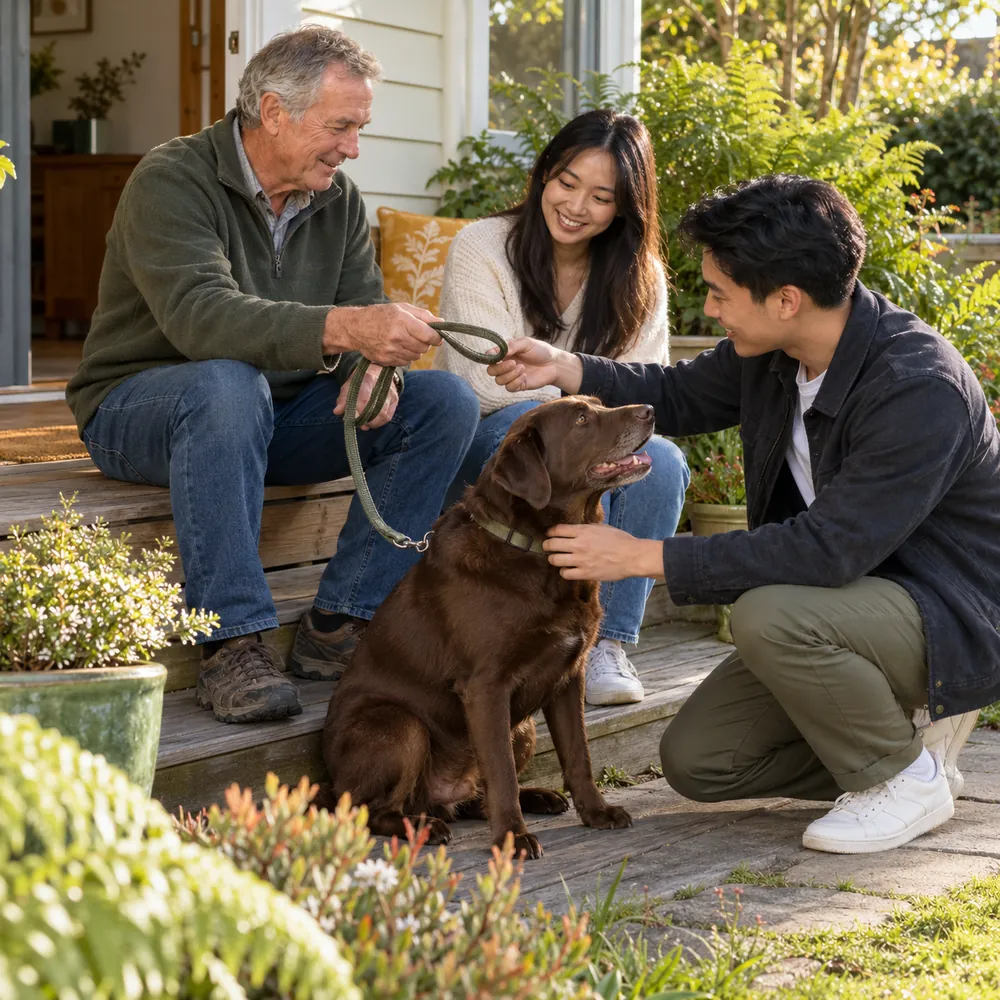
- Owners agree never to ask for deposits or transport fees before you meet
- Anything suspicious can be reported in one tap
Good to know
Questions people ask
Spotted something we haven’t covered? Email support@petrescue.org.nz.
What is the most common pet scam in New Zealand?
Asking for a deposit for a pet that doesn’t exist. The ad uses stolen photos, the seller can’t meet or video call, and once you pay they ask for more or disappear. Never pay before you’ve met the pet in person.
Should I pay a deposit to hold a puppy?
Only to someone you’ve met, for a puppy you’ve seen in person, with a written receipt. If you can’t visit, insist on a live video call first, and never pay by gift card, crypto or an overseas account.
Are pet transport and courier fees a scam?
Surprise courier, crate, quarantine or insurance fees after you’ve paid are one of the most common tricks. Arrange transport yourself with a company you choose, and pay them directly.
What should I do if I’ve been scammed?
Call your bank straight away, as they may be able to stop or reverse the payment. Keep screenshots of the ad and messages, then report it to NZ Police on 105 and to the National Cyber Security Centre through Own Your Online.
How does Pet Rescue NZ keep listings safe?
Every listing is checked by our team, sale listings are reviewed by a person before they go live, adopters message owners privately on the site, and owners agree never to ask for deposits or transport fees before a meeting.