PetRescue NZ success stories are heartwarming accounts of abandoned or surrendered animals finding forever homes through ethical rehoming networks across New Zealand. These narratives highlight the vital work of shelters, the dedication of foster carers, and the transformative bond formed between adopted pets and their new families.
Featured Rehoming Stories: From Rescue to Royalty
In the landscape of animal welfare, nothing speaks louder than the tangible evidence of a life saved. Across New Zealand, from the bustling streets of Auckland to the rural expanses of the South Island, thousands of animals are given a second chance every year. These stories are not just about survival; they are about thriving against the odds. Here, we delve into some of the most touching recent rehoming successes that define the spirit of rescue in Aotearoa.

Barnaby: The Retired Huntaway Who Found the Couch
Barnaby, a seven-year-old Huntaway, spent the majority of his life working on a high-country station near Canterbury. Like many working dogs, when his joints began to stiffen and his pace slowed, he could no longer keep up with the rigorous demands of farm life. Often, working dogs in this position face uncertain futures. However, thanks to a specialized working dog rescue initiative, Barnaby was surrendered for rehoming.
His transition wasn’t immediate. Having never lived indoors, Barnaby had to learn the basics of domestic life: that carpets are not for toileting, that the vacuum cleaner is not a sheep to be herded, and that the sofa is the best place in the world. His new owners, a retired couple in Nelson, report that Barnaby has fully embraced his retirement. “He went from sleeping in a kennel in freezing temperatures to demanding a heated blanket,” his owner laughs. Barnaby’s story is a testament to the adaptability of working breeds and the joy of adopting senior dogs.
Luna: The Storm Survivor
During the severe weather events that battered the North Island earlier this year, a litter of kittens was discovered under a flooded deck in Hawke’s Bay. They were hypothermic, malnourished, and separated from their mother. Among them was Luna, a tortoiseshell with a fighting spirit. The local rescue team mobilized immediately, providing round-the-clock bottle feeding and incubator care.
Luna’s recovery was fraught with medical challenges, including a severe respiratory infection. However, the dedication of the veterinary team paid off. Today, Luna lives with a young family in Wellington. Her story highlights the critical importance of emergency response funds and the resilience of neonate kittens when given proper medical intervention.
Max: Overcoming Severe Separation Anxiety
Max, a Staffordshire Bull Terrier cross, was returned to shelters three times before finding his forever home. His issue was severe separation anxiety; he would destroy furniture and howl incessantly if left alone for even five minutes. Many potential adopters were deterred by his “baggage.”
The turning point came when a foster carer with experience in canine behavior modification took Max in. Through a rigorous program of desensitization and the “3-3-3 rule” (3 days to decompress, 3 weeks to learn routine, 3 months to feel at home), Max learned that being alone didn’t mean being abandoned. He was eventually adopted by a remote worker who could offer him the companionship he craved while continuing his training. Max is now an advocate for the “hard-to-adopt” dogs, proving that patience and understanding can heal emotional wounds.
Updates on Our Initiatives: Transforming Animal Welfare in NZ
Success stories are the result of robust infrastructure and strategic initiatives. The landscape of ethical pet rehoming in New Zealand is evolving, with new programs designed to tackle the root causes of animal homelessness.
The National Desexing Campaign
Overpopulation remains the single biggest driver of shelter intake numbers. In response, several major NZ rescue organizations have collaborated to launch targeted “Snip ‘n’ Chip” campaigns. These initiatives provide subsidized or free desexing and microchipping for pet owners in low-income areas. Recent data indicates a 15% drop in unwanted litters in participating districts over the last twelve months. This proactive approach prevents thousands of animals from entering the shelter system in the first place.
Rural Outreach and Working Dog Support
Rural New Zealand faces unique challenges regarding animal welfare, particularly concerning semi-feral cat colonies and retired working dogs. New mobile vet clinics are now operating in remote areas, offering vaccinations and health checks that were previously inaccessible. Furthermore, partnerships with farmers are being strengthened to ensure that retiring dogs like Barnaby have a clear pathway to rehoming rather than euthanasia.
Pet Food Banks and the Cost of Living Crisis
The rising cost of living has forced many heartbreaking surrenders where families simply cannot afford to feed their pets. To combat this, rescue networks have established pet food banks across major cities including Auckland, Christchurch, and Dunedin. These banks rely on public donations and corporate partnerships to provide pet food to families in financial distress, keeping pets in their loving homes and out of the shelter system.
For more information on animal welfare regulations and government initiatives supporting these programs, you can visit the Ministry for Primary Industries (MPI) Animal Welfare page.
Community Spotlights: The Heroes Behind the Scenery
Behind every wagging tail and purring cat is a human who gave their time, money, and heart. The rescue community in New Zealand is powered by volunteers who ask for nothing in return.
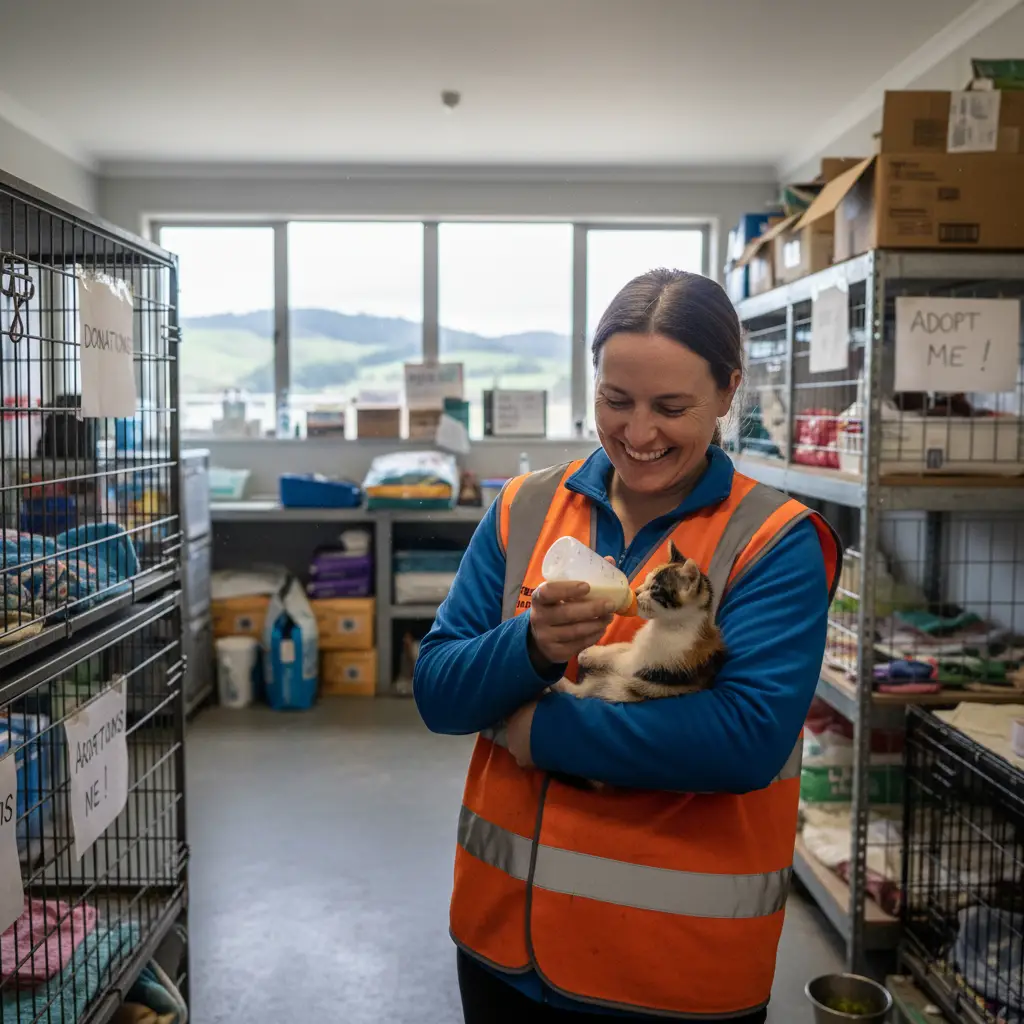
Profile: Sarah, The Neonate Specialist
Sarah, a teacher from Hamilton, has fostered over 200 kittens in the last five years. Specializing in “neonates” (kittens under four weeks old), Sarah’s home is often filled with incubators and bottles. “It’s sleepless nights, similar to having a newborn baby,” Sarah explains. “But when you see a kitten that was found in a drain grow up to be a healthy, loved family cat, every sleepless hour is worth it.” Foster carers like Sarah are the backbone of the rescue system, bridging the gap between rescue and adoption.
The Transport Network
New Zealand’s geography can be a barrier to adoption. A perfect home might be in Invercargill, while the dog is in a shelter in Whangārei. This is where the volunteer transport network steps in. A coordinated relay of drivers moves animals across the country, leg by leg. These “freedom rides” ensure that geography does not dictate an animal’s fate. We recently celebrated the 1000th successful transport coordinated through our partner network, a milestone that underscores the logistical triumph of the community.
The Journey: Understanding the Rehabilitation Process
Adopting a rescue animal is different from purchasing a puppy. It involves understanding the science of rehabilitation and the physiological effects of stress on animals. Ethical rehoming organizations in NZ prioritize behavioral assessments to ensure safe matches.
The Decompression Phase
When an animal enters a new environment, cortisol levels (stress hormones) are often elevated. We advocate for the “Two-Week Shutdown” or the “3-3-3 Rule.” This protocol suggests that for the first few days, the animal should have zero expectations placed upon them. No visitors, no intense training, just safety and food. Understanding this biological need for decompression is often the difference between a failed adoption and a success story.
Medical Rehabilitation Standards
Before an animal is listed as a success story, they undergo rigorous medical checks. In New Zealand, ethical rescue standards dictate that all animals must be desexed, vaccinated, microchipped, and treated for parasites before adoption. This standard sets New Zealand apart as a leader in animal welfare, ensuring that adopters are not burdened with immediate medical costs and that the cycle of unwanted breeding is halted.
Share Your PetRescue Story: Inspiring the Next Generation
Your story has power. When potential adopters see the transformation of a rescue pet, it breaks down stereotypes and encourages them to consider adoption. We are actively seeking submissions from the community to feature in our next monthly update.
How to Submit Your Story
If you have adopted a pet through a New Zealand rescue organization, we want to hear from you. Please send us:
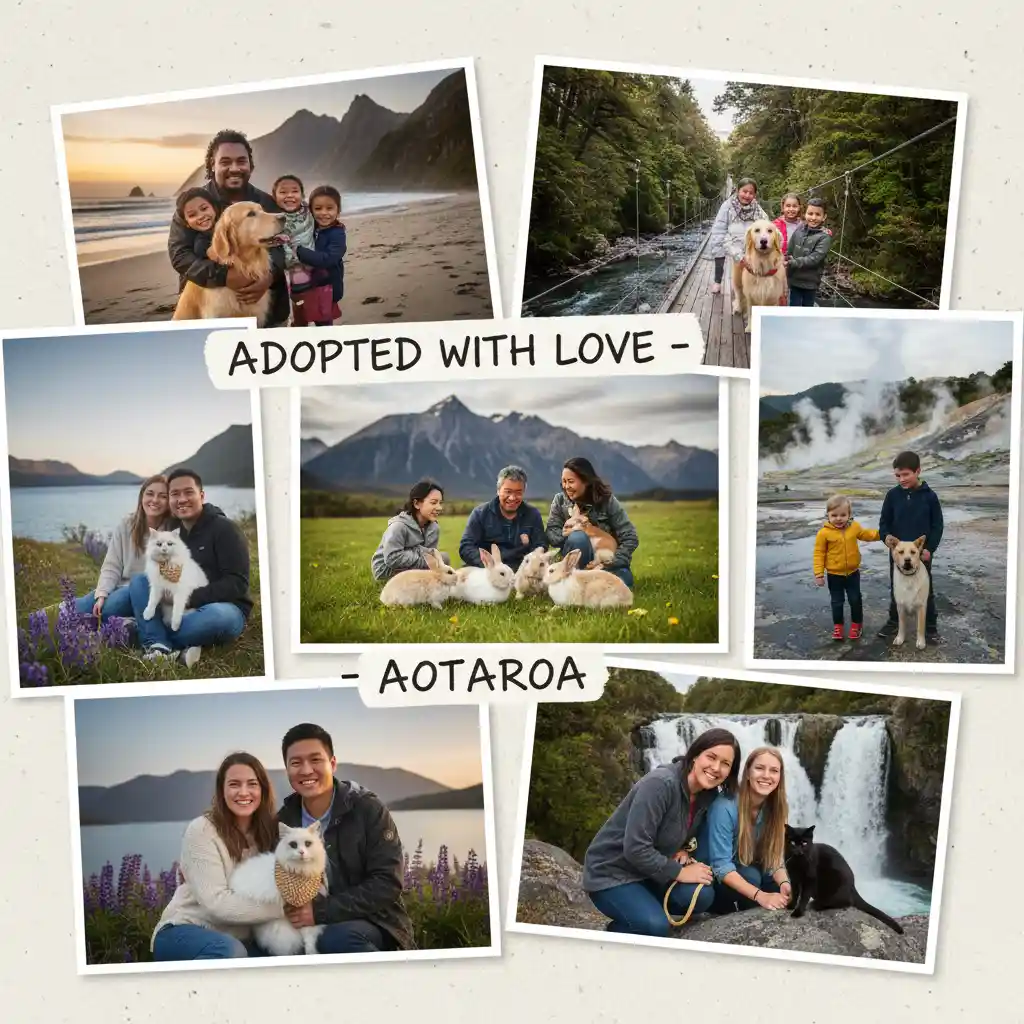
- Before and After Photos: Visual proof of the transformation is compelling.
- The Narrative: Tell us about the challenges you faced and how you overcame them.
- Advice for Others: What do you wish you knew before you adopted?
Sharing these stories helps to normalize the adoption of older pets, animals with special needs, and breeds that are often stigmatized. By amplifying these voices, we can increase adoption rates and save more lives.
For those interested in the broader scope of animal protection and how you can get involved, the SPCA New Zealand offers extensive resources on volunteering and advocacy.
Frequently Asked Questions
Below are some of the most common questions we receive regarding pet adoption and rescue in New Zealand.
How much does it cost to adopt a dog in NZ?
Adoption fees in New Zealand typically range from $250 to $400 for dogs. This fee generally covers desexing, microchipping, first vaccinations, flea/worm treatment, and registration with the local council. Puppies may sometimes have higher fees to cover extra rounds of vaccinations.
Where can I surrender my pet in New Zealand?
If you need to surrender a pet, contact your local SPCA, HUHA, or specific breed rescue organizations. It is crucial to call ahead as many shelters operate on a waitlist due to capacity issues. Never abandon a pet; shelters offer judgment-free assistance to ensure the animal’s safety.
What is the 3-3-3 rule in pet adoption?
The 3-3-3 rule represents the phases of a rescue pet’s adjustment: 3 days to decompress (feeling overwhelmed), 3 weeks to learn your routine (starting to settle), and 3 months to feel completely at home (building trust and bonding). Patience during these phases is key to a successful adoption.
Can I adopt a rescue pet if I rent in NZ?
Yes, but it can be challenging. You will typically need written permission from your landlord to present to the rescue organization. Some rescues have specific programs to help renters find suitable pets, and recent tenancy law changes are making it slightly easier for tenants to keep pets.
How long does the adoption process take?
The timeline varies by organization. It usually involves an application, a property inspection (to check fencing/safety), and a meet-and-greet. The process can take anywhere from a few days to two weeks, depending on the availability of volunteers and the specific needs of the animal.
Are rescue pets in NZ healthy?
Reputable rescues in NZ ensure all pets are vet-checked, desexed, vaccinated, and treated for parasites before adoption. Any known chronic health issues or special needs are disclosed to the adopter beforehand so they can make an informed decision.