
Rehoming Your Dog
Life changes. We get it. Sometimes, despite your absolute best efforts, keeping your dog is no longer an option.
Whether it is a sudden move, a new baby, or the crushing weight of the current cost-of-living crisis, the guilt can feel entirely overwhelming. You are not alone — and you are not a bad person for making a hard choice.
Right now, countless Kiwi families are facing the exact same heartbreaking reality. The traditional advice has always been to drop your pet at a local shelter, but today, that system is breaking under immense pressure.
We believe there is a better way. Rehoming your dog directly from your couch to a new family’s couch removes the stress, skips the cages, and keeps you in complete control. Let’s walk through how to do this safely, honestly, and with your dog’s best interests at heart.
Key Takeaways
Rehoming your dog in New Zealand is safest when done directly from home to home. This “zero cage time” approach avoids overwhelmed council shelters where euthanasia rates now reach 60%. By using a dedicated peer-to-peer platform, you retain complete legal control, screen adopters yourself, and ensure a stress-free transition.
The hard reality of rehoming in 2026
The animal welfare sector in Aotearoa is currently facing a perfect storm. The cost of living has skyrocketed, putting immense financial pressure on everyday people.
If you are struggling to afford dog food or vet bills, you need to know that you are part of a massive, silent crisis. Surrendering a pet is no longer just about lifestyle changes; it is frequently a matter of sheer financial survival.
When considering rehoming your dog, the first instinct is often to call the local pound or the SPCA. But that institutional safety net is completely maxed out.
Why physical shelters are overwhelmed
The latest statistics from Auckland Council are heartbreaking. In the 2024/2025 period, a record 10,214 dogs were impounded across the region.
Because shelters simply do not have the physical space or resources, the euthanasia rate climbed to an unprecedented 60%. That means over 6,000 dogs were put to sleep in a single year.
The financial strain is so severe that council shelters even introduced “Afterpay” for impound release fees, just to prevent owners from abandoning their pets due to upfront costs. Dropping your dog at a shelter is no longer the safe bet it used to be.
The desexing deficit
Adding fuel to the fire is a massive backlog in routine vet care. While recent data shows that 85% of owned dogs in New Zealand are desexed, that still leaves tens of thousands of dogs intact.
This leads to a surge in accidental litters, which further clogs up the rescue system. Shelters are seeing huge increases in dumped puppies, leaving no room for older, well-behaved family dogs who just need a second chance.
Why zero cage time is the safest option
We firmly believe in the “No-Shelter” movement. Your pet stays home until the right family says yes.
By choosing a home-to-home adoption, your dog experiences zero cage time. They avoid the immense stress, deafening noise, and disease risks associated with physical pounds.
More importantly, you stay in the driver’s seat. You know your dog’s quirks, their favourite toys, and what makes them anxious. A shelter simply cannot replicate that level of personal history.
Knowing your dog is moving directly from your living room to another loving home provides massive emotional relief. It removes the terrifying “unknown” of the shelter system entirely.
The dangers of Facebook and Trade Me
You might be tempted to list your dog on a local community Facebook page. Please, trust your gut and be careful.
Facebook is chaotic, unmoderated, and heavily targeted by bad actors. It is incredibly difficult to verify if a profile belongs to a genuine Kiwi family or someone with darker intentions.
Trade Me, on the other hand, treats pets like used furniture. It is highly transactional and currently plagued by advance fee scams. You need a structured, accountable platform built specifically for animal welfare.
| Rehoming Method | Stress Level for Dog | Owner Control | Safety & Scam Risk |
|---|---|---|---|
| Pet Rescue NZ | Zero (Stays at home) | 100% Control | High Safety (Moderated) |
| Council Pound | Very High (Cages/Noise) | 0% (Surrendered) | N/A (High Euthanasia Risk) |
| Facebook Groups | Zero (Stays at home) | High Control | Very Low (Unmoderated) |
| Trade Me | Zero (Stays at home) | High Control | Low (Highly Transactional) |

The legal side of rehoming in NZ
It is crucial to understand where you stand legally. Pet Rescue NZ is a digital platform designed to connect people — we are not a physical broker or an enforcement agency.
Under the Animal Welfare Act 1999, the legal duty of care remains entirely with you until the physical handover takes place. We do not guarantee adoptions or conduct home checks.
You are responsible for ensuring the new family is a safe, capable fit. This empowers you, but it also means you must be diligent and never rush the process.
Dog Control Act 1996 & microchipping
When the adoption is finalised, the paperwork must reflect the change. The Dog Control Act 1996 requires all dogs to be legally registered with the local council.
You and the new owner must update the local council registration details immediately. Failing to do so means you could still be held legally liable for the dog’s actions.
Equally important is the New Zealand Companion Animal Register (NZCAR). You must transfer the microchip details to the new family so the dog can be identified if they ever get lost.
Do not forget to transfer the NZCAR microchip details. If the new owner loses the dog and the chip is still in your name, the council will call you, causing unnecessary confusion and stress.
Step-by-step guide to finding a new family
Taking control of the process means following a few simple, proven steps. It does not have to be overwhelming.
Break it down into manageable chunks. Remember, there are no middlemen here — just good people finding each other.
Step 1: Create a judgment-free listing
When it comes to rehoming your dog, honesty is your absolute best tool. Acknowledge your dog’s amazing traits, but do not hide their flaws.
If they hate cats, say so. If they have separation anxiety, be upfront. The right family will appreciate the transparency and be prepared to manage it.
Upload clear, well-lit photos of your dog simply being themselves. A good listing acts as a natural filter, ensuring you only get inquiries from people equipped to handle your dog’s specific needs.
When writing your listing, focus on daily habits. Does your dog sleep on the bed? Do they bark at the postie? These small details help adopters picture the dog in their own home.
Step 2: Screen adopters without the guilt
It is completely okay to be picky. In fact, we actively encourage it.
Ask potential adopters about their lifestyle, their working hours, and their fencing situation. A genuine adopter will never be offended by these practical questions.
If someone is pushing you to hand the dog over immediately without a proper conversation, walk away. To avoid pet rehoming scams, always watch out for people who manufacture a sense of urgency.
Step 3: The meet-and-greet
Always arrange the first meeting in a neutral, public space. A local, fully fenced dog park is usually perfect.
This allows the dog to interact without feeling overly protective of their home territory. It also gives you a safe environment to assess the new family in person.
Trust your gut. You will know when it is right. If you have a bad feeling, you are under absolutely no obligation to proceed.
Always meet in a public park first. Bring your dog’s favourite treats and let the potential adopter do the feeding to build a positive initial bond.
Step 4: The handover and paperwork
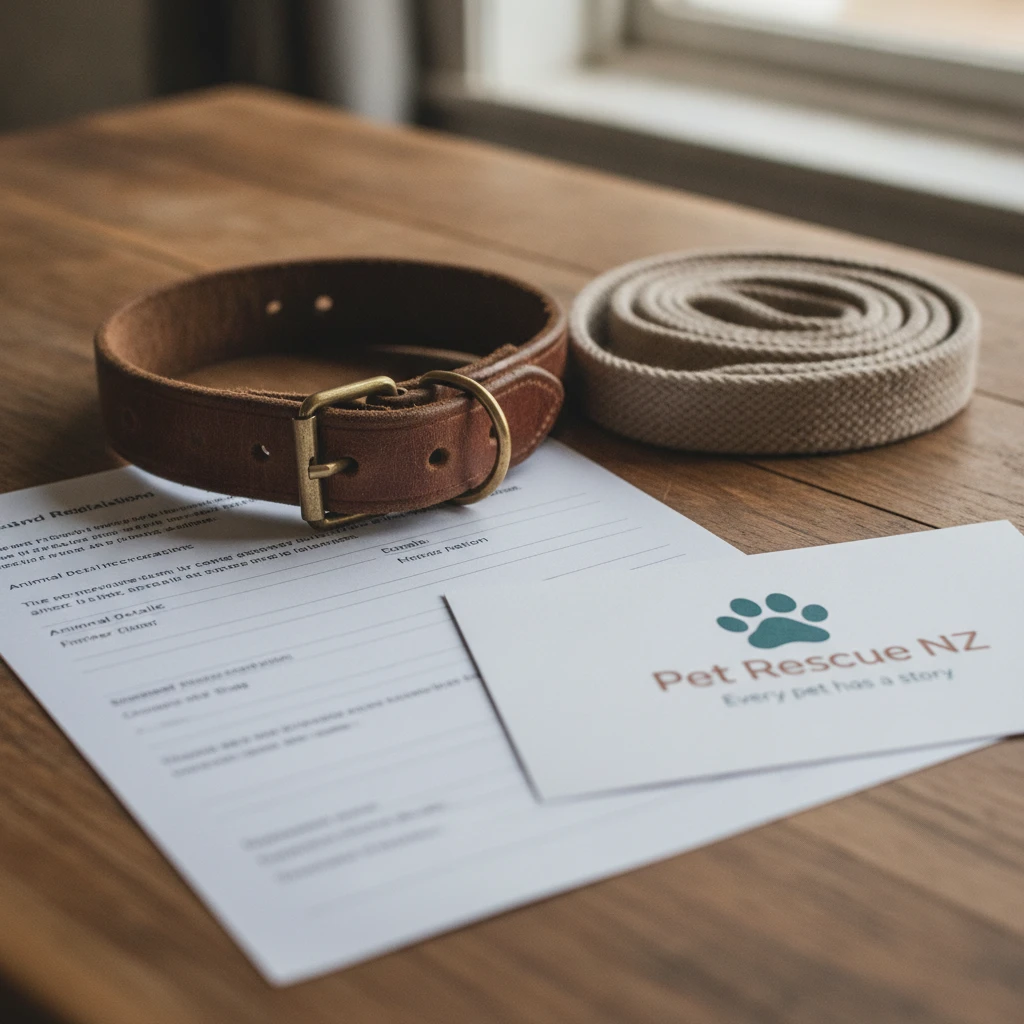
When you are finally ready to say goodbye, provide the new family with a small care package. Include their current food, a favourite blanket, and any medical records.
This familiar scent will help the dog settle into their new environment much faster. Sign a simple rehoming agreement outlining the transfer of ownership.
It will be an incredibly emotional day. Be kind to yourself, knowing you made a selfless choice to secure their future outside of a cage.
Navigating the stigma of rehoming
There is a heavy, entirely unfair stigma attached to rehoming your dog. People who have never faced a financial crisis are often the quickest to judge.
Ignore the noise. You are making a proactive, loving decision to prevent your dog from ending up in an overcrowded pound.
Every pet has a story, and sometimes you are just one chapter. Helping them write the next chapter with a family who can provide for them is an act of deep love.
At Pet Rescue NZ, we are quietly passionate about supporting you through this. No middlemen, no judgment, just good people finding each other.
Frequently Asked Questions
About Pet Rescue NZ
Pet Rescue NZ is a family-run, community-funded platform dedicated to safe, home-to-home pet adoptions across Aotearoa. We believe in zero cage time, plain English advice, and empowering Kiwi families to make the best choices for their pets without judgment or corporate agendas.