Bringing a rescue dog home is a structured process of decompression and adaptation, typically governed by the 3-3-3 rule. To successfully integrate a new dog, owners must prioritize safety, establish an immediate routine, restrict freedom within the home to prevent overwhelm, and allow the dog to decompress from shelter stress without forced interaction.
Adopting a rescue dog is one of the most rewarding experiences a pet owner can have, but it is rarely a linear journey. Whether you have adopted a greyhound retired from racing, a mixed-breed from a rural pound, or a surrendered family pet, the transition from a shelter environment to a home is a massive psychological shift for the animal. In the New Zealand rescue community, we often see adoptions struggle not because of the dog’s nature, but because the initial introduction happened too fast.
This guide serves as your comprehensive manual for the first 30 days. It moves beyond basic advice and delves into the psychology of canine decompression, ensuring you build a foundation of trust that lasts a lifetime.
The 3-3-3 Rule: A Timeline for Success
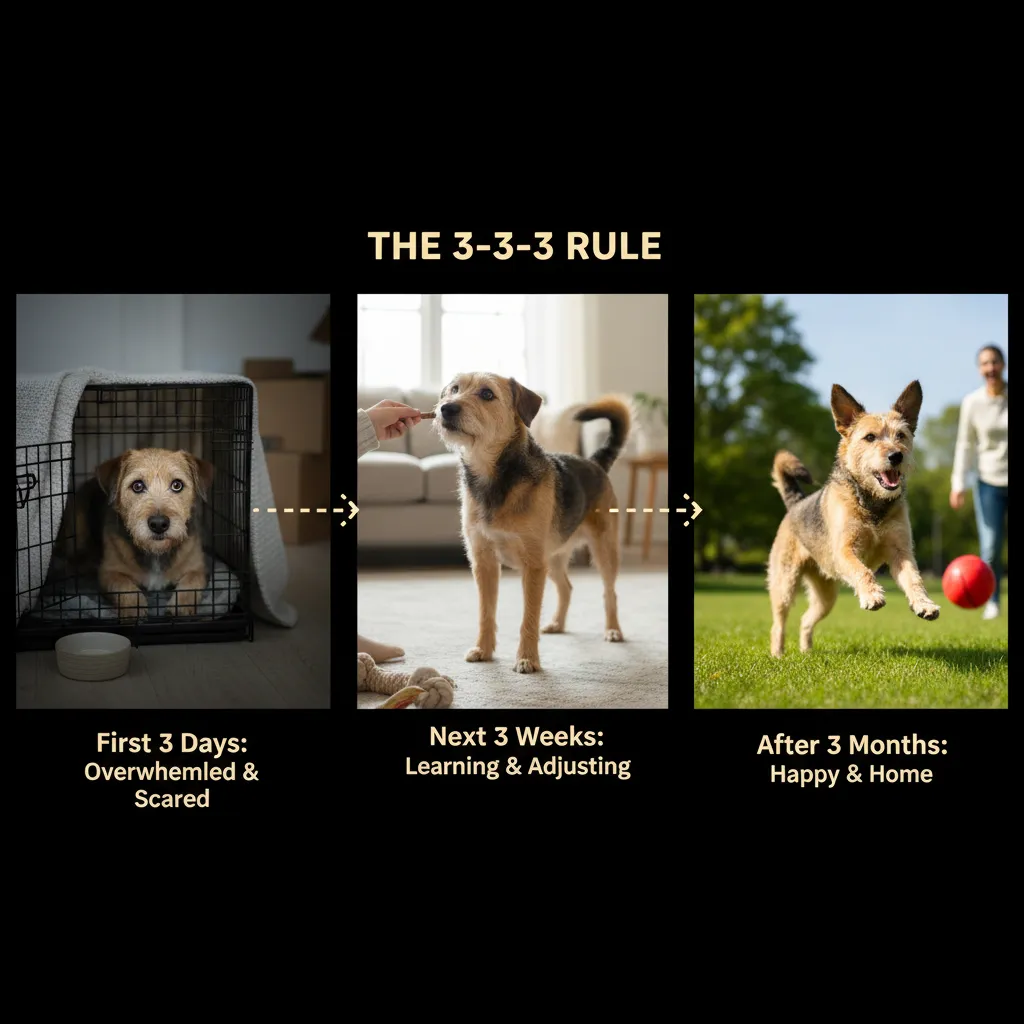
In the world of animal rescue, the “3-3-3 Rule” is the gold standard for managing expectations. It breaks down the adjustment period into three distinct phases: three days, three weeks, and three months. Understanding these milestones helps you realize that initial behavior is rarely permanent behavior.
The First 3 Days: Decompression and Shutdown
During the first 72 hours, your dog is likely overwhelmed with information. Their cortisol levels (stress hormones) are spiked. They are not being “stubborn” if they refuse to eat or look at you; they are in survival mode. In this phase, the dog may:
- Hide in their crate or under furniture.
- Refuse food or water due to anxiety.
- Sleep excessively or pace restlessly.
- Have toileting accidents despite being house-trained.
Your Goal: Do not overwhelm them. Keep the environment quiet, limit visitors, and simply let them exist in a safe space.
The First 3 Weeks: Testing Boundaries
By the three-week mark, the dog is starting to settle. They realize they are no longer in the shelter. This is often when the “honeymoon period” ends and behavioral issues may surface. The dog may start:
- Barking at noises they previously ignored.
- Testing limits (jumping on the couch, chewing).
- Showing their true personality (playfulness or reactivity).
Your Goal: Implement a strict routine. Predictability reduces anxiety. This is the critical time for positive reinforcement training.
The First 3 Months: True Bonding
After 90 days, the dog typically feels secure. They understand that you are their family and this is their home. At this stage:
- They anticipate your routine.
- Trust is established.
- You can begin more advanced training and socialization.
Preparation: Before Bringing Your Rescue Dog Home
Success begins before the dog ever steps foot in your house. Preparation prevents panic. When bringing a rescue dog home, you must control the environment so the dog doesn’t have to make decisions.
Setting Up the “Safe Zone”
Do not give a new rescue dog free roam of the entire house. This is too much territory for them to process and defend. Instead, set up a designated area—usually a laundry room, a quiet corner of the living room, or a spare bedroom—equipped with:
- A Crate: Even if you don’t intend to crate forever, a crate covered with a blanket provides a den-like sanctuary.
- Bedding: Something soft and washable.
- Water bowl: Fresh water must always be available.
- Adaptil (Optional): Pheromone diffusers can help lower anxiety levels in the environment.
Essential Gear
Ensure you have a martingale collar or a secure harness. Rescue dogs are notorious “flight risks” in the first few weeks. A standard flat collar can easily slip over a fearful dog’s head. In New Zealand, ensuring your microchip details are pre-registered with the NZ Companion Animal Register (NZCAR) before pickup is a vital safety step.
The First 24 Hours: Critical Steps for Safety
The car ride home and the initial entry into the house set the tone. This is the highest risk period for a dog escaping.
The Transport
Secure the dog in the car using a crate or a seatbelt tether attached to a harness. Do not stop for walks at busy parks on the way home. Go straight home to minimize stimulation.
The Potty Stop
Before you take the dog inside the house, take them immediately to the designated toilet spot in your garden. Keep them on a lead. Stand still and wait. If they go, praise them calmly. If they don’t go after 10 minutes, that is fine—bring them inside.
Entering the Home
Keep the dog on a lead as you walk them to their “Safe Zone.” Do not make a big fuss. Do not pick them up or hug them, as this can be interpreted as threatening by a dog who doesn’t know you. Show them their water and bed, then take the lead off (if safe) or drop the lead and sit quietly nearby.
Decompression Techniques and Trigger Stacking
Decompression is the process of allowing a dog’s nervous system to reset. Shelter dogs often suffer from “Trigger Stacking.” This occurs when multiple stressors (loud noises, new people, car rides, strange smells) accumulate without time for the stress hormones to dissipate. Eventually, one small event causes an explosion of behavior (snapping, fleeing, or shutting down).
How to Decompress
For the first few days, your life should be boring.
- No Visitors: Keep the house to immediate family only.
- No Big Walks: Stick to the backyard or very quiet, short loops for toileting.
- Passive Presence: Read a book in the same room as the dog, but ignore them. Let them approach you. If they sniff you, remain still. This builds trust faster than trying to coax them.
- Sleep: Let them sleep as much as they want. Sleep is how the brain processes trauma and new information.

Establishing a Routine Immediately
Dogs thrive on predictability. Anxiety stems from not knowing what will happen next. By establishing a routine from Day 1, you tell the dog: “I am in charge, and you are safe.”
Sample Daily Schedule (First 2 Weeks)
- 07:00 AM: Toilet break (on lead).
- 07:15 AM: Breakfast. (If they don’t eat after 15 mins, remove the food. This teaches them to eat when food is offered).
- 08:00 AM: Quiet time/Nap in crate or safe zone.
- 12:00 PM: Toilet break and short sniffari (sniffing walk) in the garden.
- 05:00 PM: Dinner (use food puzzles or slow feeders to mentally stimulate them).
- 06:00 PM: Calm interaction time.
- 10:00 PM: Final toilet break and lights out.
Consistency is key. Try to feed and walk them at the same times every day.
Handling Regression, Fear, and Behavioral Hiccups
It is common for owners to panic when a dog who seemed fine on Day 2 suddenly growls or has an accident on Day 10. This is often part of the decompression process as the dog comes out of their shell.
The “Honeymoon Period” End
As the dog relaxes, they may test boundaries. If a dog growls, do not punish them. A growl is a communication tool saying, “I am uncomfortable.” If you punish the growl, the dog may bite without warning next time. Instead, assess the situation: Did you move too fast? Did you touch a sore spot? Back off and reassess.
Toilet Training Regression
Even house-trained dogs have accidents in new homes due to stress and different floor plans. Treat the dog like an 8-week-old puppy. Take them out every 2 hours and reward heavily for outside elimination. Never punish accidents found after the fact; the dog cannot connect the punishment to the action.
Separation Anxiety
Rescue dogs often fear being abandoned again. Practice short separations immediately. Leave the room for 30 seconds, then return. Gradually build this up to 5 minutes, then 20. Do not make a scene when leaving or returning. Keep your emotions neutral.

The New Zealand Context: Registration and Safety
For New Zealand dog owners, there are specific legal requirements to handle within the first 30 days. Ensuring you are compliant not only avoids fines but ensures your dog’s safety.
Council Registration: You must register your dog with your local city or district council. If the dog was adopted from a shelter like the SPCA, they often provide paperwork to assist with this. You will receive a tag that must be worn on the collar.
Microchip Verification: While the rescue center likely microchipped the dog, it is your responsibility to ensure the contact details on the NZCAR are updated to your name and address immediately. A microchip is useless if the phone number connects to a disconnected line.
Leash Laws: Be aware of local leash laws. Many beaches and reserves in NZ have strict restrictions, especially during summer or bird nesting seasons. For more information on responsible ownership, resources like the SPCA New Zealand offer excellent local advice.
Conclusion: The Road to Bonding
Bringing a rescue dog home is a marathon, not a sprint. The dog you see in the first week is rarely the dog you will have in a year. By respecting the 3-3-3 rule, prioritizing decompression over excitement, and maintaining a calm, consistent leadership style, you are saving that dog’s life a second time.
Be patient. Celebrate the small victories—a tail wag, a full meal eaten, a deep sleep. These are the signs that your new family member is finally settling in.
People Also Ask
How long does it take for a rescue dog to settle?
While every dog is different, the general guideline is the 3-3-3 rule: 3 days to decompress, 3 weeks to learn the routine, and 3 months to feel fully at home and build trust.
What is the first thing to do when bringing a rescue dog home?
The first step is to keep the dog on a lead and take them to their designated toilet spot. Once they have toileted or had a chance to sniff, lead them to a quiet, prepared “safe zone” inside the house with water and bedding.
Should I ignore my rescue dog at first?
Yes, practicing “passive presence” is recommended. Ignore the dog to let them observe you without pressure. Let them approach you when they feel safe, rather than forcing interaction which can cause anxiety.
Why is my rescue dog not eating?
It is very common for rescue dogs to refuse food in the first few days due to high cortisol (stress) levels. Keep offering high-value food in a quiet place, but do not force them. If they do not eat for more than 48 hours, consult a vet.
How do I introduce a rescue dog to my other dogs?
Introductions should be done on neutral territory (like a park), not in your home. Keep both dogs on loose leads and allow them to walk parallel to each other before allowing a brief sniff. Keep the initial meetings short and positive.
What if my rescue dog is aggressive?
aggression in the first few days is often fear-based reactivity. Do not punish the dog. Give them more space, reduce stimulation, and consult a professional dog behaviorist immediately if the behavior escalates.