Pet training NZ refers to the specialized application of behavioral modification and positive reinforcement techniques tailored to the unique environment and regulations of New Zealand. To successfully train a companion animal in this region, owners must focus on establishing reliable recall to protect native wildlife, utilizing force-free methods to build trust with rescue animals, and implementing consistent mental enrichment to satisfy the high energy levels of common working breeds found in Kiwi homes.
Foundations of Obedience Training in NZ
Establishing a solid foundation of obedience is the cornerstone of a harmonious relationship between you and your companion animal. In New Zealand, where outdoor lifestyles are prevalent and interactions with other dogs and people are frequent, having a well-trained pet is not just a luxury; it is a responsibility. Whether you have adopted a puppy or an adult rescue, the principles of learning remain consistent.
The Power of Positive Reinforcement
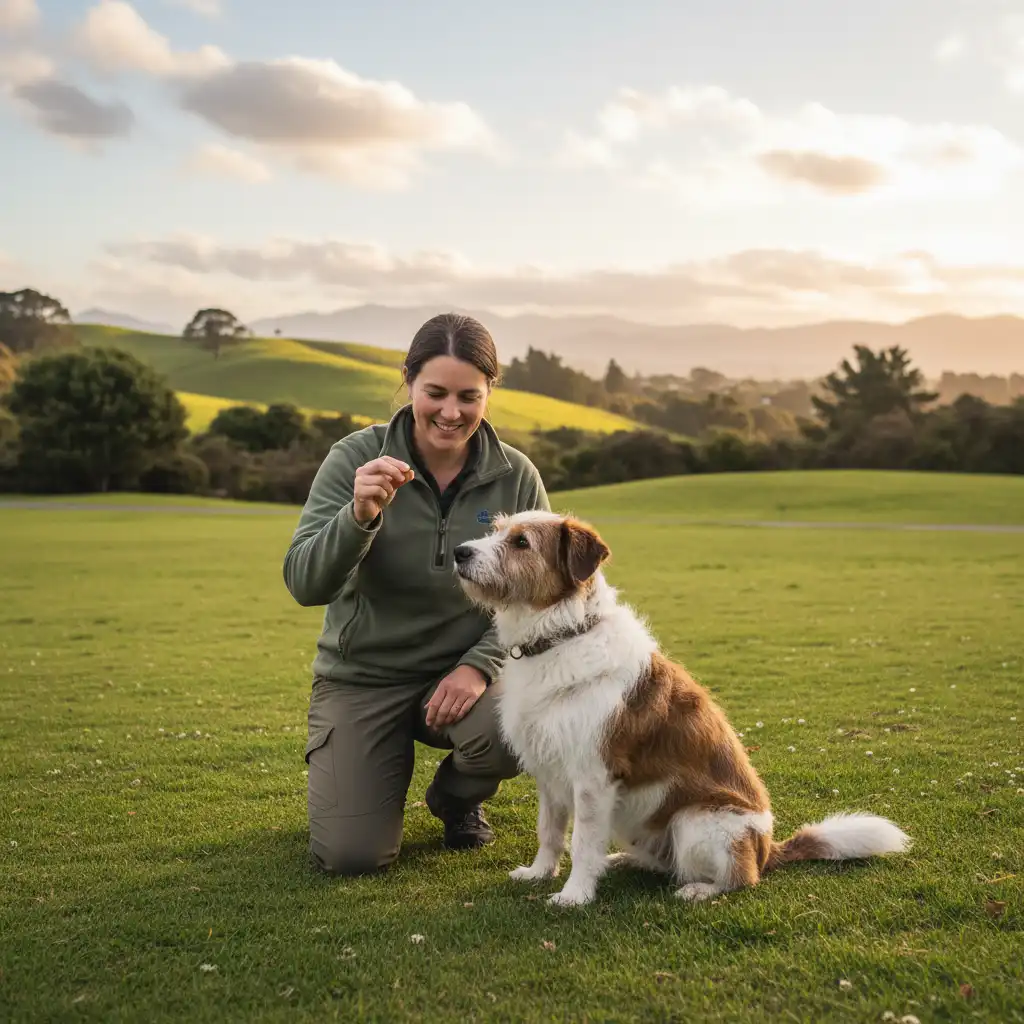
Modern behavioral science unequivocally supports positive reinforcement (often abbreviated as R+) as the most effective and humane method for pet training. This involves rewarding desired behaviors rather than punishing unwanted ones. When your dog sits on command and receives a high-value treat, the likelihood of them sitting again increases. Conversely, punishment-based methods can lead to fear, aggression, and a breakdown of the human-animal bond, particularly in rescue animals who may already possess trauma.
Essential Commands for Safety and Manners
While trick training is fun, specific core commands are non-negotiable for safety in New Zealand’s public spaces:
- Recall (Come): This is arguably the most critical command. New Zealand has strict leash laws in many areas, but designated off-leash dog parks and beaches require a bulletproof recall. If your dog cannot return to you immediately when called, they are not ready to be off-leash.
- Loose Leash Walking: Many Kiwi suburbs are bustling with activity. A dog that pulls can cause injury to themselves or their handler. Training a “heel” or loose-leash walk ensures walks are enjoyable rather than a chore.
- Leave It: From discarded food on city streets to dangerous items in the bush, “leave it” is a life-saving command that prevents your pet from ingesting harmful substances.
- Stay/Wait: This impulse control command is vital at street crossings or when opening the car door to prevent the dog from bolting into traffic.
The Rescue Factor: The 3-3-3 Rule
Training a rescue animal requires a shift in perspective. Unlike a blank-slate puppy, a rescue animal comes with a history. In the context of Pet Rescue NZ, many animals are rehomed due to lifestyle changes, housing issues, or neglect. Understanding their decompression timeline is vital for training success.
The First 3 Days: Decompression
During the first three days, your new pet is likely overwhelmed. They may not eat, may hide, or may test boundaries. Training during this phase should be minimal. Focus on safety, containment, and establishing a predictable routine. Do not invite extended family over to meet the new pet yet; let them breathe.
The First 3 Weeks: Settling In
By the three-week mark, your dog begins to settle. Their true personality starts to emerge, which can sometimes include behavioral issues that were previously suppressed by fear. This is the ideal time to introduce basic, low-pressure training sessions. Keep sessions short (5-10 minutes) and highly rewarding.
The First 3 Months: Bonding
After three months, your pet likely feels secure in their new home. Trust has been built. This is where you can ramp up training difficulty and start working on more complex behaviors or addressing ingrained bad habits. Patience is the currency of rescue training.
Solving Common Behavioral Problems
Even with the best intentions, behavioral issues can arise. Addressing these early prevents them from becoming lifelong habits.
Separation Anxiety
Separation anxiety is rampant among rescue pets. It manifests as destructive behavior, excessive vocalization, or house soiling when the owner leaves. To combat this, practice desensitization. Pick up your keys and put them down without leaving. Put on your shoes and sit on the couch. Gradually build up the time you are separated from your pet, starting with just seconds. Crate training, when done positively, can provides a safe haven for anxious dogs.
Resource Guarding
Some rescues may growl or snap when you approach their food or toys. This stems from a fear of scarcity. Never punish a growl; it is a warning signal. Instead, use the “trade up” game. If they have a bone, offer them a piece of high-value cheese from a distance. Teach them that your approach predicts something better, not the loss of their item.
Reactive Barking
Reactivity on a leash is often mistaken for aggression, but it is usually frustration or fear. When your dog sees a trigger (another dog, a bike), their threshold is breached. The key is to increase distance from the trigger and reward the dog for looking at you (engaging/disengaging game). If they are barking, you are too close.
Importance of Mental Enrichment Activities
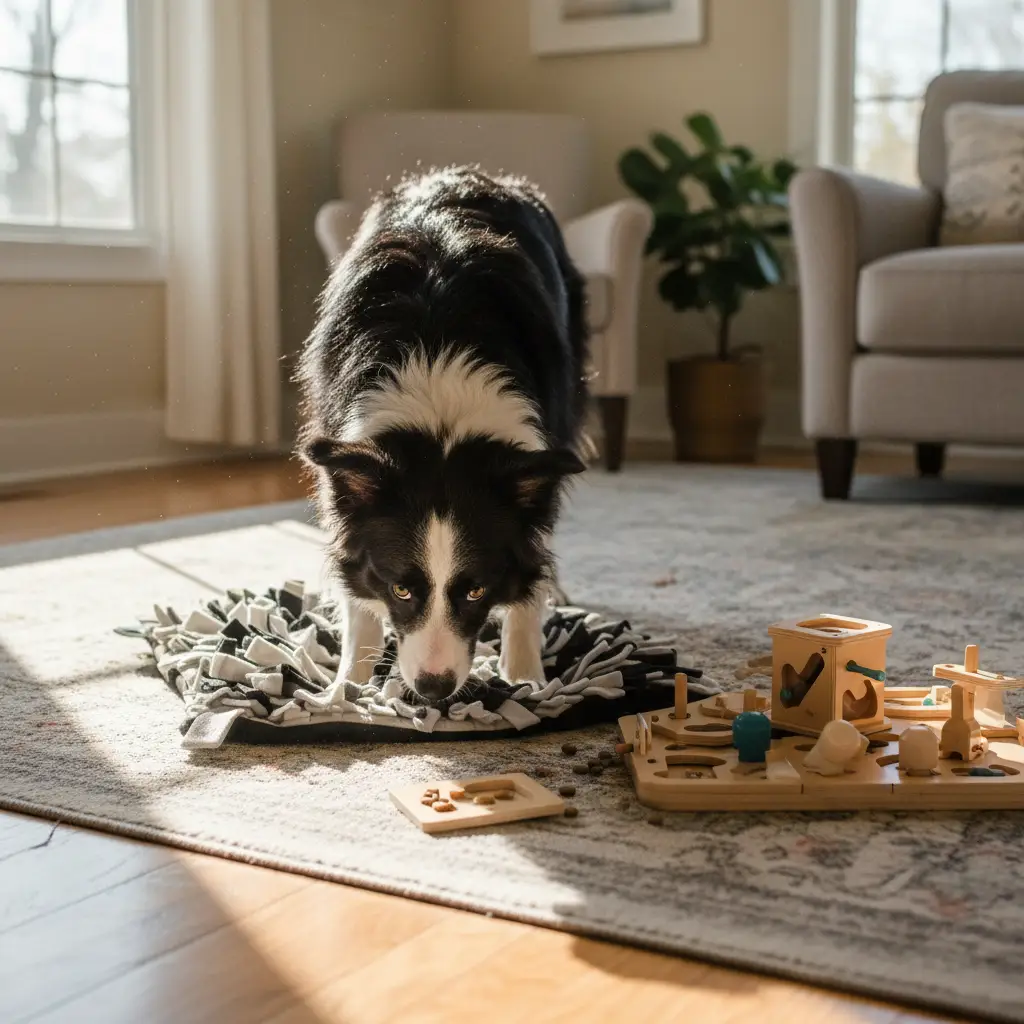
Physical exercise is not enough. A tired dog is a good dog, but a physically tired dog with a bored brain can still be destructive. Mental enrichment is the concept of allowing your pet to engage in innate behaviors like sniffing, chewing, and problem-solving.
DIY Enrichment Ideas
You do not need expensive toys to provide enrichment. New Zealand pet owners are known for their ingenuity:
- The Snuffle Mat: Hide dry food in a shaggy rug or a specialized snuffle mat. This engages the nose, which is mentally exhausting for dogs.
- Cardboard Chaos: Hide treats inside empty toilet rolls or egg cartons, fold them shut, and let your dog shred them to get the reward. (Supervise to ensure they don’t eat the cardboard).
- Scatter Feeding: Instead of a bowl, scatter your dog’s kibble in the grass in your backyard. Foraging is a natural calming behavior.
The Role of Breed in Enrichment
New Zealand has a high population of working breeds like Huntaways, Border Collies, and Heading Dogs. These breeds are hard-wired to work all day. Without a “job,” they will employ themselves, usually by re-landscaping your garden or dismantling your furniture. For these breeds, advanced enrichment like agility training, scent work, or trick training is essential to maintain behavioral health.
Kiwi Aversion and Wildlife Safety
One aspect of pet training NZ that differs from the rest of the world is the critical need to protect native taonga (treasures). Our flightless birds, such as the Kiwi and Weka, are defenseless against dogs.
The Department of Conservation (DOC) offers Avian Aversion Training. This is highly recommended, and often mandatory, for dogs accessing conservation land. However, for the average owner, the rule is simple: if you are in an area with potential wildlife, your dog must be on a leash. No amount of recall training is 100% guaranteed against high prey drive in a dense bush environment. Responsible ownership means protecting the biodiversity of New Zealand.
For more information on where you can take your dog and the rules surrounding conservation land, you can consult the resources provided by the Department of Conservation.
When to Seek Professional Pet Trainers
While many owners can handle basic obedience, there are times when professional intervention is necessary. If your pet shows signs of aggression (towards humans or animals), severe separation anxiety that results in self-injury, or extreme fearfulness, you should seek a qualified behaviorist immediately.

Choosing the Right Trainer
The dog training industry in New Zealand is unregulated, meaning anyone can call themselves a trainer. It is crucial to vet your potential trainer carefully.
- Look for Certifications: reputable trainers will have certifications from organizations like the the Certification Council for Professional Dog Trainers (CCPDT).
- Methodology: Ask specifically about their methods. If they mention “alpha rolls,” “dominance theory,” or heavy reliance on shock/prong collars, look elsewhere. Modern science has debunked dominance theory.
- Association Membership: Look for members of the Association of Pet Dog Trainers New Zealand (APDTNZ). Members of this organization adhere to a code of ethics focusing on force-free training.
Investing in a professional trainer early can save you thousands of dollars in property damage and years of stress. It is an investment in the quality of life for both you and your companion animal.
People Also Ask
How much does dog training cost in NZ?
The cost of dog training in New Zealand varies by region and trainer expertise. Group classes typically range from $150 to $250 for a 6-8 week course. Private, one-on-one sessions usually cost between $80 and $150 per hour. Specialized behavioral consultations for aggression or anxiety are often higher, ranging from $200 to $400 for an initial assessment.
At what age should I start training my puppy?
You should start training your puppy the day you bring them home, typically around 8 weeks of age. Early socialization and positive reinforcement foundations are crucial during the developmental window which closes around 16 weeks. Puppy preschools are recommended as they provide a safe, sanitized environment for socialization before vaccinations are fully complete.
Can you train an old rescue dog?
Yes, you absolutely can train an older rescue dog. The saying “you can’t teach an old dog new tricks” is a myth. While older dogs may have established habits that take longer to modify, they often have better focus and impulse control than puppies. Positive reinforcement is highly effective for dogs of all ages.
What is the 3-3-3 rule for rescue dogs?
The 3-3-3 rule is a general guideline for the decompression phases of a rescue dog. It suggests: 3 days to decompress (feeling overwhelmed), 3 weeks to settle into a routine (personality emerges), and 3 months to build trust and feel completely at home. Understanding this timeline helps owners manage expectations and reduce training pressure.
Is crate training legal in New Zealand?
Yes, crate training is legal and widely recommended in New Zealand when used correctly as a management tool and safe space, not for punishment. The Code of Welfare for Dogs requires that if a dog is crated, the crate must be large enough for the dog to stand, turn around, and lie down comfortably, and they should not be confined for unreasonable periods.
How do I stop my dog from chasing native birds?
Stopping a dog from chasing birds involves strong recall training and impulse control. However, for native NZ wildlife like Kiwi, avoidance is best. Keep dogs on a leash in bush areas. For hunting dogs or those living near conservation land, specific Avian Aversion Training provided by the Department of Conservation is recommended and sometimes mandatory.