To stop cat spraying indoors, you must first rule out medical conditions like UTIs through a veterinary exam, then neutralize existing urine markers using enzymatic cleaners. Simultaneously, reduce environmental stress by providing vertical territory, increasing resources (litter boxes, water bowls) in multi-cat households, and ensuring your cat is desexed to minimize hormonal territorial instincts.
Identifying the Issue: Spraying vs. Inappropriate Elimination
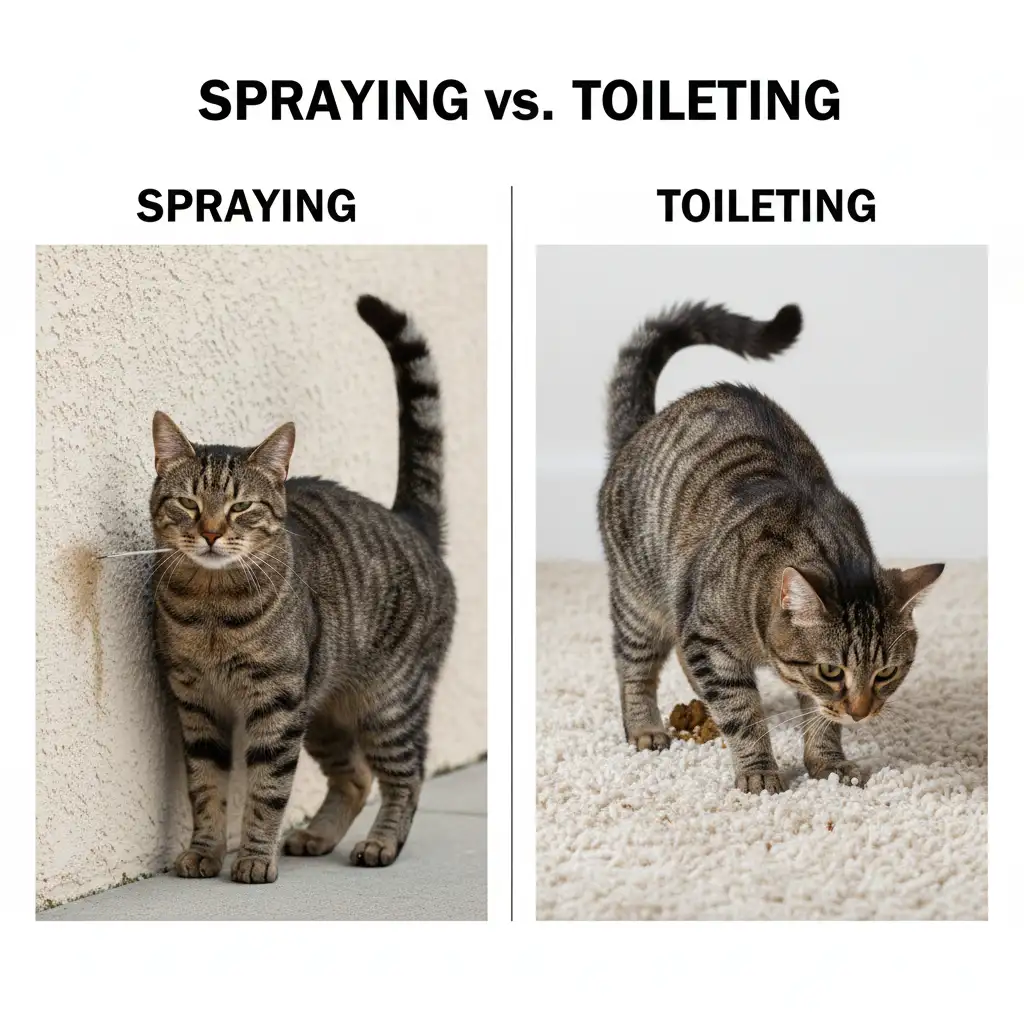
Before you can effectively stop cat spraying indoors, it is critical to distinguish between urine marking (spraying) and inappropriate elimination (toileting outside the litter box). While both result in urine in unwanted places, the motivations and solutions differ significantly.
Spraying is a communication behavior. It is almost always performed on vertical surfaces like walls, curtains, or the sides of furniture. When a cat sprays, they typically stand with their tail upright and quivering, treading with their back feet, and release a small amount of urine backward. This is a territorial mark, signaling ownership or stress to other animals.
Inappropriate Elimination generally involves a cat squatting on a horizontal surface (carpets, beds, piles of laundry) to empty their bladder fully. This behavior is often linked to aversion to the litter box (dirty litter, wrong substrate, poor location) or medical pain associated with urination.
Understanding this distinction is the first step in remediation. If your cat is squatting on the rug, you likely have a litter box management issue or a medical urgency. If they are backing up to the sofa and vibrating their tail, you are dealing with the behavioral complexity of spraying.
Medical Causes: Why a Vet Visit is Mandatory
It is a common misconception among pet owners that cats spray or urinate outside the box out of “spite” or anger. This is anthropomorphism and is factually incorrect. Cats do not experience spite. Often, what looks like a behavioral issue is actually a cry for help regarding a physical ailment.
Before attempting any behavioral modification, you must consult a veterinarian. Conditions such as Feline Lower Urinary Tract Disease (FLUTD), cystitis (inflammation of the bladder), or kidney stones can cause immense pain. A cat may associate the litter box with this pain and avoid it, or they may spray as a reaction to the stress of the illness.
According to the Cornell Feline Health Center, up to 30% of cats surrendered to shelters are due to house soiling issues, yet many of these cases have treatable medical roots. In older cats, arthritis can also be a factor; if a litter box has high sides, it may be too painful to enter, leading to accidents that might be mistaken for marking.
Behavioral Triggers: Stress and Territory
Once a clean bill of health is established, you must investigate the environmental triggers. Spraying is fundamentally a mechanism to cope with stress or assert territorial security. If a cat feels insecure in their environment, they will surround themselves with their own scent to feel safer.
Common Stressors Include:
- Neighborhood Cats: Even if your cat is strictly indoors, seeing a roaming cat through the window or smelling them near a vent can trigger a spraying response.
- Changes in Routine: A new work schedule, a new baby, or even moving furniture can unsettle a sensitive cat.
- New Pets: Introducing a new cat or dog without a slow, proper integration period is a leading cause of territorial spraying.
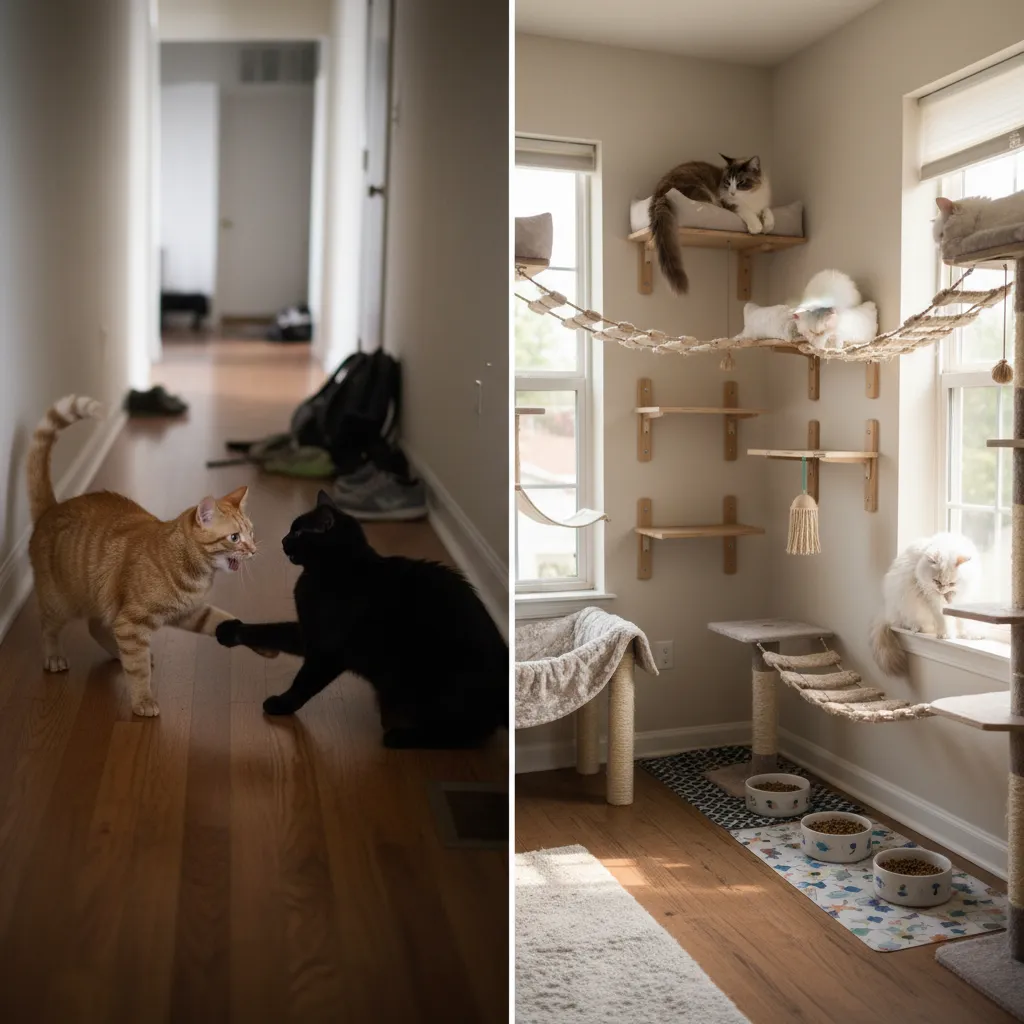
- Conflict: Tension between cats in the same household (staring contests, blocking paths) creates a high-stress environment.
To stop cat spraying indoors effectively, you must become a detective in your own home. Look for patterns. Does the spraying happen near windows? This suggests an outdoor threat. Does it happen on your bed? This suggests separation anxiety or a need to bond with your scent.
Navigating Multi-Cat Household Dynamics
In New Zealand, many households are multi-pet homes. While cats can live together in harmony, they are not obligate pack animals like dogs. They are solitary hunters who, when forced to share limited resources, can develop significant anxiety.
Resource guarding is a subtle behavior that leads to spraying. One cat may not physically attack another but might block access to the litter box or food bowl. The victimized cat, unable to access the resources or feeling their territory is shrinking, may spray to reclaim space.
The Rule of Resources
To mitigate this, follow the “n+1” rule for resources. If you have three cats, you should have:
- 4 Litter boxes (placed in different rooms, not lined up in a row).
- 4 Water stations.
- Multiple scratching posts and resting perches.
Spreading resources out ensures that a dominant cat cannot guard all of them simultaneously, reducing the social pressure on the subordinate cats.
Understanding and Managing Destructive Scratching
Alongside spraying, destructive scratching is a top reason for behavioral complaints. However, unlike spraying, scratching is a completely natural, necessary behavior for cats. They do not do it to destroy furniture; they do it to:
- Scent Mark: Cats have scent glands in their paws. Scratching leaves a visual mark (shreds) and a chemical mark (pheromones).
- Husbandry: It removes the dead outer sheath of their claws.
- Stretch: It allows a full-body stretch to tone muscles.
Redirecting, Not Stopping
You cannot stop a cat from scratching, but you can choose where they scratch. If a cat is scratching the sofa, it is usually because the sofa is sturdy, tall, and has a satisfying texture. To stop this:
- Provide Better Options: Offer scratching posts that are taller than the cat when fully stretched. Wobbly, short posts will be ignored.
- Match the Texture: If they scratch the carpet, provide horizontal cardboard or sisal pads. If they scratch the couch arm, provide vertical sisal or wood posts.
- Location Matters: Place the post immediately next to the item they are currently scratching. Cats scratch to mark territory, so hiding the post in a back corner renders it useless for their purpose.
Environmental Enrichment for Indoor Cats
Boredom is the enemy of a well-behaved cat. Indoor cats in particular are prone to behavioral issues simply because their environment lacks stimulation. In the wild, a cat spends hours hunting, tracking, and patrolling. In a home, if food is delivered in a bowl and there is nothing to do, that predatory energy must go somewhere—often into spraying or aggression.
Creating a Cat-Friendly Ecosystem
Enrichment doesn’t just mean toys; it means creating an environment that allows the cat to express natural behaviors.
- Vertical Space: Cats live in 3D. Cat trees, shelving, and window perches allow them to survey their territory from above, providing a massive confidence boost. A confident cat is less likely to spray.
- Food Puzzles: Ditch the bowl. Use puzzle feeders or hide dry food around the house to simulate hunting. This engages their brain and burns off nervous energy.
- Catios: In New Zealand, protecting native wildlife is paramount. Building a “catio” (enclosed patio) gives your cat safe outdoor access, fresh air, and visual stimulation without endangering local birds or exposing your cat to fighting toms.

The Cleaning Protocol: Eliminating the Scent
One of the most critical steps to stop cat spraying indoors is proper cleanup. If a cat can smell their previous mark, they are biologically compelled to refresh it. Standard household cleaners are insufficient.
Avoid Bleach and Ammonia: Cat urine contains ammonia. Cleaning with ammonia-based products or bleach (which smells similar to ammonia to a cat) actually attracts them back to the spot to “over-mark” the strange scent.
Use Enzymatic Cleaners: You must use a high-quality enzymatic cleaner. These products contain bacteria that produce enzymes to break down the uric acid crystals in the urine, permanently eliminating the smell rather than just masking it. Saturate the area, let it sit for the recommended time (often 10-15 minutes), and then blot it up. For carpets, you may need to treat the underlay or subfloor in severe cases.
By combining medical clearance, environmental enrichment, resource management, and proper cleaning, you can resolve scratching and spraying issues, restoring peace to your home and happiness to your feline companion.
Frequently Asked Questions
Why is my neutered male cat still spraying indoors?
While neutering reduces hormonal spraying significantly, it doesn’t eliminate it if the cause is stress or habit. A neutered male may still spray due to anxiety, territory threats (like seeing a stray cat outside), or medical issues like UTIs. Consult a vet to rule out physical pain first.
Can Feliway help stop cat spraying?
Yes, synthetic pheromones like Feliway can be very effective. They mimic the “happy” facial pheromones cats use to mark safe territory, which can help reduce the anxiety that leads to spraying. It works best when combined with environmental changes and proper cleaning.
How do I stop my cat from scratching the sofa?
You must offer a better alternative. Place a tall, sturdy scratching post (sisal or wood) right next to the sofa. Cover the sofa corner with double-sided sticky tape or a plastic guard temporarily to make it unappealing while rewarding the cat for using the new post.
Is cat spraying the same as peeing outside the litter box?
No. Spraying is usually vertical (backing up to a wall) and is a communication/territorial behavior. Peeing outside the box (toileting) is usually on horizontal surfaces and involves squatting, often signaling a litter box aversion or medical issue.
What is the best cleaner for cat urine?
Enzymatic cleaners are the only effective solution. They break down the uric acid crystals that cause the lingering smell. Avoid bleach or ammonia-based cleaners, as these can actually encourage the cat to spray the area again.
Does declawing stop scratching behavior?
Declawing is an amputation of the last toe bone and is widely considered inhumane and is illegal in many countries, including New Zealand. It can lead to chronic pain and increased behavioral issues like biting and litter box avoidance. Regular nail trimming and scratching posts are the humane solution.