A Huntaway dog is a large, energetic working breed developed in New Zealand specifically for herding sheep across rugged, steep terrain using their loud, deep bark to drive stock. Unlike “eye dogs” that herd silently, the Huntaway is bred strictly for stamina, intelligence, and its ability to bark on command, resulting in a loyal companion that requires extensive physical exercise and mental stimulation.
The History and Origins of the New Zealand Huntaway
The story of the Huntaway is intrinsically linked to the agricultural history of New Zealand. In the late 19th and early 20th centuries, shepherds farming the vast, high-country stations of the South Island faced a unique challenge. The terrain was steep, the paddocks were enormous (often thousands of acres), and the weather was unforgiving. The traditional British sheepdogs, such as the Border Collie, which worked silently by “eyeing” the sheep, often struggled to move large mobs of sheep across such rough landscapes where the dog might disappear from the sheep’s view.
Shepherds needed a dog with the stamina to run all day up and down hills, but more importantly, they needed a dog with a booming voice. The goal was to breed a dog that could “hunt away” the sheep—literally using their bark to push the flock forward rather than gathering them. To achieve this, early New Zealand farmers crossed various breeds. While records were rarely kept, it is widely accepted that the genetic melting pot included the Border Collie for intelligence, the Doberman for size and bark, the Foxhound for stamina and voice, and possibly the Labrador or Rottweiler for substance.
The result was not a dog bred for the show ring, but a landrace breed defined entirely by its utility. If a dog could handle the work, bark on command, and survive the harsh conditions, it was a Huntaway. This focus on performance over pedigree has made the Huntaway an icon of Kiwi rural culture. In 2013, the New Zealand Kennel Club finally recognized the Huntaway as a breed, though the working lines remain distinct from any show standards.
Physical Characteristics: Function Over Form
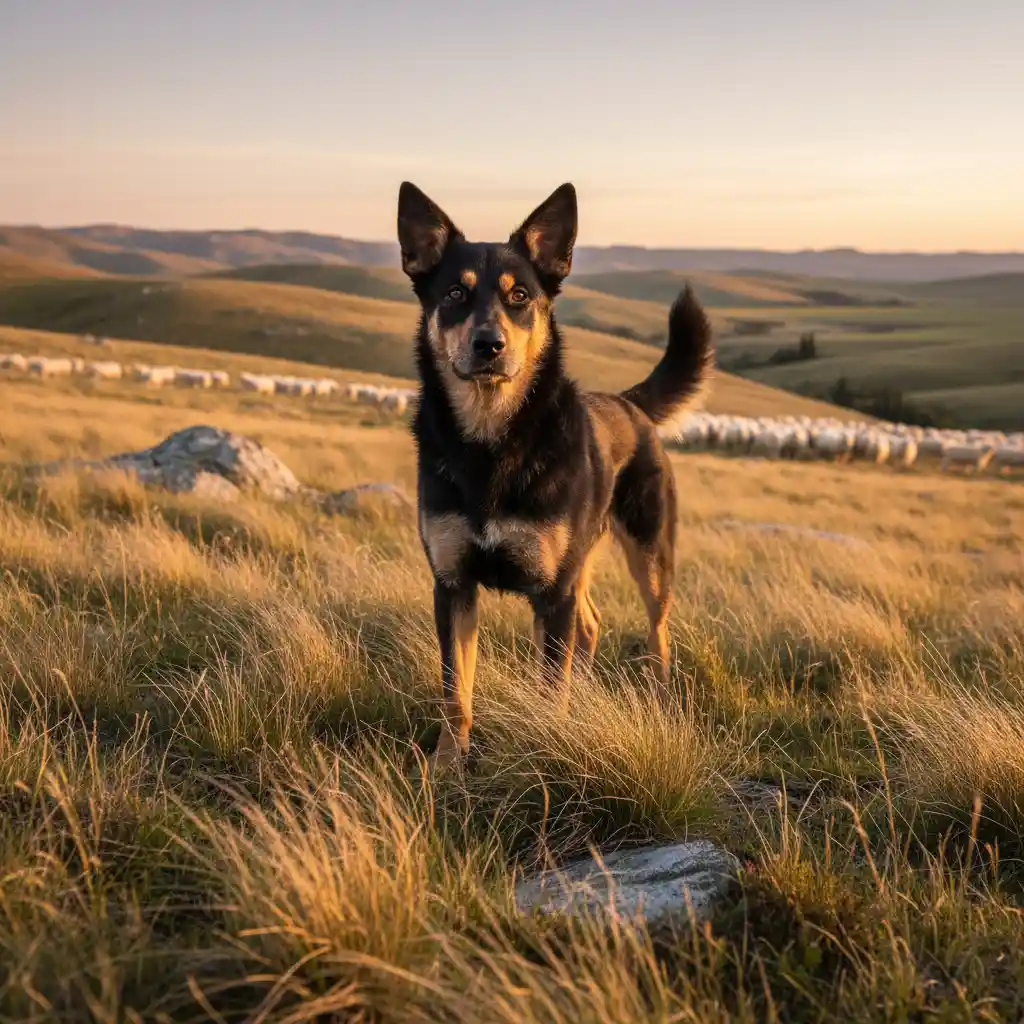
Because Huntaways were bred exclusively for their working ability, their physical appearance can vary significantly more than other standardized breeds. However, there are common traits that define the classic Huntaway look.
Size and Build
Generally, the Huntaway is a large, muscular dog. They typically weigh between 25 to 45 kilograms (55 to 100 lbs) and stand 56 to 66 centimeters (22 to 26 inches) at the shoulder. Their build is athletic and robust, featuring a deep chest that allows for significant lung capacity—essential for both running long distances and producing their signature deep bark.
Coat and Color
The most recognizable color pattern is black and tan, often with white markings on the chest or paws. However, because color does not affect working ability, you will also see Huntaways that are brindle, black, or tricolor. Their coats come in three main varieties:
- Smooth Coat: Short and dense, easy to maintain.
- Rough Coat: Slightly longer and wirier, offering more protection against brambles.
- Beardie: A shaggier variation, likely pointing to Bearded Collie ancestry.
Regardless of the texture, the coat is usually double-layered to provide insulation against the cold New Zealand winters and the scorching summer sun.
Temperament and Personality Traits
The Huntaway is renowned for its intelligence and friendly nature. Unlike some working breeds that can be aloof or high-strung, Huntaways are typically good-natured and eager to please. They possess a high “pack drive,” meaning they bond closely with their handlers and families.
However, their intelligence cuts both ways. A bored Huntaway is a destructive Huntaway. They are problem solvers, and if you don’t give them a job to do, they will invent one—usually involving landscaping your garden or dismantling your outdoor furniture. They are also bred to be vocal. While they are trained to bark on command, their natural instinct is to use their voice. This makes them poor candidates for apartments or properties with strict noise restrictions.
Despite their size and loud voice, they are rarely aggressive. They were bred to work alongside other dogs and humans, fostering a cooperative rather than combative temperament. For more on the cultural significance of working dogs in New Zealand, you can visit Te Ara – The Encyclopedia of New Zealand.
Exercise Requirements: Can a Huntaway Live in the Suburbs?
This is the most critical section for any potential owner. The exercise requirements of a Huntaway are extreme compared to the average pet dog. These dogs are genetically engineered to run 20 to 60 kilometers a day across steep terrain. A 30-minute walk around the block is merely a warm-up for a Huntaway.
The Suburban Challenge
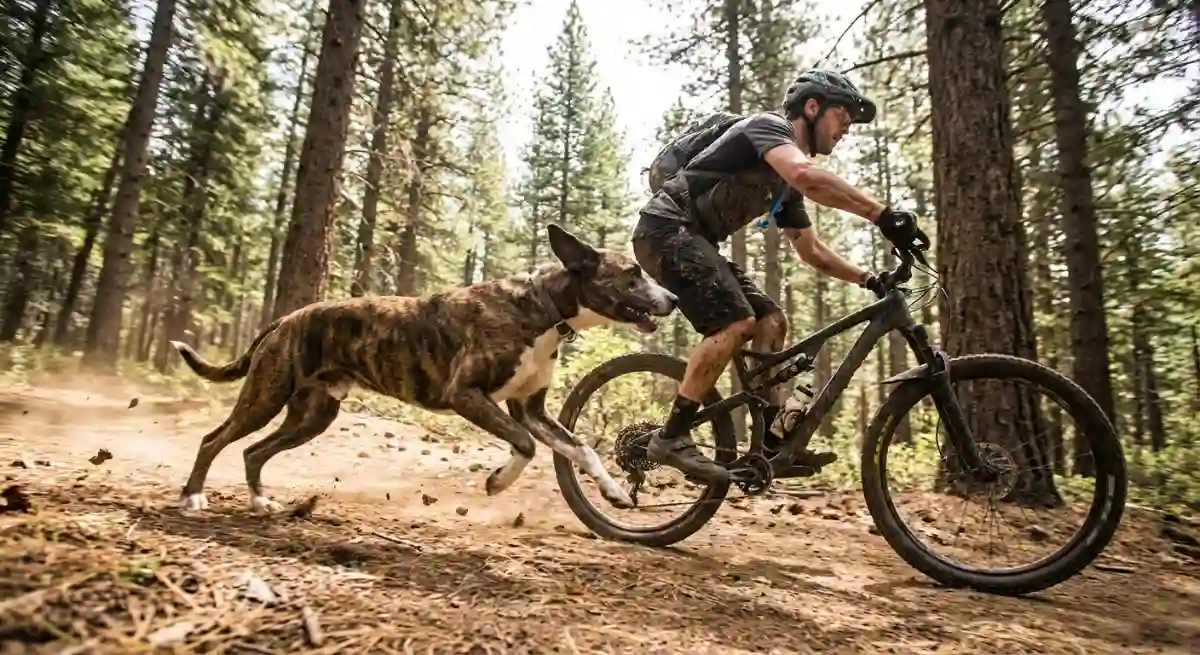
Can a Huntaway live in a suburban home? The answer is yes, but with major caveats. If you live in the suburbs, you must be an active outdoor enthusiast. Huntaways make excellent companions for:
- Long-distance running
- Mountain biking (running alongside the bike)
- Hiking and tramping
- Agility and Flyball sports
If you work 9-to-5 and simply want a dog to greet you when you get home and sit on the couch, do not get a Huntaway. Without at least 2 hours of vigorous exercise daily, combined with mental stimulation, a suburban Huntaway will likely develop behavioral issues such as excessive barking, digging, and anxiety.
Training and Socialization Strategies
Training a Huntaway requires patience, consistency, and an understanding of their drive. Because they are independent thinkers (a trait necessary for working far away from the shepherd), they may not follow commands as blindly as a Border Collie. They need to understand why they are doing something.
Positive Reinforcement
Huntaways respond best to positive reinforcement. Harsh methods can cause them to shut down or become stubborn. Use food rewards, toys, and praise to shape behavior. Because they are food-motivated, clicker training is often highly effective.
Managing the Bark
Since barking is their primary tool, teaching a “Quiet” command is essential, especially in a non-farm environment. It is easier to train a Huntaway to bark on command (the “Speak” command) and then teach the cessation of that bark, rather than trying to suppress the instinct entirely.
Socialization
Early socialization is key. While generally friendly, Huntaways can be boisterous. They need to learn how to interact politely with smaller dogs and children, as they often underestimate their own size and strength.
Common Health Issues and Wellness
Huntaways are generally a robust and healthy breed, benefiting from a wide gene pool compared to closed-studbook pedigree breeds. However, their size and active lifestyle predispose them to certain conditions that owners must be aware of.
Hip Dysplasia
Like many large breeds, Huntaways are susceptible to Hip Dysplasia. This is a genetic condition where the hip joint fails to develop correctly, leading to arthritis and pain. It is crucial to ensure that breeding dogs are hip-scored. For owners, keeping the dog at a lean, healthy weight significantly reduces the stress on their joints.
Gastric Dilatation-Volvulus (Bloat)
Due to their deep chests, Huntaways are at risk of bloat, a life-threatening condition where the stomach twists. To prevent this, avoid vigorous exercise immediately before or after meals, and consider using a slow-feeder bowl if your dog eats too quickly.
Mucopolysaccharidosis IIIA (MPS IIIA)
A specific genetic concern for the breed is Mucopolysaccharidosis IIIA, a rare metabolic disorder that affects the nervous system. Fortunately, genetic testing is available. Responsible breeders and rescue organizations are aware of this and monitor for it. You can read more about canine genetic health at the Orthopedic Foundation for Animals (OFA) or similar veterinary resources.
Is a Huntaway Right for Your Family?
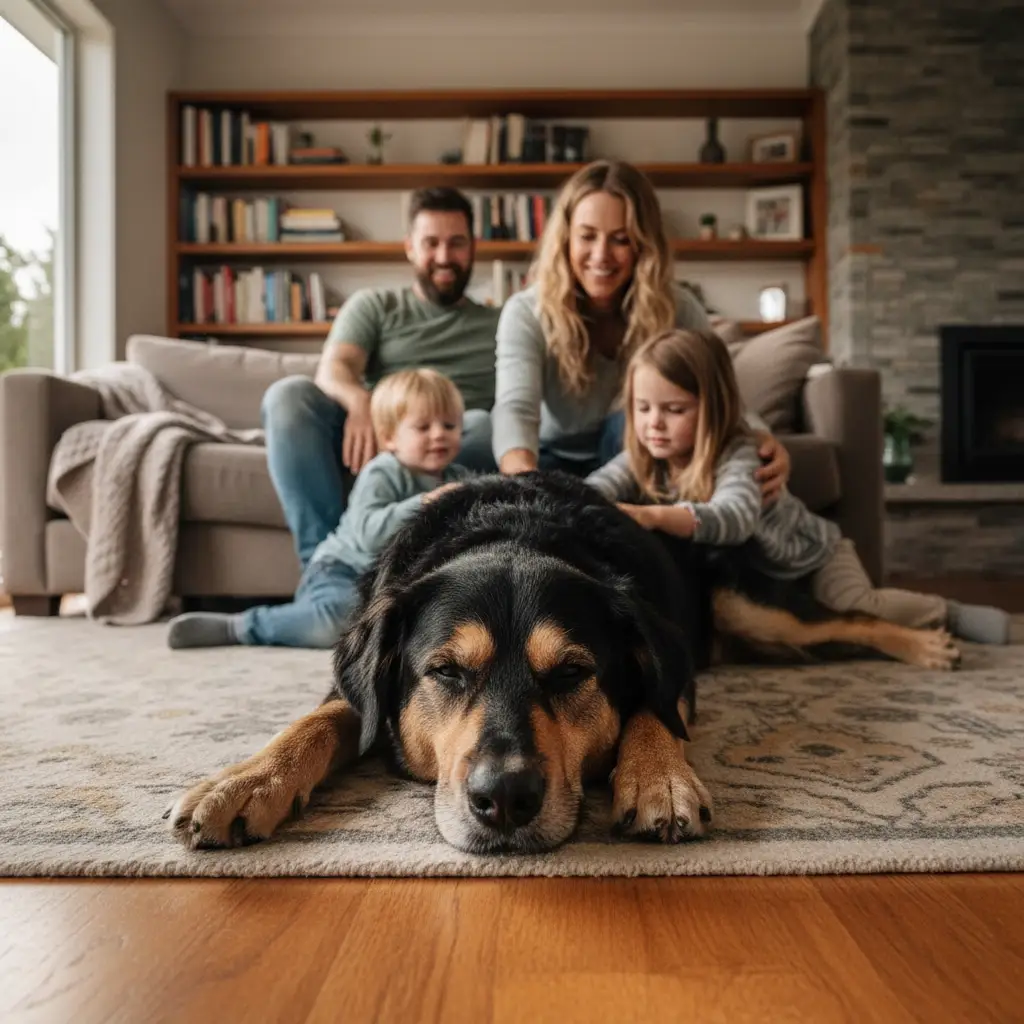
Determining if a Huntaway fits your family dynamic requires an honest assessment of your lifestyle. These dogs are affectionate, loyal, and often hilarious with their goofy personalities. They tend to be great with children, often displaying a protective and gentle demeanor. However, their “herding” instinct might kick in with running kids, which needs to be managed.
Pros for Families:
- Extremely loyal and protective.
- Robust enough to play rough with older children.
- Generally healthy with fewer vet visits than delicate breeds.
- Excellent motivation for a family to get outdoors.
Cons for Families:
- Their loud bark can wake babies and annoy neighbors.
- They shed, and their large paws can track in mud.
- They require time commitment that busy families may not have.
- They need space—a large, securely fenced yard is non-negotiable.
Adopting a Huntaway: The Rescue Perspective
In the context of Pet Rescue & Education NZ, Huntaways are frequently found in shelters. This is rarely the fault of the dog. Often, they are “failed” farm dogs—perhaps they didn’t have enough bark, or they weren’t interested in sheep. Ironically, these “failed” working dogs often make the best pets because they have lower drive than their working counterparts.
Another common reason for surrender is town owners underestimating the exercise needs. When you adopt a Huntaway, you are often getting a dog that is already house-trained and socialized but needs a second chance in an active home. Rescue organizations can provide valuable insight into the specific energy levels of an individual dog, helping match the right Huntaway to your lifestyle.
If you are considering adoption, ask the rescue center:
- How is the dog with cats? (High prey drive can be an issue).
- Does the dog have any noise phobias? (Common in working breeds).
- What is their energy level on a scale of 1-10?
Frequently Asked Questions
Do Huntaway dogs bark a lot?
Yes, Huntaways are bred to bark. Their bark is their primary tool for moving sheep. While they can be trained to be quiet on command, they are naturally vocal dogs and are not suitable for environments where noise is a major concern.
Are Huntaways good family pets?
Huntaways can make excellent family pets for active families. They are loyal, friendly, and good with children. However, they require significant exercise and a large, fenced yard. They are not suitable for sedentary households.
How much exercise does a Huntaway need?
A Huntaway requires at least 90 minutes to 2 hours of vigorous exercise every day. This should include running, hiking, or mental stimulation activities. A simple walk around the block is insufficient for this breed.
What is the life expectancy of a Huntaway?
The average life expectancy of a New Zealand Huntaway is between 12 and 14 years. They are generally a healthy, robust breed, provided they are fed a high-quality diet and maintained at a healthy weight.
Do Huntaways shed hair?
Yes, Huntaways shed moderately throughout the year and more heavily during seasonal changes (spring and autumn). Their coats are usually short but dense, requiring weekly brushing to manage loose hair.
What is the difference between a Heading Dog and a Huntaway?
The main difference is their working style. A Heading Dog (often Border Collie lineage) uses its eyes and stealth to silently block and control sheep. A Huntaway uses its deep, loud bark and physical presence to push and drive sheep forward.