Rehoming Your Dog in NZ: A Guide to Regional Laws
Life changes. We get it. Sometimes, despite our absolute best efforts and deepest love, we find ourselves in a position where we need to find a new family for our beloved dog. It is an emotional, heavy decision, and the last thing you need is to get bogged down in confusing legal jargon and red tape.
When it comes to transitioning your pet, understanding Rehoming Your Dog in NZ: A Guide to Regional Laws is your ultimate starting point. This guide is designed to help you navigate the process smoothly, ensuring your dog’s transition is completely legal, safe, and stress-free.
We believe that every dog has a story, and we want to help you write the next chapter with confidence. Let’s walk through the legal steps together, like neighbors chatting over the back fence, to make sure everything is sorted for your dog’s future.
Key Takeaways
Rehoming a dog in New Zealand requires notifying your local council within 14 days of ownership transfer under the Dog Control Act 1996. If transferring to a new district, you must notify both councils within 6 weeks. Remember to also update the NZ Companion Animal Register (NZCAR) database.
Understanding the legal framework in Aotearoa
In New Zealand, dog ownership is not just a matter of the heart—it is also a matter of law. The primary legislation governing our canine companions is the Dog Control Act 1996. This national Act sets out the responsibilities of dog owners and the powers of local councils.
When you rehome your dog, you are legally transferring these responsibilities to another person. This transition must be formally documented to protect both you, the new owner, and the dog. It is an act of stewardship that ensures the dog’s continuous protection under local bylaws.
If the transfer is not executed clearly, you could theoretically remain liable for the animal’s welfare. You might also be held responsible for any damage or trouble the dog causes in the future. That is why understanding the official rules for rehoming your dog in NZ: a guide to regional laws is so vital for every pet owner.
National requirements under the Dog Control Act 1996
Under Section 48 of the Dog Control Act 1996, when a registered dog changes ownership, both the previous owner and the new owner must notify the local council in writing within 14 days. This is a nationwide requirement that applies regardless of which region you live in.
The notice must include the full name, residential address, and contact details of the new owner. It must also specify the address where the dog will ordinarily be kept. This ensures that the council database remains accurate and that the dog can be identified if it ever gets lost.
If you are moving your dog to a completely different council district, Section 49 of the Act comes into play. If the dog is kept in the new district for 1 month or more, you must give written notice to both councils within 6 weeks of the transfer.
Failing to notify the council of a change of ownership within 14 days is an offence under Section 48 of the Dog Control Act 1996. Both the previous owner and the new owner can be fined up to $500 upon conviction.
To help visualize these crucial legal timelines, we have synthesized the statutory deadlines set by the Dog Control Act 1996. Keeping these dates in mind ensures you avoid unnecessary penalties and keep your transition completely smooth.
Regional differences across Kiwi councils
While the overarching law is national, local councils in New Zealand have their own bylaws and policies. These regional rules dictate how many dogs you can keep, licensing requirements, and the exact process for transferring ownership.
For instance, in major urban areas like Auckland or Wellington, there are strict limits on how many dogs can live on a standard residential property without a special permit. This forms the core of our guide to rehoming your dog in NZ: a guide to regional laws, as every council interprets these rules slightly differently.
| Region / Council | Ownership Change Deadline | District Transfer Deadline | Multi-Dog Limit (Without License) | Transfer Fee |
|---|---|---|---|---|
| Auckland Council | 14 days | 6 weeks (or 14 days for address change) | Max 2 dogs on urban properties | Free ($0) |
| Wellington City Council | 14 days | 6 weeks | Max 2 dogs on urban properties | Free ($0) |
| Christchurch City Council | 14 days | 6 weeks | Max 2 dogs on urban properties | Free ($0) |
| Dunedin City Council | 14 days | 6 weeks | Max 2 dogs on urban properties | Free ($0) |
Auckland Council bylaws
In Tāmaki Makaurau, the Auckland Council requires a Responsible Dog Owner Licence (RDOL) if you want to receive discounts on registration. However, if the new owner wants to keep more than 2 dogs on an urban property, they must apply for a multiple dog licence.
Both you and the new owner must sign Auckland Council’s change of ownership form. If the previous owner cannot be found, the new owner must make a formal statutory declaration to complete the transfer and assume legal responsibility.
Wellington City Council bylaws
In our capital city, Wellington City Council has a similar 2-dog limit for urban properties. The council team is highly approachable and allows owners to update details online or via a simple PDF form.
If you are moving out of Wellington or rehoming your dog to someone outside the region, you must notify the council so they can close your account. This prevents you from receiving annual registration bills for a dog you no longer own.
Christchurch and southern councils
Down south, Christchurch City Council and Dunedin City Council maintain strict control over wandering dogs and registration. If you rehome a dog in Canterbury or Otago, the process remains free, but you must ensure the new owner’s property is fully fenced.
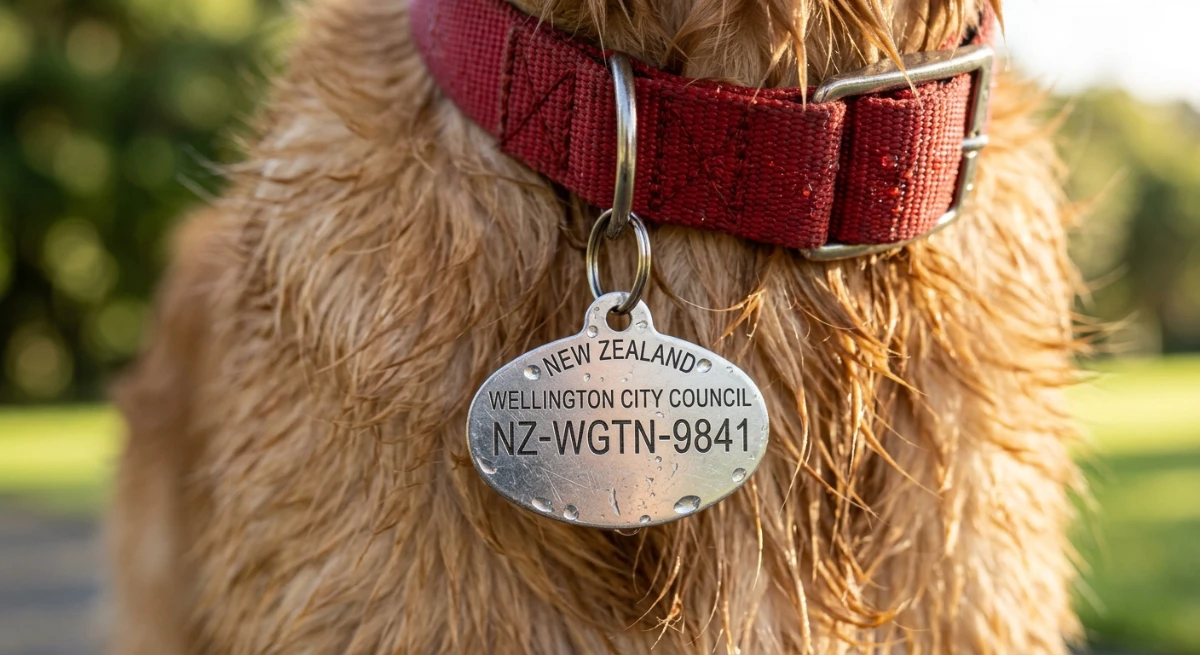
When transferring a registered dog to a new council area, your new council will issue a new tag or strap completely free of charge once you submit the transfer paperwork. Do not throw away your old tag until the new one arrives!
Step-by-step guide to transferring dog ownership
To make this as easy as possible, we have put together a breakdown of rehoming your dog in NZ: a guide to regional laws to make sure you stay on the right side of the law. Here is the step-by-step process you should follow:
- Download the form: Visit your local council’s website and search for the “Change of Dog Ownership” form.
- Fill in your details: Complete the previous owner section, including your dog’s current registration tag number.
- Get the new owner’s details: Ensure the new owner fills in their full name, date of birth, address, and contact details.
- Sign together: Both parties must sign the declaration. If you are rehoming remotely, you can scan and email the form back and forth.
- Submit to council: Send the completed form to the council via email, post, or drop it off in person at a local service center.
If you cannot contact the previous owner—perhaps you have taken in a dog from a family member who has gone overseas—you will need to complete a statutory declaration. This is a written statement declaring you are the rightful guardian, signed in the presence of an authorized witness like a Justice of the Peace (JP).
The crucial role of microchipping and the NZCAR
While council registration is a legal requirement, it is only half of the equation. Microchipping is the other crucial piece of the puzzle. Under the Dog Control Act, all dogs registered in New Zealand for the first time after 1 July 2006 must be microchipped.
A microchip is a tiny transponder about the size of a grain of rice. It is implanted under the dog’s skin between the shoulder blades. This chip contains a unique 15-digit number that can be read by any standard scanner.
Crucially, council records and the New Zealand Companion Animal Register (NZCAR) are separate databases. The NZCAR is a national database used by vets, shelters, and rescues to reunite lost pets with their families.
When rehoming your dog, you must transfer the microchip registration on the NZCAR. This is usually done by contacting your vet or logging into the NZCAR portal directly. There is a small, one-off fee to update the guardian details, but it is worth every cent for peace of mind.
Safeguarding your dog’s future during the transition
Rehoming is an act of love. It means putting your dog’s needs first, even when it hurts. To ensure your dog transitions smoothly into their new home, we recommend sharing their full history with the new family.
Provide details about their favorite food, veterinary records, vaccination history, and behavioral quirks. If they are afraid of thunder or dislike mail carriers, let the new owner know. This practice of kaitiakitanga (guardianship) ensures the dog is understood and cared for from day one.
Before handing over the leash, ensure you have signed the council change of ownership form, provided the microchip details, and initiated the transfer on the NZ Companion Animal Register.
By following this checklist and understanding the details of rehoming your dog in NZ: a guide to regional laws, you can ensure your dog’s journey is legally sound and emotionally reassuring. It is about doing right by your best mate, every step of the way.
If you are currently looking for a new family for your dog, or if you are ready to welcome a new dog into your home, we are here to help. Our peer-to-peer platform connects good people directly, keeping dogs out of shelters and in comfortable homes.
Trust your gut. Take your time. You will know when the fit is right. And when that day comes, refer back to our guide on rehoming your dog in NZ: a guide to regional laws to keep your transition smooth and stress-free.
Written by the Pet Rescue NZ Editorial Team
We are a family-run, community-driven team of pet advocates based in New Zealand. Our mission is to support Kiwi pet owners with honest, practical, and legally accurate advice to ensure every pet stays safe, loved, and out of shelters.