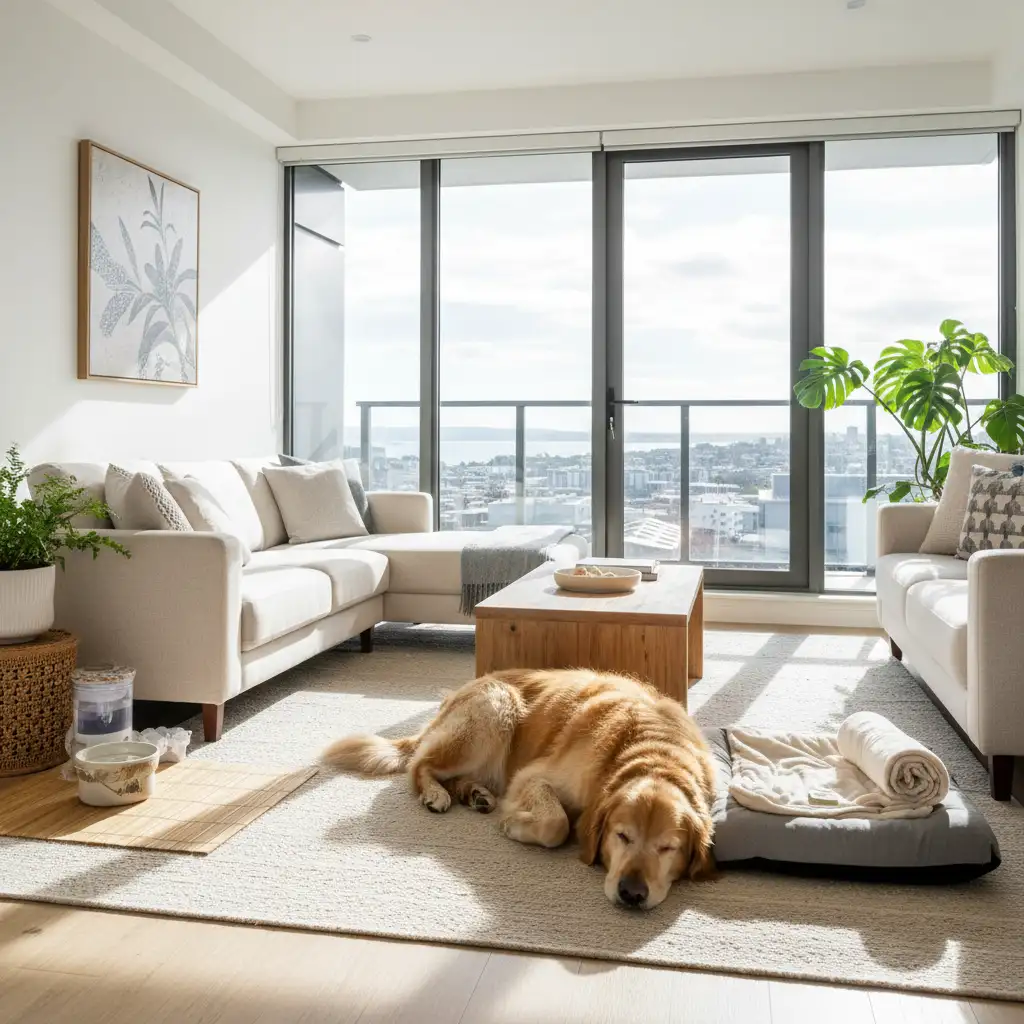
Body Corporate Rules vs Pet Ownership
Body corporate rules regarding pets in New Zealand are governed by the Unit Titles Act 2010. While bodies corporate can establish operational rules, they cannot enforce blanket bans that are deemed ‘unreasonable’ or ‘ultra vires.’ Typically, owners must seek written consent to keep a pet, which the committee cannot unreasonably withhold unless the animal poses a significant nuisance or safety risk.
Living in a unit title property—such as an apartment, townhouse, or suburban unit—offers a convenient lifestyle, but it comes with a layer of governance known as the Body Corporate. For animal lovers, navigating body corporate rules pets NZ can be one of the most stressful aspects of purchasing or renting a strata property. The tension between a resident’s desire for companionship and the collective desire for peace and quiet often leads to disputes.
Historically, many New Zealand apartment complexes enforced strict “no pets” policies. However, the legal landscape has shifted significantly in recent years. Courts and the Tenancy Tribunal are increasingly viewing blanket bans as unreasonable, favoring a case-by-case assessment system. This guide provides a comprehensive look at your rights, the application process, and the legal realities of keeping pets in unit title developments.
The Legal Framework: Unit Titles Act 2010
To understand your rights, you must first understand the legislation that governs strata titles in New Zealand: the Unit Titles Act 2010. Under this Act, every unit owner is automatically a member of the body corporate. The body corporate has the power to make “operational rules” that govern the use of the units and the common property.
These rules are intended to facilitate the management of the complex and ensure the quiet enjoyment of all residents. However, Section 106 of the Act places specific limitations on these rules. Crucially, a rule is invalid if it is “ultra vires” (beyond the powers of the body corporate) or if it is unreasonable.
Default Operational Rules vs. Amended Rules
The Unit Titles Regulations 2011 provide a set of “default” operational rules found in Schedule 1. Interestingly, the default rule regarding pets is quite permissive. It states that a unit owner or occupier may keep a pet providing they have the written consent of the body corporate, and that such consent will not be unreasonably withheld.
However, bodies corporate are free to amend these rules. Many older complexes have customized rules that explicitly state “no animals are permitted.” This is where the conflict arises. Even if a body corporate has a custom rule banning pets, that rule can be challenged if it is deemed oppressive or unreasonable under the overarching principles of the Unit Titles Act.
Challenging ‘No Pets’ Rules: Are Blanket Bans Legal?
The legality of absolute bans on pets has been a hot topic in New Zealand legal circles. The prevailing view in recent case law is that a rule imposing a blanket ban on all pets, regardless of their nature, size, or likely impact on others, may be invalid.
The logic follows that body corporate rules must relate to the management, use, and enjoyment of the unit. A goldfish in a bowl, for example, has zero impact on the neighbors or the common property. Therefore, a rule banning all animals would theoretically ban the goldfish, which serves no legitimate management purpose and interferes unreasonably with the owner’s property rights.
The Concept of “Reasonableness”
When disputes reach the Tenancy Tribunal (which has jurisdiction over Unit Title disputes up to a certain monetary limit), the adjudicators often look at “reasonableness.” Is it reasonable to ban a quiet, elderly cat? Probably not. Is it reasonable to ban a large, aggressive dog in a studio apartment with thin walls? potentially yes.
For a detailed look at the legislation governing these decisions, you can review the Unit Titles Act 2010 on the New Zealand Legislation website. This resource outlines the specific powers and limitations placed on body corporate committees.
The Application Process: How to Get Approval
Regardless of whether the rules seem permissive or restrictive, you should never bring a pet into a unit title property without following the official process. Sneaking a pet in is a violation of the rules and can lead to costly legal battles or forced removal of the animal.
To maximize your chances of approval, treat your pet application like a job interview for your animal. You need to prove to the Body Corporate Committee (BCC) that your pet will not be a nuisance.
Step 1: The Pet Resume
Create a professional document detailing your pet. Include:
- Photo: A cute, non-threatening photo of the pet.
- Details: Breed, age, weight, and desexing status.
- Training: Certificates of obedience training or puppy preschool.
- Veterinary Records: Proof of vaccinations and flea/worm treatments.
- References: Letters from previous landlords or neighbors attesting that the pet is quiet and well-behaved.
Step 2: The Proposal
In your cover letter, address the committee’s potential fears directly. Propose conditions that you are willing to abide by. For example:
- “I will carry the dog through common areas to prevent soiling.”
- “The cat will be strictly indoors.”
- “I agree to an annual carpet cleaning inspection.”
Common Conditions and Restrictions
Even when a body corporate allows pets, they rarely give unconditional approval. “Consent not unreasonably withheld” usually comes with strings attached. These conditions are designed to protect the peace and asset value of the complex.
Size and Weight Limits
Many bodies corporate adopt a weight limit (e.g., “dogs under 10kg”). While this is a common shorthand for “small dogs only,” it is somewhat arbitrary. A small Jack Russell can be much louder and more disruptive than a large, lethargic Greyhound. If you have a large but quiet dog, provide evidence of the breed’s temperament to counter the weight argument.
Common Property Access
Almost all approvals will restrict the pet’s movement on common property. This usually means:
- Animals must be on a leash at all times when outside the unit.
- Animals are not allowed in shared amenities like pools, gyms, or BBQ areas.
- Owners must immediately clean up any waste dropped on common property.
- Ingress and egress may be restricted to specific doors (e.g., service elevators or basement exits) to avoid the main lobby.
Noise and Nuisance
The most significant condition is the “revocation clause.” Approvals are almost always revocable. If the dog barks incessantly, causing a disturbance to the “quiet enjoyment” of other residents, the body corporate reserves the right to rescind permission. This is the ultimate safety net for the committee.

What to Do If Your Application is Declined
If you have submitted a robust application and the body corporate declines it without a valid reason, or simply points to a “no pets” rule, you have options. The first step is negotiation. Ask for the specific reasons for the refusal. If the refusal is based on a misconception (e.g., “dogs smell”), you can provide evidence to the contrary.
Mediation and the Tenancy Tribunal
If the committee remains obstinate, you can apply to the Tenancy Tribunal. Under the Unit Titles Act, the Tribunal hears disputes between unit owners and bodies corporate. You would argue that the decision to withhold consent was “unreasonable” or that the rule banning pets is “ultra vires” (invalid).
It is important to note that this process can be time-consuming and may create friction with your neighbors. However, precedent is often on the side of the pet owner, provided the pet is suitable for apartment living. For more on dispute resolution processes, refer to Tenancy Services, which provides resources for both residential tenancies and unit title disputes.
Tenants vs. Owners: Understanding the Difference
There is a critical distinction between being a Unit Owner and a Tenant renting a unit. The hierarchy of permission is different.
For Owners: You deal directly with the Body Corporate rules. If the rules say yes, you are generally good to go.
For Tenants: You have two hurdles. First, the Body Corporate rules must allow pets. Second, your Landlord must allow pets. Even if the building is pet-friendly, your landlord can still legally decline pets in your tenancy agreement (though recent changes to the Residential Tenancies Act encourage landlords not to unreasonably refuse). Conversely, if your landlord says yes, but the Body Corporate says no, the Body Corporate rule wins. You cannot keep the pet.
Tenants should always ask to see a copy of the Body Corporate Operational Rules before signing a tenancy agreement to ensure they align with their pet ownership plans.
Tips for Responsible Pet Ownership in Strata
Successfully keeping a pet in an apartment or unit complex requires a higher level of diligence than living in a detached house. You are living in high-density housing, and your actions directly affect your neighbors.
- Soundproofing: If you have hard floors, consider adding rugs to dampen the sound of claws clicking, which can annoy neighbors below.
- Enrichment: Bored dogs bark. Ensure your pet has plenty of toys and exercise to keep them calm during the day.
- Odor Control: In smaller spaces, smells accumulate faster. Be rigorous with litter box cleaning and grooming.
- Be a Good Neighbor: If your dog has an accident in the hallway, clean it up immediately and thoroughly. Apologize to neighbors if your pet makes noise. Goodwill goes a long way in preventing complaints from escalating into formal breach notices.
Navigating body corporate rules pets NZ requires patience, preparation, and a willingness to compromise. By understanding the Unit Titles Act and presenting a professional case for your pet, you can often overcome the hurdles of strata living and enjoy your home with your furry companion.
People Also Ask
Can a body corporate ban pets in NZ?
Technically, a body corporate can have a rule banning pets, but such rules are increasingly being challenged as “unreasonable” or “ultra vires” under the Unit Titles Act 2010. If a rule unjustifiably restricts a unit owner’s rights without a valid management reason, the Tenancy Tribunal may overturn it.
What happens if I keep a pet without body corporate permission?
If you keep a pet without permission, you are in breach of the operational rules. The body corporate can issue a formal notice requiring you to remove the pet. If you refuse, they can take the matter to the Tenancy Tribunal, which can order the removal of the animal and potentially impose fines.
Can a landlord say no to pets if the body corporate allows them?
Yes. A tenant needs permission from both the landlord and the body corporate. Even if the building rules allow pets, a landlord can choose to exclude pets in the tenancy agreement, provided they comply with the Residential Tenancies Act regulations regarding reasonable consent.
What does ‘consent not unreasonably withheld’ mean?
This legal phrase means the body corporate cannot say ‘no’ just because they don’t like pets. They must have a valid, objective reason for refusal, such as the specific animal being a known danger, a noise nuisance, or inappropriate for the size of the unit.
How do I write a pet application for a body corporate?
A strong application should include a ‘pet resume’ with a photo, breed details, vaccination records, and training certificates. Include references from previous neighbors or landlords and a cover letter outlining how you will manage the pet to prevent noise and mess.
Can a body corporate force me to remove my pet?
The body corporate itself cannot physically remove the pet, but they can obtain an order from the Tenancy Tribunal enforcing the rules. If the Tribunal orders the removal of the pet due to a breach of rules or nuisance, you are legally required to comply.
