
Finding Pet-Friendly Rentals Wellington
Finding pet friendly rentals in Wellington requires a proactive approach involving the creation of a comprehensive pet resume, targeting specific suburbs like Miramar and the Hutt Valley, and utilizing advanced search filters on platforms like TradeMe Property. Success often hinges on demonstrating responsible pet ownership to potential landlords in this competitive market.
The Challenge of Pet-Friendly Renting in Wellington
Wellington is renowned for its vibrant culture, stunning harbor, and accessible green belts, making it a fantastic city for pet owners. However, the rental market in the capital is notoriously competitive. When you add a furry companion to the equation, the pool of available properties shrinks significantly. For tenants, this creates a high-stakes environment where preparation and strategy are paramount.
The hesitation from landlords often stems from concerns regarding property damage, noise complaints from neighbors in high-density housing, and lingering odors. In a market where open homes often see dozens of groups, a landlord may view a tenant with a pet as an unnecessary risk compared to a tenant without one. To overcome this, tenants must shift their mindset from passive searching to active advocacy. You are not just selling yourself as a reliable tenant; you are selling your pet as a low-risk, well-behaved addition to the property.
Understanding the local geography is also crucial. Wellington’s topography—characterized by steep hills and winding access ways—presents unique challenges for dog owners specifically. A property might be listed as having a “yard,” but in Wellington, that could mean a steep, unfenced bank of clay and gorse. Therefore, verifying the physical suitability of a rental is just as important as securing the landlord’s permission.
Top Suburbs for Pet-Friendly Living
While you can find pet-friendly pockets throughout the Greater Wellington region, certain suburbs are historically more accommodating due to larger section sizes, proximity to dog parks, and a higher density of standalone homes rather than apartments.
The Hutt Valley (Lower and Upper Hutt)
If you are willing to commute, the Hutt Valley offers the highest inventory of pet-friendly housing. Suburbs like Petone, Waterloo, and Silverstream generally feature flat sections with full fencing—a gold standard for dog owners. The rental prices here can also be slightly more forgiving than the central city, allowing tenants to offer slightly above the asking price to secure a pet clause, a common tactic in competitive negotiations.
Miramar Peninsula and Eastern Suburbs
Miramar, Seatoun, and Strathmore Park are highly coveted by pet owners. The proximity to beaches (many of which have off-leash areas) and the generally family-oriented demographic make landlords here slightly more open to pets. The housing stock is predominantly standalone 1930s bungalows, which often come with established yards.
Karori and Western Suburbs
Karori is one of New Zealand’s largest suburbs and is flanked by Zealandia and extensive walking tracks like Wrights Hill. While it can be damp, the access to outdoor recreation is unmatched. Rental properties here are often larger family homes, which are more likely to accept a cat or a dog than the townhouses found in the CBD.
Te Aro and CBD (The Challenge)
Finding a pet-friendly rental in Te Aro or Mount Victoria is difficult but not impossible. The trend toward modern apartment living has seen some body corporates relax rules regarding small pets and cats. However, you must always ask to see the Body Corporate rules before signing a tenancy agreement, as a landlord’s permission does not override building bylaws.
Mastering the Search: Platforms and Tools
To find a property, you must utilize the digital tools available effectively. The two primary platforms in New Zealand are TradeMe Property and realestate.co.nz, but using them requires specific tactics.
Optimizing TradeMe Filters
TradeMe is the dominant player in the market. When searching, utilize the “Pets OK” filter, but be aware of its limitations. Some landlords select “No Pets” by default but might be open to negotiation for the right tenant.
Pro Tip: Set up two saved searches. One with the “Pets OK” filter enabled for immediate opportunities, and a second search without the filter but with specific keywords like “fully fenced,” “courtyard,” or “negotiable” in the description. This allows you to spot properties that are physically suitable for pets, giving you an opening to inquire even if the listing doesn’t explicitly say yes.
Community Advocacy Groups
Facebook groups such as “Vic Deals” (popular with students and young professionals) and specific “Rentals Wellington” groups are invaluable. In these spaces, you can post a “Tenant Available” ad. This reverses the dynamic; instead of applying for a house, you pitch yourself. Include a photo of you and your pet. Landlords who self-manage their properties often monitor these groups to find tenants without paying advertising fees.
The Power of a Pet Resume
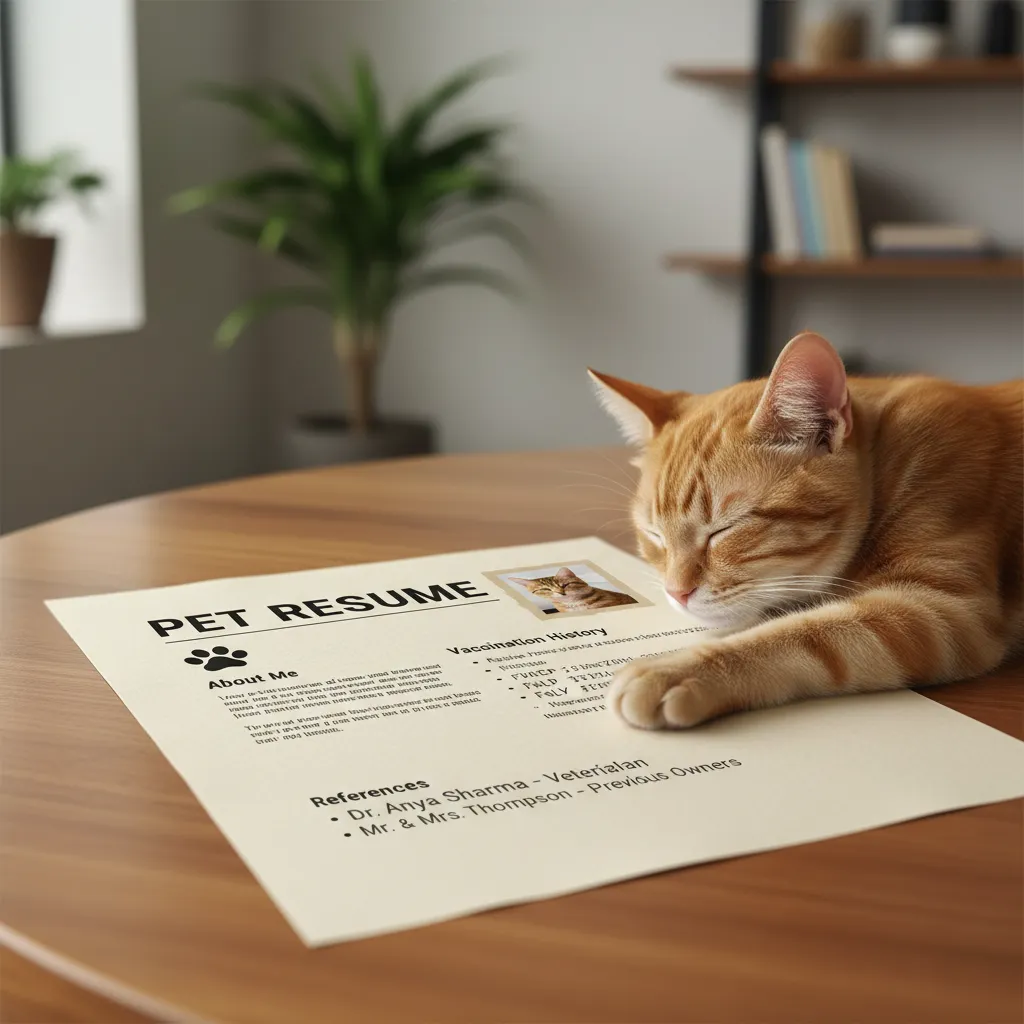
In a market where landlords receive 50+ inquiries for a single viewing, a generic application will get lost. To stand out, you must treat your pet application as seriously as a job application. This is where the “Pet Resume” becomes your most powerful asset.
A Pet Resume is a one-page document dedicated solely to your animal. It serves to humanize the pet and address landlord fears proactively. It should include:
- The Basics: Name, age, breed, and size/weight.
- A Professional Photo: A cute, clean photo of your pet looking well-behaved.
- Health Status: Proof of desexing, flea/worming treatments, and up-to-date vaccinations. This shows you are a responsible owner who spends money on maintenance.
- Behavioral References: Written references from previous landlords specifically stating the pet caused no damage and was not a nuisance. If you haven’t rented before, a reference from a veterinarian or dog trainer is a strong substitute.
- Personality Profile: A brief description of their temperament. Use phrases like “crate trained,” “sleeps most of the day,” or “indoor-only cat.”
Navigating Property Managers and Private Landlords
There is a distinct difference between dealing with property management companies and private landlords in Wellington.
Property Management Companies
Property managers are bound by the instructions of the property owner, but they also prefer low-maintenance tenants. Some agencies in Wellington have a reputation for being strictly “no pets” due to efficiency policies. However, boutique agencies are often more flexible. When dealing with a property manager, bring the Pet Resume to the viewing. Handing it over physically makes a lasting impression that a digital attachment cannot match.
Private Landlords
Private landlords are often your best bet. They are more likely to make decisions based on gut feeling and personal connection. If you meet a private landlord at a viewing, engage with them. Mention your pet early but frame it responsibly. For example, “I have a 5-year-old Labrador who is crate trained and comes with excellent references from my current landlord.” This direct approach cuts through the uncertainty.
Legal Rights: The Residential Tenancies Act
Understanding the legal landscape is critical for tenant advocacy. In New Zealand, the Residential Tenancies Act (RTA) governs the relationship between landlord and tenant.
The Myth of the “Pet Bond”
It is vital to understand that pet bonds are illegal in New Zealand. A landlord cannot charge more than the equivalent of four weeks’ rent as a bond, regardless of whether you have a pet. If a landlord asks for an extra “pet bond” on top of the maximum legal bond, they are breaching the RTA.
However, landlords can include specific clauses in the tenancy agreement regarding the pet. For example, they may require that carpets are professionally cleaned upon vacating the property. This is a common and reasonable compromise to secure a rental. For authoritative information on bond limits, always refer to Tenancy Services.
Can Landlords Ban Pets?
Currently, New Zealand landlords have the right to prohibit pets. Unlike some jurisdictions that are moving towards “pets by default,” NZ law still allows landlords to enforce a “no pets” policy. This is why negotiation and presentation are so critical. However, once a pet is allowed and written into the agreement, the landlord cannot unreasonably revoke that permission without cause.
Securing the Lease: Negotiation Strategies
When you find the perfect property, how do you close the deal?
- Offer to Pay More Rent: While illegal to charge extra bond, it is legal to offer a slightly higher weekly rent (e.g., $10-$20 extra) to cover the perceived risk. This is often the tipping point for hesitant landlords.
- Extended Notice Periods: While fixed-term tenancies are standard, offering a longer fixed term (e.g., 12 months or more) shows stability. Landlords love stability.
- The “Meet and Greet”: Offer to bring your dog to meet the landlord or property manager. A well-behaved dog in person is the best sales pitch you can make.
- Liability Insurance: Inform the landlord that you hold personal liability insurance (often part of contents insurance) that covers accidental damage to the property. This reassures them that if the worst happens, they are not out of pocket.
Finding a pet-friendly rental in Wellington is undeniably a challenge, but it is one that can be overcome with professionalism, preparation, and persistence. By presenting yourself and your pet as a package deal of responsibility and reliability, you can unlock doors that might otherwise remain closed.

People Also Ask
Can a landlord refuse pets in Wellington?
Yes, under current New Zealand law, landlords have the right to refuse pets. They can state “no pets” in their rental listing and tenancy agreement. However, tenants can try to negotiate this term before signing the lease.
Are pet bonds legal in New Zealand?
No, pet bonds are not legal in New Zealand. A landlord cannot charge more than four weeks’ rent as a bond. Charging an additional fee specifically for a pet is a breach of the Residential Tenancies Act.
What is a pet resume for rental applications?
A pet resume is a document created by a tenant to showcase their pet to prospective landlords. It typically includes the pet’s photo, breed, age, vaccination status, and references from previous landlords or vets to prove the pet is well-behaved.
Which Wellington suburbs are best for dog owners?
Suburbs like Miramar, Seatoun, Karori, and the Hutt Valley (Petone, Lower Hutt) are popular for dog owners due to their larger section sizes, access to beaches, and proximity to green spaces and dog parks.
Can I be evicted for getting a pet without asking?
If your tenancy agreement explicitly states “no pets” and you bring a pet onto the property without permission, you are in breach of your contract. The landlord can issue a 14-day notice to remedy the breach (remove the pet) or apply to the Tenancy Tribunal to end the tenancy.
How do I find pet-friendly flats in Wellington?
Use search filters on TradeMe Property (select ‘Pets OK’), join Facebook groups like “Vic Deals” or “Rentals Wellington” to post “Tenant Available” ads, and create a strong pet resume to present to private landlords and property managers.
