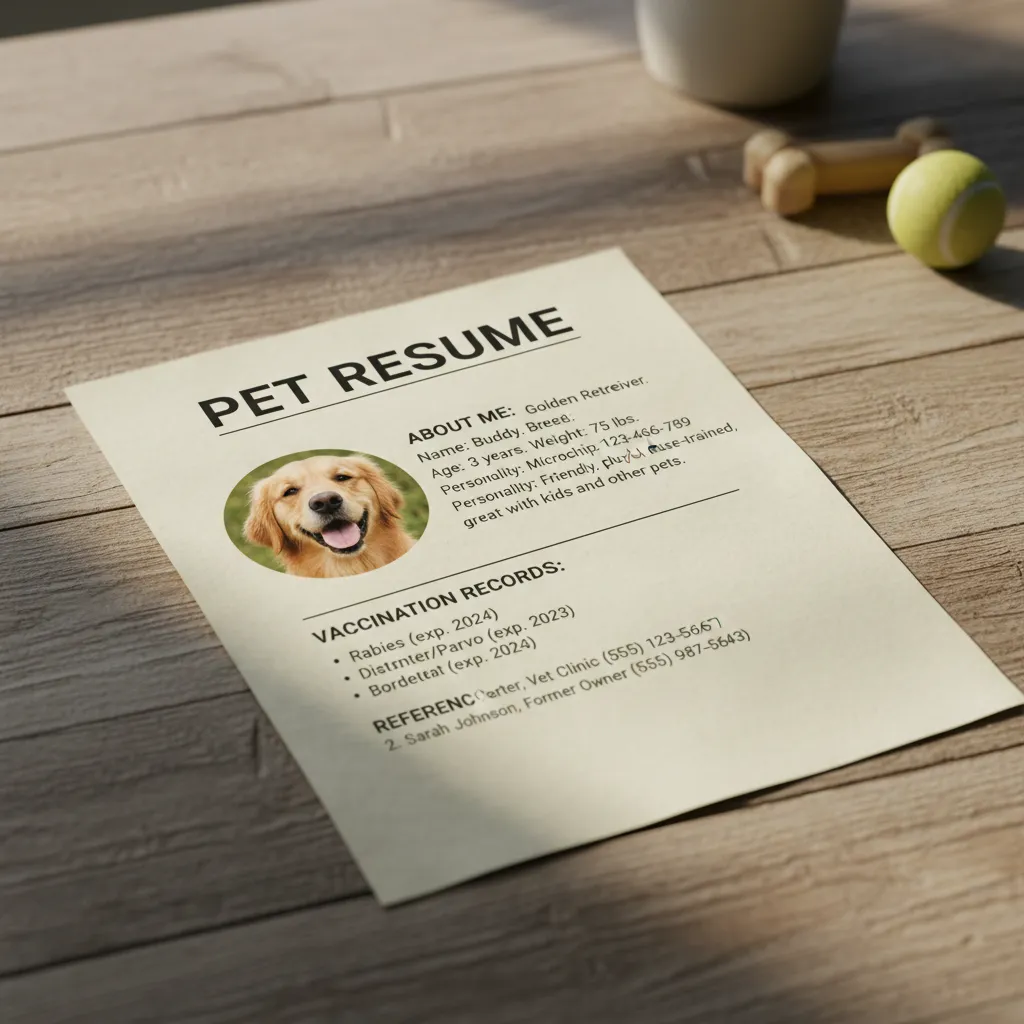
Pet CV Templates for Rentals
A pet CV for rental application is a professional document designed to demonstrate responsible pet ownership to prospective landlords. It typically includes the animal’s breed, age, vaccination status, training certifications, spay/neuter confirmation, and references from previous landlords or veterinarians. The primary goal is to alleviate property owner concerns regarding noise, damage, and liability.
What is a Pet CV for Rental Applications?
In a competitive rental market, finding housing that accommodates pets can be one of the most stressful hurdles for tenants. Many landlords implement strict “no pets” policies or breed restrictions based on generalized fears of property damage, noise complaints, or insurance liabilities. A Pet CV (Curriculum Vitae), or pet resume, acts as a persuasive tool to bridge this gap.
Unlike a simple verbal assurance that your dog is “a good boy,” a Pet CV provides tangible evidence of your dedication to responsible ownership. It shifts the narrative from “risky animal” to “well-managed family member.” By presenting a professional document, you signal to the property manager that you take the condition of their property seriously and that your pet is unlikely to cause the issues they fear.
Why a Pet Resume Helps Secure a Rental
To write an effective resume, you must understand the psychology of the landlord. Property owners are business people. Their primary motivation is asset protection and consistent revenue. When they see an application with a pet, they often visualize scratched floors, stained carpets, incessant barking, and flea infestations.
A comprehensive pet CV for rental application addresses these specific pain points directly:
- It proves proactive responsibility: The mere act of creating a resume shows you go above and beyond average tenants.
- It addresses liability: By documenting vaccinations and insurance, you remove legal and health worries.
- It humanizes the pet: A name, a photo, and a personality description turn an abstract “animal” into a specific, known entity.
- It offers verification: References allow the landlord to verify your claims with a third party.
According to the Humane Society of the United States, demonstrating that your pet is spayed/neutered and providing references can significantly increase your chances of securing pet-friendly housing. Landlords are far more likely to make an exception to a “no pets” rule if they are presented with a dossier that mitigates their risk.
Essential Components of a Winning Pet CV
Your pet’s resume should be concise, professional, and easy to read. It should mirror the structure of a human professional resume but tailored to animal behavior and health.
1. The “Header” and Basic Stats
Start with the basics. Landlords need to know exactly what they are dealing with. Be honest—falsifying breed or weight can lead to eviction later.
- Name: (e.g., “Barnaby”)
- Breed: (e.g., “Labrador Mix”)
- Age: (Older pets are often viewed as lower risk than puppies)
- Weight: (Crucial for weight-limit restrictions)
- Sex & Spay/Neuter Status: (Neutered animals are perceived as less aggressive and less likely to mark territory)
2. Training and Certifications
This is the most persuasive section of the document. If your dog has undergone formal training, list it here. Ideally, you want to show that the animal obeys commands and is socialized.
- Formal Classes: Puppy kindergarten, obedience school.
- Certifications: The AKC Canine Good Citizen (CGC) test is the gold standard for rental applications. If your dog has this, highlight it prominently.
- Behavioral Traits: Crate trained, house broken, does not chew furniture.
The Power of References and Health Records
Claims of good behavior are subjective; third-party validation is objective. Including a dedicated section for references can make or break your application.
Who to Ask for References
Do not use your mother or best friend. Use authoritative figures who can speak to the animal’s behavior in a professional or residential setting.
- Previous Landlords: The holy grail of references. A letter stating “The pet caused no damage and created no noise complaints” is invaluable.
- Veterinarians: A statement confirming the pet is healthy, flea-free, and up-to-date on shots.
- Dog Trainers/Walkers: Professionals who can vouch for the animal’s temperament.
- Neighbors: If you live in an apartment, a neighbor’s note confirming they never hear your dog bark is powerful evidence.
Veterinary and Health Data
Landlords fear infestations. Explicitly state that your pet is on a regular flea and tick prevention regimen. Include a copy of the vaccination records (Rabies, DHPP, Bordetella) as an appendix to the CV. This shows you are a tenant who maintains a clean and hygienic household.
Adding Photos and Personality Descriptions
While data is important, emotional connection closes the deal. You need to include a photo, but not just any photo. Avoid blurry action shots or photos where the dog looks aggressive or hyperactive.
The Ideal Photo Strategy:
- The “Sleepy” Shot: A photo of the pet sleeping or lounging suggests low energy and quiet behavior.
- The “Groomed” Shot: A clean, well-groomed animal suggests a clean home.
- The “Social” Shot: A photo of the dog interacting gently with a person or another animal.

Writing the Personality Bio:
Keep it brief and focused on “tenant” qualities. Instead of saying “He loves to play fetch,” write “He is a low-energy indoor dog who spends most of the day napping while I am at work.” Highlight traits like “quiet,” “friendly to strangers,” and “does not suffer from separation anxiety.”
Downloadable Pet CV Templates
Below are two templates you can copy, paste into a document editor, and customize. One is designed for dogs, and one for cats.
Template 1: The Responsible Dog Resume
[INSERT PHOTO OF DOG HERE]
BASIC INFORMATION
Name: [Pet Name]
Breed: [Breed]
Age: [Age]
Weight: [Weight]
Gender: [Male/Female] (Spayed/Neutered)
ABOUT ME
I am a fully house-trained, crate-trained, and well-mannered dog. I am accustomed to apartment living and spend my days napping while my owner is at work. I rarely bark and have no history of chewing furniture or causing property damage. I am up-to-date on all vaccinations and on a strict flea/tick prevention schedule.
TRAINING & BEHAVIOR
- House Broken: Yes
- Crate Trained: Yes
- Obedience Training: [List classes or “Basic Home Training”]
- Certifications: [e.g., AKC Canine Good Citizen]
HEALTH
- Veterinarian: [Vet Name & Clinic]
- Vaccinations: Fully Up-to-Date (Records Attached)
- Flea/Tick Control: Monthly [Brand Name]
REFERENCES
[Previous Landlord Name]
[Phone Number] | [Email]
“[Pet Name] was a wonderful tenant. We had no noise complaints or damage upon move-out.”
[Veterinarian/Trainer Name]
[Phone Number] | [Email]
“[Pet Name] is healthy, well-socialized, and non-aggressive.”
Template 2: The Sophisticated Cat Resume
[INSERT PHOTO OF CAT HERE]
BASIC INFORMATION
Name: [Pet Name]
Age: [Age]
Spay/Neuter Status: Yes
ABOUT ME
I am a strictly indoor cat with excellent litter box habits. I am spayed/neutered and do not spray or mark territory. I am accustomed to using scratching posts rather than furniture. I am quiet, clean, and sleep approximately 16 hours a day.
HEALTH & HYGIENE
- Litter Box Trained: Yes (100% reliability)
- Flea Prevention: Yes (Indoor only, but treated monthly)
- Vaccinations: Up-to-Date
- Nail Trimming: Nails trimmed weekly to prevent scratching.
REFERENCES
[Previous Landlord Name]
[Phone Number]
“The apartment was left in pristine condition. No odors or scratches.”
How to Present Your Pet’s Portfolio
The timing of when you present the pet CV for rental application is almost as important as the content itself. Do not wait until the lease signing to mention the pet. However, leading with “I have a pit bull” before you’ve even seen the unit can result in an immediate rejection.
- The Inquiry Stage: When asking about the property, mention you have a “well-trained, resume-carrying” pet. This intrigues landlords and sets you apart from the start.
- The Viewing: Bring a printed copy of the Pet CV to the viewing. Hand it to the landlord or agent along with your own application. The physical quality of the paper and the professional layout sends a subconscious signal of high-quality tenancy.
- The Offer: If the landlord is hesitant, offer to introduce the pet. A “pet interview” combined with the CV can alleviate fears.
Overcoming Common Landlord Objections
Even with a great CV, landlords may have objections. Here is how to handle them using your resume data:
Objection: “We worry about noise.”
Response: Point to the references section of your CV. “I understand. That is why I included the phone number of my last landlord, who can confirm that my dog, Buster, never caused a noise complaint in three years.”
Objection: “Large dogs cause too much damage.”
Response: Highlight the crate training and exercise regimen. “He is a large dog, but as you can see in his bio, he is crate trained when I am not home and gets two hours of exercise a day, so he is very calm indoors. I also carry renter’s insurance that covers pet damage.”
Objection: “We have a strict no-pet policy.”
Response: “I respect that. However, if you are struggling to find a qualified tenant with my credit score and income, would you consider a trial period or an additional pet deposit? My Pet CV demonstrates that I am not an average pet owner.”
For more information on legal rights and negotiating with landlords, trusted resources like the Nolo Legal Encyclopedia provide excellent guidance on pet addendums and security deposits.
Related Resources on Pet Rehoming
- Understanding Home-to-Home Pet Rehoming
- 🐾 The Best Way to Rehome a Dog in NZ
- Find Local Dog Rehoming Services in NZ for Your Pet
Frequently Asked Questions
What should I write about my pet for a rental application?
You should focus on responsible behavior, health, and hygiene. Include your pet’s name, age, breed, spay/neuter status, vaccination records, and flea control. Crucially, mention training certifications (like crate training or obedience school) and provide references from previous landlords or veterinarians.
Do pet resumes actually work for rentals?
Yes, they are highly effective. A pet resume distinguishes you from other applicants by showing professionalism and proactive responsibility. It addresses landlord fears regarding liability and damage before they can become deal-breakers, often swaying landlords to make exceptions to “no pet” rules.
How do I convince a landlord to accept a large dog?
To convince a landlord to accept a large dog, provide proof of “Canine Good Citizen” training, offer a pet interview, and provide references from previous housing. Emphasize that the dog is crate-trained and exercised regularly to prevent indoor hyperactivity. Offering an extra pet deposit or pet rent can also help.
What counts as a pet reference?
A valid pet reference is a statement from a professional or previous housing provider who has observed the animal. The best references come from previous landlords, property managers, veterinarians, professional dog trainers, or groomers. Avoid using family members or friends.
Should I include a picture on a pet CV?
Absolutely. A photo humanizes the animal and can dispel fears. Choose a photo that shows the pet looking calm, clean, and well-behaved—such as sleeping or sitting obediently. Avoid photos that look aggressive (barking) or messy (muddy paws).
Is a pet CV legally binding?
The CV itself is not a legal contract; it is a marketing tool. However, if the landlord accepts your application based on the CV, the information provided (like breed or weight) must be truthful. If you lie on the CV and the lease is signed based on that fraud, it could be grounds for eviction.
