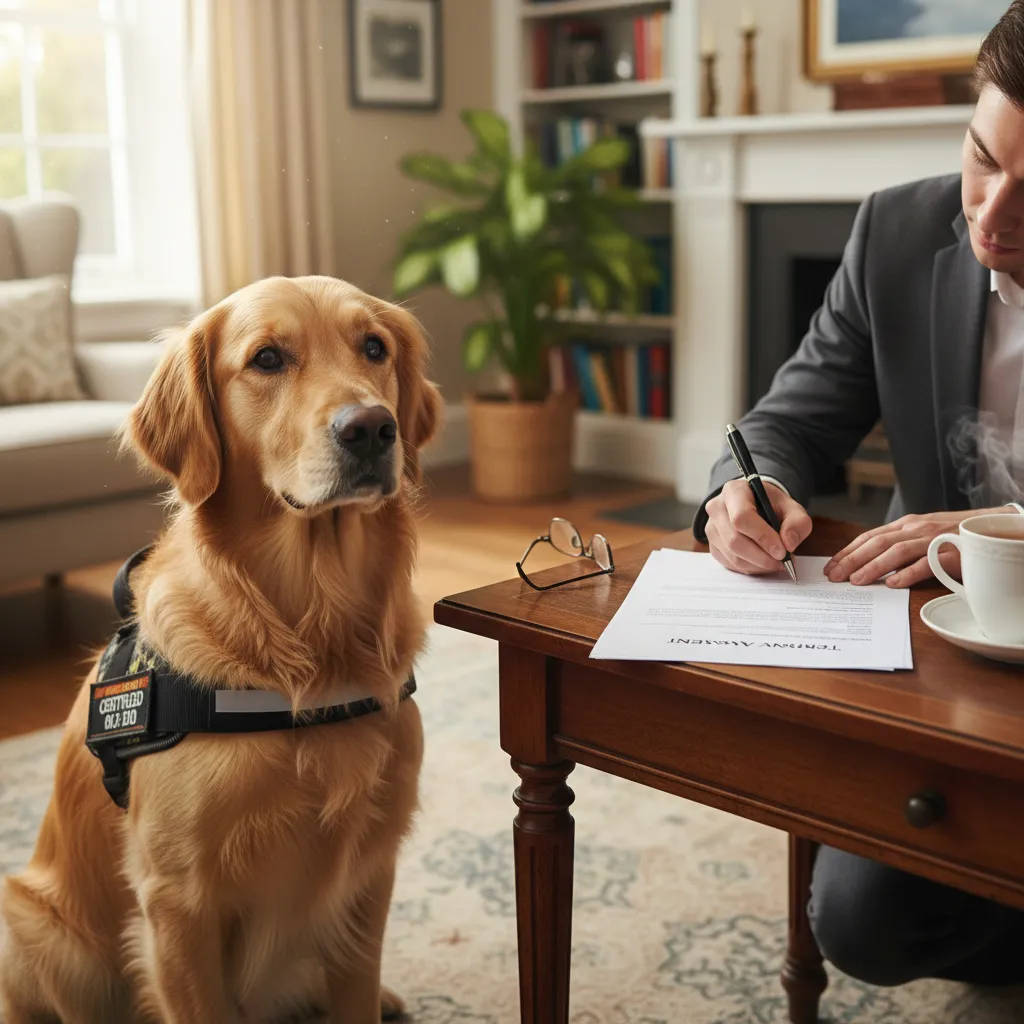
Rights of Tenants with Assistance Dogs
Disability dog tenancy rights in NZ are legally protected under the Human Rights Act 1993 and the Dog Control Act 1996. Landlords are prohibited from refusing a tenancy or enforcing “no pets” clauses against tenants with certified disability assist dogs, as this constitutes unlawful discrimination based on disability, provided the dog is certified by a recognized organization.
Understanding Disability Assist Dogs in New Zealand Legislation
Navigating the rental market can be challenging for any tenant, but for individuals relying on disability assist dogs, the intersection of tenancy law and human rights legislation is of paramount importance. In New Zealand, the rights of tenants with assistance dogs are robust, designed to ensure that no individual is disadvantaged in their search for housing due to their reliance on a service animal.
The foundation of these rights lies primarily in the Human Rights Act 1993. Under this Act, it is illegal to discriminate against a person on the grounds of disability. This protection extends to the use of aids and appliances, and crucially, the reliance on a disability assist dog. Therefore, refusing to rent a property to someone because they have a guide dog, hearing dog, or mobility dog is effectively a refusal based on the person’s disability, which is unlawful.
Furthermore, the Dog Control Act 1996 provides a specific legal definition for what constitutes a “disability assist dog.” This is not a loose term; it refers to dogs certified by specific organizations authorized to train dogs to assist persons with disabilities. This legislative framework ensures that the rights are reserved for legitimate service animals that perform essential tasks for their handlers, distinguishing them from general pets.
It is vital for both landlords and tenants to understand that the Residential Tenancies Act 1986 works in tandem with these laws. While landlords have the right to prohibit pets in general, a disability assist dog is legally viewed not merely as a “pet” but as an extension of the person’s disability support system. Consequently, standard “no pets” clauses in tenancy agreements are unenforceable when applied to certified disability assist dogs.
Assistance Dogs vs. Emotional Support Animals: The Legal Distinction
One of the most common sources of confusion and conflict in the rental sector is the distinction between a certified Disability Assist Dog and an Emotional Support Animal (ESA) or therapy pet. In New Zealand law, this distinction is sharp and carries significant consequences regarding tenancy rights.
Certified Disability Assist Dogs
A Disability Assist Dog is explicitly defined in Section 2 of the Dog Control Act 1996. To qualify, the dog must be certified by one of the specific organizations listed in the Act (or authorized by the Governor-General). These organizations include:
- Blind Low Vision NZ (formerly the Blind Foundation)
- Assistance Dogs New Zealand Trust
- Hearing Dogs for Deaf People New Zealand
- New Zealand Epilepsy Assist Dog Trust
- Mobility Dogs
- Perfect Partners Assistance Dogs Trust
- K9 Medical Detection New Zealand
Dogs from these organizations undergo rigorous training to perform specific tasks that mitigate their handler’s disability. Because of this high standard of training and certification, they are granted full public access rights, including access to rental housing, shops, and public transport.
Therapy Pets and Emotional Support Animals (ESAs)
In contrast, Emotional Support Animals (ESAs) and therapy pets do not currently enjoy the same automatic legal protections in New Zealand tenancy law. While an ESA provides comfort and support to individuals with mental health conditions, they are not classified as “disability assist dogs” under the Dog Control Act unless they are certified by one of the recognized bodies mentioned above.
This means that if a tenant has a dog for emotional support that is not certified by a recognized organization, a landlord is technically entitled to enforce a “no pets” policy. However, tenants can still request a modification to the tenancy agreement. If the landlord refuses, the tenant may argue their case based on reasonable accommodation, but the legal footing is not as absolute as it is for certified assist dogs. Tenants with ESAs are encouraged to negotiate openly with landlords, providing references for the dog’s behavior and perhaps offering a pet CV.
Can a Landlord Refuse a Certified Assistance Dog?
The short answer is no. A landlord cannot refuse a tenancy application or terminate a tenancy solely because the tenant has a certified disability assist dog. Doing so is a breach of the Human Rights Act.
The “No Pets” Clause Exception
Many standard tenancy agreements in New Zealand include a clause stating, “No pets allowed.” While this is valid for companion animals, it is void and unenforceable regarding certified disability assist dogs. A landlord cannot use this clause to evict a tenant or deny entry to a certified dog. If a landlord attempts to enforce this clause against a certified assist dog, they expose themselves to legal action through the Tenancy Tribunal and the Human Rights Commission.
For more detailed information on discrimination laws, you can refer to the New Zealand Human Rights Commission, which outlines the specific protections for disability.
Reasonable Accommodations and Undue Hardship
While the right to housing with an assistance dog is strong, it operates within the framework of “reasonable accommodation.” A landlord must make reasonable accommodations for a person with a disability. However, there are rare exceptions where a landlord might claim “undue hardship.”
For example, if a property is fundamentally unsuitable for a dog (e.g., extremely small shared living quarters where another resident has a severe, medically documented allergy to dogs), a landlord might argue that accommodating the dog imposes an undue hardship. However, the threshold for proving undue hardship is incredibly high. Mere preference, minor inconvenience, or a general dislike of dogs does not constitute undue hardship. The law overwhelmingly favors the rights of the disabled tenant to access housing.
Required Documentation and Certification
To access the legal protections afforded to disability assist dogs, tenants must be able to provide proof of certification. A landlord is entitled to ask for verification that the dog is indeed a certified disability assist dog and not merely a pet.
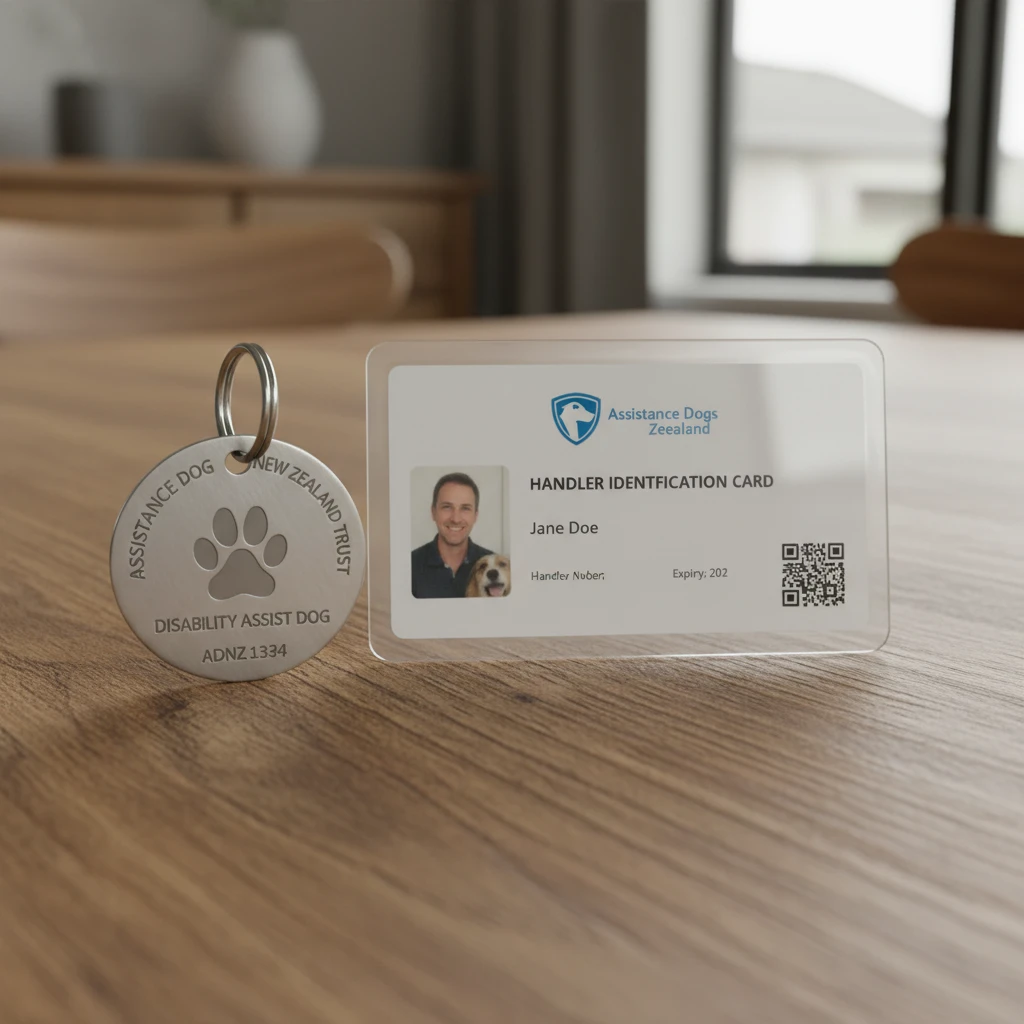
Valid Forms of Identification
Tenants should be prepared to show:
- ID Tags: Most certified dogs wear a specific tag on their collar identifying the certifying organization (e.g., a tag from Blind Low Vision NZ).
- Handler’s ID Card: The handler is usually issued a photo ID card by the organization, confirming they are the registered handler of the dog.
- Coat or Harness: While not a legal document, the dog often wears a branded jacket or harness indicating its working status.
What a Landlord Cannot Ask For
While a landlord can verify the dog’s certification, they cannot ask for detailed medical records regarding the tenant’s disability. The focus must remain on the dog’s status as a certified assist animal. Demanding invasive medical history is a breach of privacy and potential discrimination.
It is important to note that self-printed certificates or “service dog” vests purchased online do not carry legal weight in New Zealand. The certification must come from the organizations listed in the Dog Control Act. You can verify recognized organizations via the Dog Control Act 1996 legislation.
Tenant Responsibilities and Liabilities
Possessing a right to have an an assistance dog does not absolve the tenant of their responsibilities under the Residential Tenancies Act. Tenants with assistance dogs are held to the same standards of property care as any other tenant.
Damage and Maintenance
The tenant is responsible for any damage caused by the assistance dog. If the dog scratches doors, soils carpets, or causes other damage beyond fair wear and tear, the landlord is entitled to seek compensation or deduct costs from the bond. It is the tenant’s duty to ensure the property is kept reasonably clean and tidy.
Noise and Nuisance
Certified assistance dogs are trained to a very high standard and are typically quiet and unobtrusive. However, if an assistance dog were to become a nuisance (e.g., incessant barking disturbing neighbors), the landlord could issue a 14-day notice to remedy the breach of quiet enjoyment. The certification of the dog does not grant immunity from nuisance laws, although such behavior is rare in fully trained service animals.
Dispute Resolution: Steps for Advocacy
Despite the clear laws, tenants may still face resistance from uniformed landlords or property managers. If you believe you have been discriminated against due to your assistance dog, there are clear steps for recourse.
Step 1: Education and Communication
Often, a refusal stems from a lack of knowledge. Providing the landlord with information about the Human Rights Act and the Dog Control Act definitions can resolve the issue. Written communication is best, as it creates a paper trail.
Step 2: The Tenancy Tribunal
If a landlord refuses a tenancy or attempts to evict based on the dog, the tenant can apply to the Tenancy Tribunal. The Tribunal can issue orders preventing the landlord from terminating the tenancy or ordering them to comply with the law. They can also award exemplary damages for unlawful discrimination.
Step 3: The Human Rights Commission
Simultaneously, or alternatively, a complaint can be lodged with the Human Rights Commission. They offer a mediation service to resolve disputes regarding discrimination. This is a free service designed to protect individuals from unlawful treatment.
In summary, the law in New Zealand is firmly on the side of tenants with certified disability assist dogs. By understanding these rights and the necessary documentation, tenants can advocate for themselves effectively, ensuring they have access to the secure housing they deserve.
People Also Ask
Can a landlord say no to a service dog NZ?
No, generally a landlord cannot say no to a certified disability assist dog in New Zealand. Under the Human Rights Act 1993, refusing a tenancy or evicting a tenant solely because they have a certified assistance dog is considered discrimination on the grounds of disability. However, the dog must be certified by a recognized organization listed in the Dog Control Act 1996.
Is an emotional support dog considered a service dog in NZ?
No, in New Zealand law, an emotional support animal (ESA) is not automatically considered a “disability assist dog.” Unless the ESA is certified by one of the specific organizations listed in the Dog Control Act (such as Blind Low Vision NZ or Mobility Dogs), it does not have the same guaranteed access rights to rental properties as a certified assistance dog.
Do I have to tell my landlord about my service dog?
While you are not strictly legally obligated to disclose it during the initial viewing, it is highly recommended to be transparent. Because the landlord cannot legally refuse the tenancy based on the dog, disclosing it along with proof of certification avoids future disputes. If you move a dog in without notification, it may damage the relationship, though the landlord still cannot evict you for the dog’s presence if it is certified.
Can a landlord charge a pet bond for a service dog?
No. In New Zealand, landlords can only charge a bond equivalent to up to four weeks’ rent. There is no legal provision for a separate “pet bond” or “service dog bond.” Any bond charged must be lodged with Tenancy Services, and charging extra specifically for the dog is not permitted.
What specific organizations certify assistance dogs in NZ?
The organizations recognized under the Dog Control Act 1996 include Blind Low Vision NZ, Assistance Dogs New Zealand Trust, Hearing Dogs for Deaf People New Zealand, New Zealand Epilepsy Assist Dog Trust, Mobility Dogs, Perfect Partners Assistance Dogs Trust, and K9 Medical Detection New Zealand.
What happens if a service dog damages the rental property?
The tenant is fully responsible for any damage caused by their assistance dog. While the landlord must allow the dog, they are entitled to deduct the cost of repairs for any damage (beyond fair wear and tear) from the tenancy bond or seek compensation through the Tenancy Tribunal.
