Solving cat behavior problems in NZ homes involves understanding the root causes of common feline issues such as inappropriate urination, destructive scratching, and aggression. By decoding your cat’s communication signals and implementing consistent, positive reinforcement strategies, New Zealand pet owners can effectively address these challenges, fostering a harmonious environment for both cat and family.
Understanding Feline Communication: The Foundation of Good Behavior
Before any behavior issue can be effectively addressed, it’s crucial for cat owners in New Zealand to grasp the nuances of feline communication. Cats, being masters of subtle cues, express their feelings, needs, and intentions through a complex interplay of body language, vocalizations, and scent marking. Misinterpreting these signals can often lead to frustration for both cat and owner, exacerbating existing problems or even creating new ones.
Body Language Decoded: Tails, Ears, and Eyes
A cat’s tail is a strong indicator of its mood. A high, wagging tail often signifies happiness and confidence, while a tucked tail or one thrashing back and forth can signal fear, anxiety, or irritation. The position of their ears offers further clues: forward-facing ears suggest alertness and interest, flattened ears indicate fear or aggression, and swiveling ears show they’re monitoring sounds. Eye contact is also significant; dilated pupils can mean fear or excitement, narrowed pupils often precede aggression, and slow blinking is a sign of trust and affection.
Vocalizations and Their Meanings: From Purrs to Hisses
Cats use a diverse range of vocalizations to communicate. Purring is typically associated with contentment, though it can also be a self-soothing mechanism when a cat is stressed or in pain. Meows vary widely in tone and length, often conveying requests for food, attention, or entry. Hisses and growls are clear warnings that a cat feels threatened and wants to be left alone, while a yowl can indicate pain, fear, or territorial dispute. Learning to distinguish these sounds is vital for understanding your cat’s immediate needs and emotional state.
Scent Marking and Territory: Understanding a Cat’s World
Scent marking, though less obvious to humans, is a primary form of communication for cats. They deposit pheromones through rubbing their faces and bodies on objects (bunting), scratching, and urine spraying. These scent marks define their territory, signal their presence to other cats, and establish a sense of security. Understanding that inappropriate urination or spraying can sometimes be a form of scent marking in response to stress or perceived threats is key to addressing these issues effectively. Providing vertical scratching posts and enrichment can help redirect these natural behaviors positively.

Addressing Litter Box Problems: Causes and Solutions
Inappropriate elimination is one of the most frustrating cat behavior problems for owners. It’s rarely out of spite; rather, it’s usually a clear signal that something is wrong. Tackling this issue requires a detective’s approach, systematically ruling out causes and implementing solutions.
Medical Reasons for Inappropriate Elimination
The very first step when a cat begins eliminating outside the litter box is a veterinary check-up. Conditions like urinary tract infections (UTIs), kidney disease, diabetes, hyperthyroidism, or arthritis can cause pain or increased urgency, making the litter box an uncomfortable or inaccessible place. Even dental pain can make a cat reluctant to squat. A vet in NZ can rule out these medical causes, which are surprisingly common and require prompt treatment.
Litter Box Hygiene and Type
Cats are fastidiously clean creatures. A dirty litter box is a common culprit. Litter boxes should be scooped at least once a day, and ideally twice. The entire litter should be changed, and the box thoroughly cleaned with mild, unscented soap weekly. Consider the type of litter: many cats prefer unscented, fine-grained clumping litter. Some cats dislike covered boxes, while others prefer them. Experimentation might be necessary. A good rule of thumb is to have one more litter box than the number of cats you own (e.g., two cats = three boxes).
Location and Accessibility
The placement of the litter box is crucial. It should be in a quiet, safe, and easily accessible location where your cat won’t feel ambushed or disturbed. Avoid high-traffic areas, noisy appliances, or places where other pets or children might interfere. If you have a multi-story home, ensure there’s a box on each level. For older cats or those with mobility issues, ensure the box has low sides for easy entry and exit.
Stress and Environmental Factors
Changes in the home environment can trigger litter box avoidance. This includes new pets, new people, moving furniture, or even changes in your routine. Cats are creatures of habit and can become stressed by novelty. Identify potential stressors and try to mitigate them. Providing more hiding spots, vertical space, and consistent routines can help reduce anxiety. Consider using feline pheromone diffusers, which can have a calming effect.
Managing Destructive Scratching: Protecting Your Home and Happy Cat
Scratching is a natural, instinctual behavior for cats, serving multiple purposes: sharpening claws, stretching muscles, marking territory with scent glands in their paws, and relieving stress. The key is not to stop scratching, but to redirect it appropriately.
Understanding Why Cats Scratch
Cats scratch to maintain claw health, removing old nail sheaths to reveal sharper new ones. It’s also a full-body stretch, exercising their front legs, shoulders, and back. As a territorial animal, scratching leaves both a visual mark and a scent mark, claiming an area. When cats scratch furniture, they’re often trying to fulfill these innate needs in the most convenient location. For a comprehensive overview of cat behavior, including scratching, you can refer to resources like the Wikipedia page on Cat behavior.
Providing Appropriate Scratching Surfaces
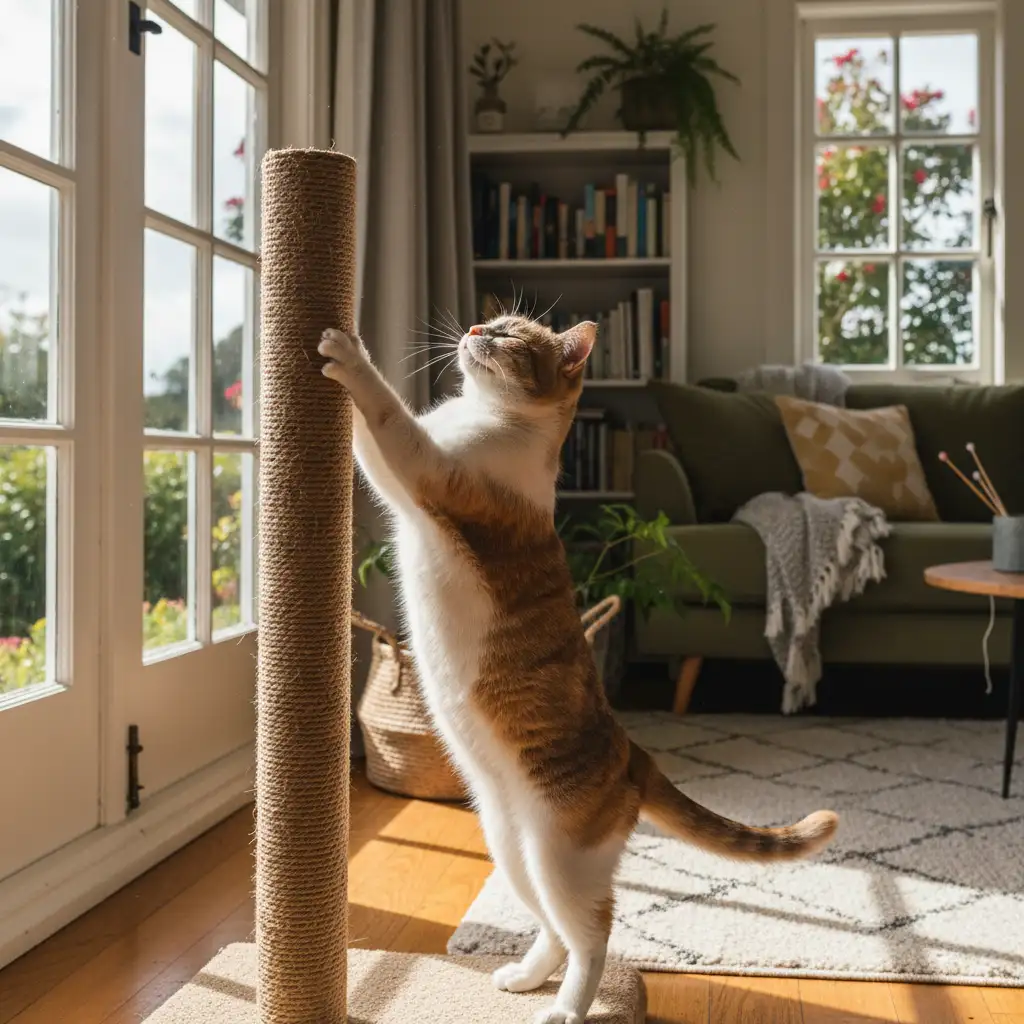
Offer a variety of scratching posts and surfaces. Cats have preferences for material (sisal, cardboard, carpet, wood), orientation (vertical, horizontal, inclined), and height. A tall, sturdy sisal post is often a favourite, allowing them to stretch fully. Cardboard scratchers are also popular and can be placed horizontally. Place these scratchers in prominent locations where your cat already likes to hang out or near areas they’ve previously scratched inappropriately. Having multiple options encourages them to use the designated areas.
Deterrents and Positive Reinforcement
To deter scratching on inappropriate items, make those areas less appealing. Double-sided sticky tape, aluminium foil, or plastic covers can be temporarily applied to furniture. For existing damage, consider covering the area to prevent further scratching. Simultaneously, positively reinforce good scratching behavior by praising your cat and offering treats when they use their designated scratchers. You can also make new scratchers more appealing by sprinkling catnip on them or playing near them.
Coping with Aggression and Fear: Building Trust and Security
Aggression and fear are serious behavioral issues that can be distressing for both cats and their owners. Addressing these requires patience, understanding, and often the help of a professional behaviorist. It’s crucial to identify the type and triggers of aggression to formulate an effective plan.
Types of Feline Aggression
Feline aggression can manifest in various forms: play aggression (common in kittens), fear aggression (when a cat feels threatened), territorial aggression (against other animals or people perceived as intruders), redirected aggression (when a cat cannot reach the target of its frustration and attacks a nearby individual), petting-induced aggression, and pain-induced aggression. Each type has distinct triggers and requires tailored approaches.
Identifying Triggers and Avoidance
Carefully observe your cat to identify what triggers their aggressive or fearful responses. Is it a specific person, another animal, certain sounds, or particular situations? Once identified, the immediate goal is to avoid these triggers as much as possible to prevent escalation and reduce your cat’s stress. For instance, if your cat is fearful of visitors, provide a safe, quiet room they can retreat to, complete with food, water, and a litter box. For insights into managing aggressive behavior, resources from reputable animal welfare organizations can be very helpful, such as those provided by the SPCA New Zealand.
Creating a Safe and Enriching Environment
A secure and stimulating environment can significantly reduce fear and aggression. Provide plenty of vertical space (cat trees, shelves), hiding spots (boxes, tunnels), and interactive toys. Enrichment helps burn off energy, reduces boredom, and allows cats to express natural hunting behaviors in a healthy way. For fearful cats, consistency in routine and a predictable environment are key to building confidence. Consider using synthetic feline pheromones, which can help create a calming atmosphere.
Desensitization and Counter-Conditioning
For fear-based or mild aggression, desensitization and counter-conditioning techniques can be effective. This involves gradually exposing the cat to the trigger at a very low intensity, while simultaneously associating it with something positive (e.g., treats, praise, playtime). The goal is to change the cat’s emotional response from fear or aggression to a positive one. This process requires extreme patience and should be done slowly, always staying below the cat’s reactivity threshold. If aggression is severe or causes injury, consult with a certified feline behaviorist or your veterinarian.

People Also Ask
Why is my cat suddenly aggressive towards me in NZ?
Sudden aggression often stems from pain, fear, or stress. It’s crucial to first rule out medical issues with a vet. Environmental changes, perceived threats, or even redirected frustration can also be triggers. Observe specific situations or body language leading up to the aggression to identify the cause.
How can I stop my cat from spraying urine inside my NZ home?
Urine spraying is typically a territorial or stress-related marking behavior, not a litter box problem. Ensure all medical causes are ruled out by a vet. Then, address potential stressors like new pets, outdoor cats, or changes in the home. Increase vertical space, provide more litter boxes, and use feline pheromone diffusers. Thoroughly clean marked areas with enzymatic cleaners.
What are the best types of scratching posts for cats in New Zealand?
Cats in New Zealand, like anywhere, have preferences. Offer a variety: tall, sturdy vertical posts wrapped in sisal or corrugated cardboard, and horizontal scratchers. Ensure posts are stable and tall enough for a full stretch. Place them in prominent areas and near existing scratching spots. Experiment with different materials to find your cat’s favourite.
Why is my cat not using its litter box anymore in my NZ house?
Litter box avoidance is usually a sign of discomfort or dissatisfaction. Start with a vet visit to rule out medical issues like UTIs or arthritis. Then, evaluate the litter box: is it clean enough? Is the litter type appealing (unscented, fine-grained)? Is the box large enough and in a quiet, accessible location? The rule of thumb is ‘number of cats + 1’ litter boxes.
How can I introduce a new pet to my existing cat in NZ without aggression?
Slow and gradual introduction is key. Keep the new pet and existing cat separate initially, allowing them to acclimate to each other’s scents. Use controlled, short visual introductions with positive reinforcement (treats, praise). Never force interaction. Provide plenty of resources (food, water, litter boxes, resting spots) for both, and supervise interactions closely, separating if signs of stress appear.
Is it normal for cats in NZ to play aggressively?
Kittens and young cats often engage in vigorous play that can seem aggressive, involving pouncing, biting, and scratching. This is normal but needs redirection if it targets humans. Provide plenty of appropriate toys for solo and interactive play. Never use your hands or feet as toys, as this teaches them that human skin is acceptable for biting and scratching. If play aggression is excessive, consult a behaviorist.