
Socializing Rescue Pets
Socializing a rescue dog is the gradual, strategic process of exposing a canine to new environments, people, animals, and sensory stimuli in a controlled manner to build confidence and reduce fear. Unlike puppy socialization, socializing a rescue often requires counter-conditioning techniques to overwrite past negative associations, ensuring the dog remains below their stress threshold while creating positive emotional responses to the world around them.
Understanding the Rescue Dog Mindset
Adopting a rescue dog is one of the most rewarding experiences a pet owner can have, but it comes with a unique set of challenges. Unlike a puppy obtained from a breeder who may have had a “clean slate,” a rescue dog often comes with baggage. This history might include trauma, neglect, abuse, or simply a lack of exposure to the world. When we talk about socializing a rescue dog, we are not just talking about teaching them to play with other dogs; we are talking about teaching them how to navigate the human world without fear.
Fear is the primary driver of most behavioral issues in rescue dogs. Aggression, withdrawal, excessive barking, and destruction are often symptoms of an underlying anxiety. A dog that has never seen a staircase, never walked on hardwood floors, or never heard a city bus will react instinctively—usually with fight, flight, or freeze responses. Therefore, your goal is not to force interaction, but to facilitate safety.
To successfully socialize a rescue, you must become an expert in canine body language. You need to recognize the subtle signs of stress before a bite or a breakdown occurs. Look for “whale eye” (seeing the whites of the eyes), lip licking, yawning when not tired, pinned ears, or a tucked tail. These are your dog’s way of saying, “I am uncomfortable, please help me.” Ignoring these signals often leads to what trainers call “trigger stacking,” where small stressors accumulate until the dog reacts explosively.
The 3-3-3 Rule: A Timeline for Adjustment
Before you even attempt active socialization, you must respect the decompression period. The gold standard in the rescue community for this timeline is known as the 3-3-3 Rule. This guideline helps manage your expectations and prevents you from rushing a dog that isn’t ready.
The First 3 Days: Decompression
During the first three days, your dog is likely overwhelmed. They have moved from a shelter (or a bad situation) to a car, and then to a strange new house. They do not know you are their savior; to them, you are just another stranger.
- Behavior: They may hide, refuse to eat, sleep excessively, or test boundaries.
- Your Role: Do not invite guests over. Keep the environment quiet. Establish a safe zone (like a crate or a specific room). Do not force affection. Let them come to you.
The First 3 Weeks: Routine Integration
After about three weeks, the dog begins to settle in. They are starting to understand the routine—when food comes, when walks happen, and who lives in the house.
- Behavior: Their true personality starts to emerge. This is often when behavioral issues appear because the dog feels safe enough to express them. You might see guarding behavior or reactivity.
- Your Role: Start implementing basic training and boundaries. Consistency is key. This is the time to start very low-level socialization, such as observing the world from a distance.
The First 3 Months: Bonding and Belonging
By three months, most dogs realize they are “home.” They have built trust with you and understand their place in the family pack.
- Behavior: They should be comfortable with your routine. Security has been established.
- Your Role: You can now ramp up socialization efforts and exposure to more challenging environments, provided the dog is showing confidence.
Socialization vs. Desensitization: Knowing the Difference
There is a critical distinction that many new rescue owners miss: the difference between socialization and desensitization. If you treat an adult rescue dog like a puppy, you might accidentally traumatize them through a process called “flooding.”
Socialization generally refers to the developmental window in puppies (up to 16 weeks) where they are primed to accept new things. Once that window closes, or if a dog has had negative experiences, we move into the realm of Desensitization and Counter-Conditioning (DSCC).
Flooding is when a dog is exposed to a terrifying stimulus at full intensity and cannot escape. For example, dragging a dog afraid of men into a crowded barbershop is flooding. This rarely works and usually results in “learned helplessness” or increased aggression. Instead, we must use desensitization: exposing the dog to the scary thing at a low enough intensity that they notice it but do not panic.
Step-by-Step Desensitization Techniques
To socialize your rescue dog effectively, you must change their emotional response to triggers. This is done by pairing the scary thing with something wonderful (usually high-value treats like boiled chicken or cheese).
1. Identify the Threshold
The threshold is the distance or intensity at which your dog notices a trigger but can still disengage and look at you. If your dog is barking, lunging, or shaking, you are over the threshold. You need to increase the distance.
2. The “Look at That” Game
This is a foundational technique for reactive dogs. The goal is to teach the dog that looking at a trigger results in a treat from you.
- Find a safe distance from the trigger (e.g., another dog walking across the street).
- When your dog looks at the other dog, immediately click (if using a clicker) or say “Yes!” and give a high-value treat.
- Repeat this. Eventually, the dog will look at the trigger and immediately look back at you, anticipating the treat.
- Gradually, over weeks or months, decrease the distance.
3. Controlled Introductions to People
Never let strangers rush your rescue dog. Advocate for your pet. Tell people, “Please ignore him; he is in training.”
- The Approach: Ask guests to sit down and avoid eye contact.
- The Treat Toss: Have guests toss treats behind the dog. This encourages the dog to retreat to get the reward, taking pressure off the interaction. Tossing treats at the dog can lure them closer than they are emotionally ready to be, leading to a “scare-bite” reaction.
For more on the science of animal behavior and desensitization, the American Veterinary Society of Animal Behavior (AVSAB) provides excellent position statements that align with modern scientific standards.
The Dog Park Debate: Friend or Foe?
One of the most common mistakes rescue owners make is heading straight to the dog park. While the intention is good—”I want my dog to make friends”—dog parks are often a recipe for disaster for rescue dogs.
Why Dog Parks Are Risky:
- Uncontrolled Environment: You cannot control the behavior of other dogs or the attentiveness of other owners.
- Disease Risk: If your rescue’s immune system is still recovering from shelter life, parks are germ factories.
- Bullying: Rescue dogs often have poor social skills or lack confidence. They can easily become targets for bullying by more dominant dogs, or they may feel cornered and lash out defensively.
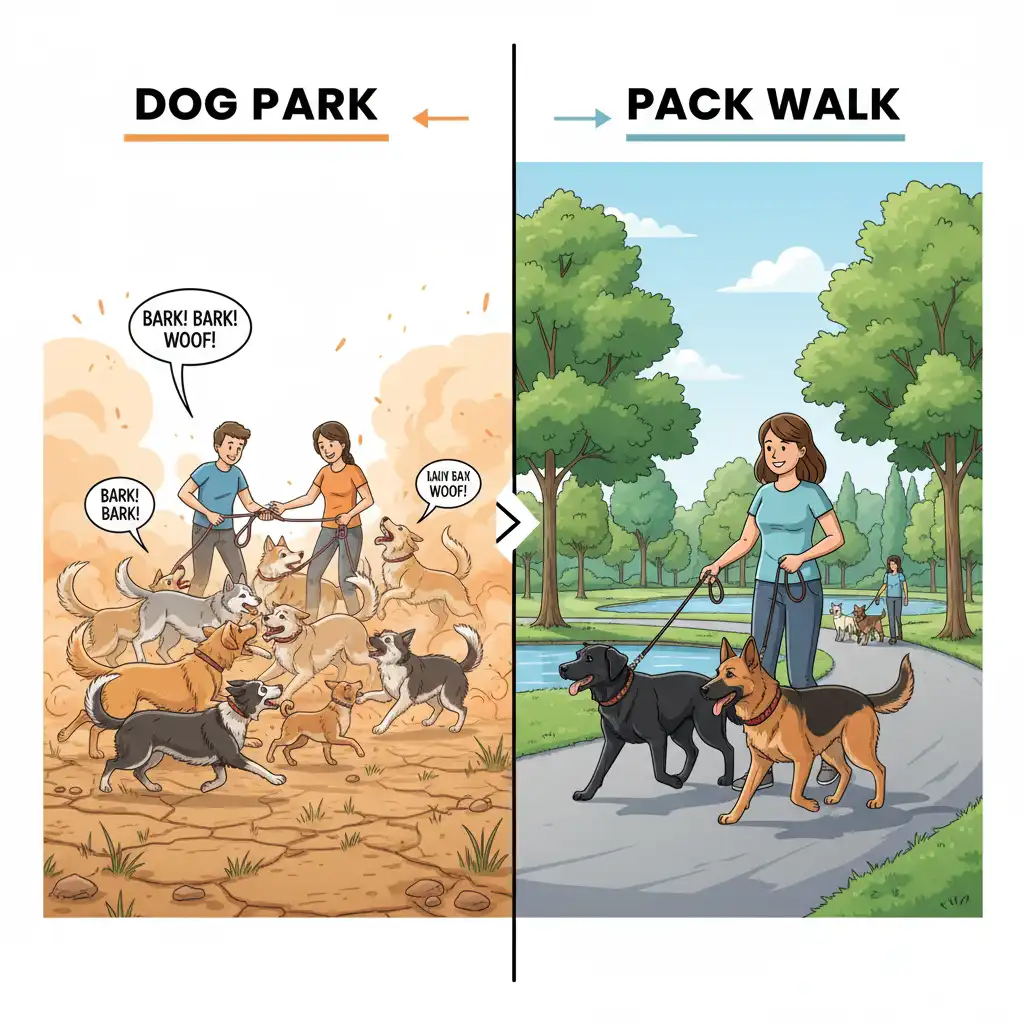
The Better Alternative: Parallel Walks
Instead of the chaos of a park, organize “parallel walks” with a friend who has a calm, stable dog. Start by walking the dogs in the same direction, but on opposite sides of the street. As they relax, gradually move closer. This allows the dogs to exist near each other and smell each other without the pressure of face-to-face confrontation. This builds social tolerance much faster and safer than a free-for-all play session.
Finding the Right Professional Support
If your rescue dog shows signs of severe aggression, extreme fear, or separation anxiety, you should seek professional help immediately. However, the dog training industry is unregulated, and the wrong trainer can make things worse.
Positive Reinforcement (+R) is Non-Negotiable
For rescue dogs, you must seek a trainer who utilizes Positive Reinforcement (+R) or LIMA (Least Intrusive, Minimally Aversive) protocols. Avoid trainers who use terms like “alpha,” “dominance,” or who rely on prong collars and shock collars (e-collars) for behavior modification.
Rescue dogs often have negative associations with pain or force. Using punishment to suppress a growl does not remove the fear; it only removes the warning signal. This creates a dog that bites without warning. A positive reinforcement trainer will work to change the dog’s emotional state, not just suppress the symptoms.
Socialization for Apartment Living
For those living in apartments or rental units, socializing a rescue dog is also a matter of tenant advocacy and housing stability. A poorly socialized dog is a liability. They are more likely to bark at noises in the hallway or react aggressively in elevators.
Elevator Etiquette:
If you live in a high-rise, the elevator is a high-stress zone. It is a confined space with no escape. Train your dog to sit in the corner and focus on you (using the “Look at That” game) whenever the doors open. If the elevator is crowded, wait for the next one. Being a responsible tenant means ensuring your dog feels safe enough to remain quiet and calm, which protects your lease and your pet’s home.
For further reading on responsible pet ownership and behavior standards, reputable organizations like the ASPCA offer extensive libraries on common behavioral issues.
Socializing a rescue dog is a marathon, not a sprint. It requires empathy, patience, and a willingness to advocate for your dog’s needs. By following the 3-3-3 rule, utilizing desensitization, and avoiding high-pressure environments like dog parks, you can help your rescue transform from a fearful animal into a confident, happy companion.
People Also Ask
How long does it take to socialize a rescue dog?
Is it too late to socialize an older rescue dog?
What if my rescue dog is aggressive toward other dogs?
Should I force my rescue dog to meet new people to get used to them?
How do I socialize a rescue dog with cats?
What are the signs that my rescue dog is overwhelmed?
