
Pet Transport Across Cook Strait
Taking pets on the Interislander ferry is fully permitted provided you book in advance and adhere to strict safety protocols. Owners can choose to transport animals inside their own vehicle or book a designated pet kennel on the vehicle deck. While service dogs are allowed in passenger lounges, all other pets must remain secured on the vehicle deck for the duration of the sailing.
Crossing the Cook Strait is a quintessential New Zealand experience, bridging the gap between the North and South Islands. For pet owners, however, this 92-kilometer journey involves more than just admiring the Marlborough Sounds; it requires logistical precision. Whether you are relocating for a new tenancy, going on a holiday, or adopting a pet from across the strait, understanding the nuances of transporting pets on the Interislander ferry is critical for a stress-free experience.
This guide serves as the definitive resource for pet owners, covering every aspect of the journey from booking to disembarking, ensuring your furry family members arrive safe and sound.
Understanding Cook Strait Pet Policies
The Cook Strait ferries operate under strict maritime safety regulations which dictate how live animals must be transported. The primary rule across all major operators is that pets are generally excluded from passenger areas (cafés, lounges, and observation decks) unless they are certified disability assist dogs. This policy ensures hygiene and safety for all passengers.
When planning to take pets on the Interislander ferry, you must declare them at the time of booking. Failure to do so can result in being denied boarding, as there are capacity limits for animals, particularly regarding the number of available kennels. It is not merely a matter of buying a ticket; it is about securing a safe space for your animal in a loud, moving industrial environment.
Interislander vs. Bluebridge: Choosing the Right Carrier
While this guide focuses on the Interislander, it is important for consumers to understand the market landscape. The two main operators, Interislander (KiwiRail) and Bluebridge (StraitNZ), have slightly different approaches to pet transport.
Interislander Advantages
The Interislander fleet (Kaitaki, Aratere, and Kaiarahi) is generally larger, offering more stability in rough weather, which can be crucial for pets prone to motion sickness. Their booking system is integrated, allowing you to add pets easily online. They offer designated animal shelters (kennels) on the vehicle decks which are sheltered from the elements.
Bluebridge Comparison
Bluebridge is often favored by dog owners because they offer a “dog-friendly cabin” option on some sailings, allowing owners to sleep in a private room with their dog. However, these cabins are limited and book out months in advance. If you cannot secure a cabin, the experience is similar to the Interislander, relying on car storage or kennels.
For most travelers, especially those moving house or traveling on short notice, the Interislander remains the most accessible option due to its frequency of sailings and capacity.
Booking Your Pet on the Interislander Ferry
Booking is a transactional process that requires attention to detail. When you select your travel dates on the Interislander website, you will be prompted to add “Extras.” This is where you select your pet option.
The cost is generally nominal compared to the vehicle fare. As of the current sailing schedule, the fee is approximately $15 per pet each way, though this is subject to change. It is vital to note that this fee applies whether the pet is in your car or in a ship kennel.
Critical Booking Rules:
- Availability: Kennels are limited. If the system does not allow you to add a kennel, they are sold out for that sailing. You must then choose the “Pet in Vehicle” option.
- Declaration: You must declare the number of animals. Undocumented animals may be refused passage.
- Rental Cars: If you are traveling in a rental car, you must check the rental agency’s policy regarding animals *before* booking the ferry. Some agencies prohibit animals, which could leave you stranded at the terminal.
Transport Options: Kennels vs. Staying in the Car
This is the most common dilemma for pet owners. Both options have pros and cons depending on your animal’s temperament.
Option A: Staying in Your Vehicle
Keeping your pet in your vehicle is often the least stressful option for the animal, as the car is a familiar environment that smells like home. This is the recommended method for cats, anxious dogs, and other small pets.
- Pros: Familiar scent, isolation from other strange animals, security.
- Cons: Potential for heat buildup (though decks are covered), motion alarms going off nearby.
- Requirement: You must leave windows slightly cracked for ventilation but not enough for the animal to escape. Water must be provided.
Option B: Using the Ship’s Kennels
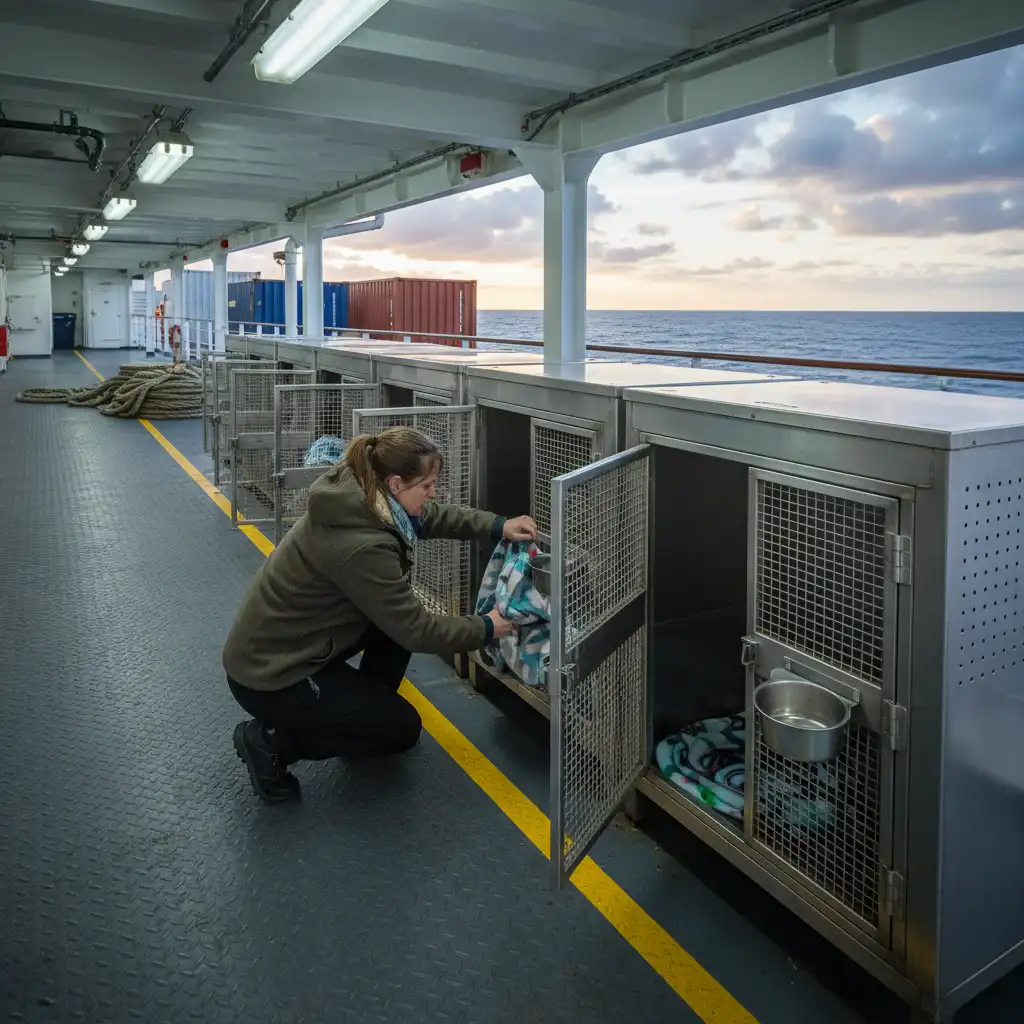
The Interislander ships are equipped with kennels located on the vehicle decks (usually a sheltered area). These are not luxury hotel suites; they are utilitarian metal cages designed for safety.
- Pros: Good ventilation, away from the immediate noise of car alarms.
- Cons: Strange environment, proximity to other barking dogs, hard surfaces.
- Requirement: You must bring your own bedding and water bowl. The ferry provides the cage only.
Dimensions: The kennels come in various sizes. Large kennels are typically around 800mm x 800mm x 1000mm, while smaller ones are suitable for cats or small terriers. If you have a Great Dane or a giant breed, the car is your only viable option.
Preparing Your Pet for the Journey
Preparation is the key to a successful crossing. The Cook Strait can be treacherous, and sea sickness affects animals just as it affects humans. According to the SPCA New Zealand, minimizing stress during transport is crucial for animal welfare.
Veterinary Consultation
If your pet is anxious or prone to nausea, consult your veterinarian two weeks before travel. They may prescribe anti-nausea medication or mild sedatives. Never sedate an animal without veterinary instruction, as sedatives can interfere with thermal regulation and balance.
Feeding and Hydration
Do not feed your pet a heavy meal immediately before boarding. Feed them 3-4 hours prior to the sailing to allow for digestion. This reduces the risk of vomiting during rough weather. However, ensure they are well-hydrated. Freeze a bowl of water the night before; as it melts during the journey, it provides a steady supply of cool water without spilling as easily as liquid water.
Exercise
Exercise your dog vigorously before heading to the ferry terminal. A tired dog is a sleeping dog. If you are departing from Wellington, there are dog-friendly walking areas near the terminal. In Picton, the foreshore provides ample space for a pre-boarding run.
Day of Travel: Check-In and Boarding Procedures
Arrive early. The standard check-in time for vehicles is 60 minutes prior to departure, but when traveling with pets on the Interislander ferry, aiming for 90 minutes is wise. This gives you time for a final toilet break for the animal.
At the Ticket Booth
When you arrive at the vehicle check-in booth, inform the staff immediately that you have a pet. They will give you a specific “Pet Hanger” or sticker for your rearview mirror. This signals to the loading marshals that your car contains a live animal.
The Boarding Process
Follow the marshal’s instructions. While they try to park cars with pets in well-ventilated areas, this is not always guaranteed due to load balancing. If you have booked a kennel, you will drive onto the ship, park, and then immediately transfer your pet from your car to the kennel area. You must bring a lead; pets cannot walk off-leash on the vehicle deck.
During the Crossing: Safety and Comfort
Once the ship departs, the vehicle decks are sealed for safety. This is a maritime regulation that is strictly enforced.
The “No Visitation” Rule
Unlike some international ferries, you generally cannot visit your pet during the sailing on the Interislander. Once you leave the vehicle deck and head up to the passenger lounges, you will not be permitted to return until the ship approaches the destination port. This is why preparation is vital—you cannot pop down to check on them or give them more water.
Car Alarms
If leaving your pet in the car, you must disable your car alarm motion sensors. The movement of the ship often triggers car alarms. A blaring alarm for 3.5 hours is terrifying for a pet trapped inside the vehicle and stressful for other animals nearby. Check your vehicle manual to learn how to lock the car without engaging the internal motion sensors.

Arriving and Disembarking
Approximately 15-20 minutes before docking, an announcement will be made for drivers to return to their vehicles. Proceed to the vehicle deck immediately.
- Assess Your Pet: As soon as you get to your car (or retrieve them from the kennel), check your pet. They may be groggy or anxious. Speak calmly to them.
- Ventilation: Open the windows fully once the engines start and the ramp opens to flush out any fumes.
- Biosecurity (If applicable): While there are no border checks between islands, if you are moving farming stock or specific animals, ensure you comply with MPI (Ministry for Primary Industries) guidelines regarding pest control, though this rarely applies to domestic cats and dogs.
- Post-Travel: As soon as you disembark in Picton or Wellington, find the nearest grassy area for a toilet break. Both terminals have green spaces nearby specifically for this purpose.
Frequently Asked Questions
Can I take my dog on the passenger deck of the Interislander?
No, only certified disability assist dogs are allowed in the passenger lounges and decks. All other dogs must remain in your vehicle or in a booked kennel on the vehicle deck.
How much does it cost to take a pet on the Interislander?
The cost is typically around $15 NZD per pet, one way. This fee applies regardless of whether the pet stays in the car or uses a kennel.
Are Interislander kennels suitable for large dogs?
The kennels vary in size. While they can accommodate medium-to-large dogs (approx 80cm x 80cm), giant breeds like Great Danes or St. Bernards are usually better off staying in the vehicle due to space constraints.
Can I visit my pet during the Interislander crossing?
Generally, no. Passengers are not permitted on the vehicle decks while the ship is underway for safety reasons. You must ensure your pet is settled before you leave the deck.
What happens if I forget to book my pet on the ferry?
If you arrive without a pet booking, it is subject to availability. If the kennels are full and the ship has reached its animal capacity, you may be denied boarding. Always modify your booking in advance.
Is it safe to leave a dog in the car on the ferry?
Yes, it is generally safe provided the windows are cracked for ventilation and water is available. The vehicle decks are covered, protecting cars from direct sun and rain.
