Dog Registration Fees by Council
Dog registration NZ cost typically ranges between $45 and $220 annually, depending on the local council, the dog’s desexing status, and the owner’s classification (Standard vs. Responsible). Fees fund animal control services, and registration is a legal requirement under the Dog Control Act 1996, due by July 1st each year.
Owning a dog in New Zealand is a rewarding experience, but it comes with significant financial and legal responsibilities. Among the most critical administrative tasks for any pet owner is the annual dog registration. While often viewed as just another bill, these fees are the backbone of New Zealand’s animal management infrastructure. For tenants and prospective adopters, understanding these costs is vital for budgeting and maintaining a good standing with landlords and local authorities.
Whether you are adopting your first puppy or moving to a new district, the cost of registration can vary wildly depending on where you live and how responsible you are as an owner. This guide provides a comprehensive breakdown of fees, the logic behind them, and how you can qualify for significant discounts.
Why Dog Registration is Mandatory in New Zealand
In New Zealand, dog registration is not merely a revenue-gathering exercise for local councils; it is a statutory requirement mandated by the central government. Under the Dog Control Act 1996, every dog over the age of three months must be registered with the local territorial authority (city or district council).
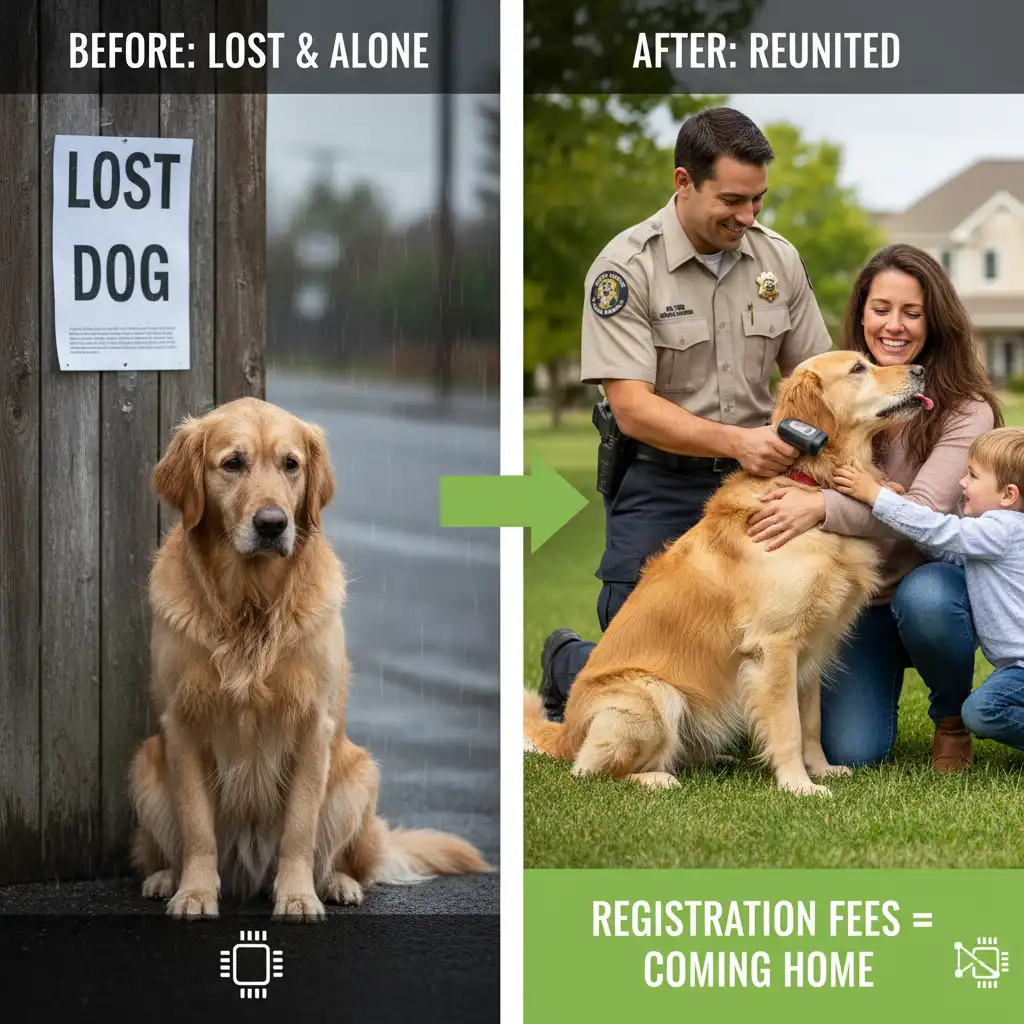
The primary purpose of registration is to maintain the National Dog Database (NDD). This database ensures that if a dog is lost, stolen, or impounded, it can be quickly identified and reunited with its owner. Furthermore, the fees collected do not go into a general council pot; they are ring-fenced to fund dog control services.
What Your Fees Pay For
Many owners ask why the fees are necessary. The revenue generated covers a wide array of community services:
- Animal Shelters and Pounds: Maintenance of facilities for lost or menacing dogs.
- Animal Control Officers: Staff salaries for those who respond to barking complaints, dog attacks, and wandering stock.
- Education Programs: School visits and community programs teaching dog safety.
- Dog Parks and Amenities: The maintenance of off-leash areas, dispense bags, and bins.
Without these funds, the safety of the community and the welfare of the dog population would be compromised. For a detailed look at the legislation governing these requirements, you can review the Dog Control Act 1996 at legislation.govt.nz.
Factors Influencing Dog Registration NZ Cost
There is no single “New Zealand Dog Tax.” Instead, each of the 67 territorial authorities sets its own fees based on the cost of delivering services in that specific area. Consequently, a dog owner in rural Southland might pay a different amount than an apartment dweller in downtown Auckland.
However, nearly all councils use a tiered fee structure based on risk and responsibility. The following factors will determine whether you pay the minimum or the maximum fee:
1. Desexing Status
The most significant variable is whether your dog is spayed or neutered. Councils heavily subsidize fees for desexed dogs to encourage population control and reduce aggression issues often associated with non-desexed animals.
2. Owner Classification
Most councils offer a “Responsible Dog Owner” (RDO) or “Selected Owner” status. This is a special license granted to owners with a clean record (no impoundments or late payments) and a property that meets specific fencing requirements. Achieving this status can slash your fees by up to 50%.
3. Dog Classification
Conversely, if your dog has been classified as “Dangerous” or “Menacing” (by breed or deed), you will face significantly higher fees—often 150% of the standard rate. Working dogs (farm dogs, police dogs) generally have much lower fees compared to companion animals.
Major Council Fee Comparison: Auckland, Wellington, Christchurch
To illustrate the variability in costs, we have analyzed the 2024/2025 fee structures for New Zealand’s three major urban centers. Note that these figures are subject to annual review and usually apply for the fiscal year running from July 1 to June 30.
Auckland Council
Auckland has one of the largest dog populations in the country. Their fee structure incentivizes RDO status heavily.
- Standard Fee (Entire Dog): Approximately $230 – $240
- Standard Fee (Desexed): Approximately $160 – $170
- Responsible Dog Owner (RDOL): Approximately $80 – $95
- Dangerous/Menacing Dog: Approximately $340+
Note: Auckland also offers discounts for SuperGold card holders with desexed dogs.
Wellington City Council
Wellington focuses heavily on desexing. Their standard fee for an un-neutered dog is quite high to discourage accidental breeding.
- Standard Fee (Entire Dog): Approximately $250+
- Standard Fee (Desexed): Approximately $185
- Responsible Dog Owner (RDO): Approximately $105
Christchurch City Council
Christchurch offers a competitive rate for responsible owners but maintains strict penalties for late payments.
- Standard Fee (Un-neutered): Approximately $130 – $140
- Standard Fee (Spayed/Neutered): Approximately $100 – $110
- Responsible Dog Owner Status: Approximately $65 – $75
As seen above, a Responsible Dog Owner in Christchurch might pay nearly one-third of what a standard owner of an un-neutered dog pays in Wellington. This disparity highlights the importance of checking your specific local council’s schedule of fees.
Discounts: Desexing and Responsible Dog Owner Status
For tenants and budget-conscious families, minimizing these recurring costs is essential. There are two primary pathways to reducing your annual dog registration bill.
The Desexing Discount
Desexing is the easiest way to lower your fees immediately. To claim this discount, you must provide a veterinary certificate proving the procedure has been completed. This is a one-off verification; once your dog is recorded as desexed in the council database, the lower fee applies for the dog’s life.
Achieving Responsible Dog Owner (RDO) Status
This is the “gold standard” of ownership. While criteria vary slightly by council, the general requirements to become an RDO include:
- Clean Record: You must not have had any abatements, seizure notices, or infringement notices in the last 12 to 24 months.
- Timely Payments: You must have paid your registration fees by the due date for the previous year (or two).
- Microchipping: Your dog must be microchipped in accordance with the Dog Control Act.
- Property Inspection: A council officer may inspect your property to ensure you have adequate fencing and that the dog has free access to shelter and water.
Applying for RDO status usually requires a separate application form submitted before the registration renewal period (often by April or May). If you are a tenant, achieving RDO status is a powerful tool. It demonstrates to landlords that you are legally verified as a low-risk, responsible tenant, which can help secure pet-friendly rentals.
The Cost of Non-Compliance: Penalties and Fines
Failing to register your dog is a false economy. The penalties for non-compliance far outweigh the cost of the registration fee itself. Local councils conduct regular audits and patrols to check for unregistered dogs.
Infringement Fees
If you are caught with an unregistered dog, you will be issued an infringement notice. The standard fine for keeping an unregistered dog is $300. This fine does not replace the registration fee; you will still be required to pay the annual fee on top of the fine.
Late Payment Penalties
Registration is due on July 1st. Most councils offer a grace period until July 31st. If payment is not made by this date, a statutory penalty is added to the fee. This penalty is typically 50% of the applicable fee. For example, if your fee was $160, it becomes $240 on August 1st.
Impoundment and Seizure
In severe cases, or repeat offenses, animal control officers have the legal authority to seize unregistered dogs. To release an impounded dog, the owner must pay:
- The seizure fee.
- Daily sustenance costs for the time the dog was held.
- The full registration fee (plus penalties).
- Microchipping costs if the dog is not yet chipped.
This can easily total over $600-$800 for a single incident.

Tenant Advocacy: How Registration Helps Renters
In the competitive New Zealand rental market, pet owners often face significant hurdles. Landlords are frequently hesitant to allow dogs due to fears of property damage or noise complaints. This is where understanding and maintaining your dog’s registration becomes a strategic advantage.
When applying for a rental property, providing proof of current registration and, ideally, Responsible Dog Owner status serves as third-party validation of your character. It proves:
- Legal Compliance: You adhere to laws and regulations.
- Financial Stability: You prioritize your pet’s administrative costs.
- Vetted Behavior: If you have RDO status, the council has essentially vetted you as a low-nuisance owner.
We recommend including a copy of your dog’s registration tag number and a reference from your previous property manager specifically mentioning the dog in your tenancy application (CV for your pet). For more information on local government structures that influence these rules, you can visit the Department of Internal Affairs (Local Government).
How and When to Pay Your Registration Fees
The dog registration year in New Zealand runs from 1 July to 30 June. Renewal notices are typically sent out by councils in May or June via email or post.
Payment Methods
Most councils have modernized their systems, offering multiple ways to pay:
- Online: The fastest method. You will need your “Dog ID” or reference number from your renewal notice.
- In-Person: At council service centers or selected NZ Post outlets.
- Internet Banking: Direct credit transfers (ensure you use the correct reference to avoid lost payments).
First-Time Registration
If you have a new puppy, you must register them by the time they are three months old. If you adopt an older dog, you usually have 14 days to update the registration details into your name. If the dog is already registered for the current year in another NZ district, you can transfer the registration to your new council for free or a nominal administration fee (usually $5-$10), rather than paying the full annual fee again. This is known as a “registration transfer.”
Ensuring your dog is legally registered is the first step in responsible pet ownership. It protects your dog, supports community safety, and aids in securing housing. Do not wait for the penalty deadline—register early and explore your eligibility for RDO discounts today.
Frequently Asked Questions
How much is dog registration in NZ?
Dog registration fees in NZ vary by council but generally range from $45 for rural working dogs or Responsible Dog Owners (RDO) to over $200 for standard urban dogs. Dangerous dogs can cost over $300 to register.
What happens if I don’t register my dog NZ?
Failure to register your dog is an offense under the Dog Control Act 1996. You can be issued an infringement fine of $300, plus you will still be required to pay the registration fee and any late penalties. Your dog may also be seized and impounded.
Is dog registration cheaper if desexed?
Yes, almost every council in New Zealand offers a significant discount for desexed dogs. The discount is typically between $30 and $80 off the standard “entire” dog fee.
When is dog registration due NZ?
Dog registration is due annually on July 1st. Most councils allow a payment grace period until July 31st. Payments made after August 1st usually incur a 50% late penalty.
Can I pay dog registration in installments?
Some councils allow for part-payments or installments, but this must usually be arranged in advance of the due date. You should contact your local council’s rates or animal management team to see if this option is available to you.
How do I become a Responsible Dog Owner (RDO)?
To become an RDO, you generally need a history of timely registration payments, no impoundments or complaints for 1-2 years, a microchipped dog, and a property that meets fencing compliance standards. You must apply for this status before the registration year begins.