Introducing a Rescue Dog to Pets
Introducing dogs to cats in NZ requires a phased approach involving scent swapping, visual barriers, and controlled interactions. To ensure safety, owners must keep the dog leashed indoors, establish strictly separated safe zones, and reward calm behavior to desensitize the dog to the cat’s presence over several weeks.
Preparing Your Home for a New Rescue
Adopting a rescue dog is a rewarding experience, but the transition period is critical for establishing long-term harmony in your household. Before you even bring the new dog home, you must prepare the environment to prevent conflict. This is particularly important in New Zealand, where many households have multi-species families including cats, rabbits, and livestock. The goal of preparation is to manage the environment so that the animals cannot make mistakes that lead to aggression or fear.
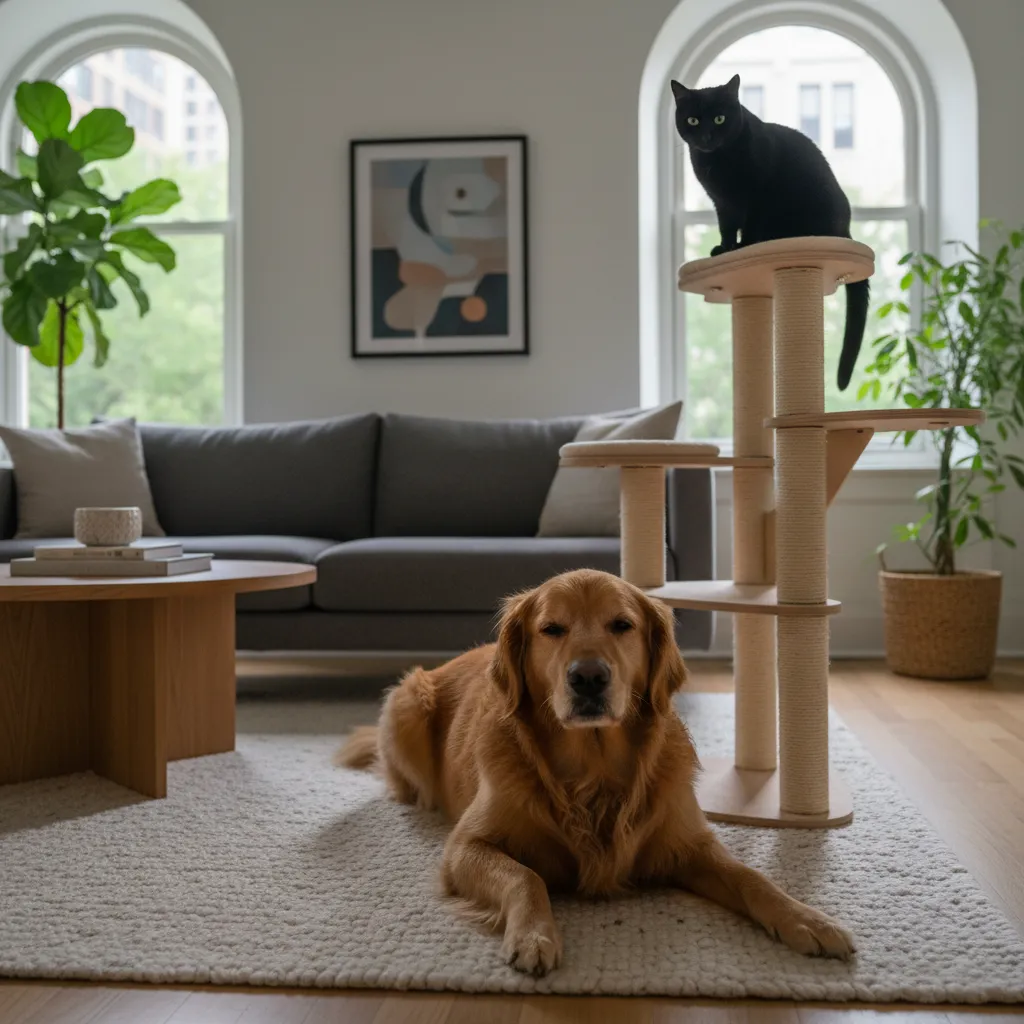
The first step in preparation is establishing physical boundaries. Management is often more effective than training in the early stages. Utilize baby gates to create “dog-free zones” where your existing pets can retreat. For cats, vertical space is essential. Ensure there are high shelves, cat trees, or cleared countertops where the cat can observe the new dog from a position of safety. If you are renting, look for pressure-mounted gates that do not damage walls, ensuring you remain compliant with your tenancy agreement while safeguarding your pets.
The Scent Swapping Strategy
Olfactory communication is the primary language of dogs and cats. Before the animals ever see each other, they should smell each other. This process, known as scent swapping, allows the animals to gather information about one another without the threat of physical confrontation. To do this, take a clean cloth or a small towel and rub it gently on the new dog’s flank and neck. Do the same with a separate cloth for your resident pet.
Place the dog-scented cloth in the cat’s area (near their food bowl or bed) and the cat-scented cloth in the dog’s area. Observe their reactions. If the dog fixates on the scent, whines, or tries to destroy the cloth, you know that the prey drive or excitement level is high, and you must proceed with extreme caution. Repeat this process for several days until the animals show no reaction to the scent. This desensitization creates a sense of familiarity, reducing the shock of the eventual face-to-face meeting.
The Art of Introducing Dogs to Cats in NZ
When introducing dogs to cats NZ pet owners must be particularly vigilant due to the high prevalence of indoor-outdoor cats in the country. A rescue dog with an unknown history may view a fleeing cat as prey. The introduction process must be slow, controlled, and positive. Rushing this step is the leading cause of return-to-shelter rates for adopted dogs.
The Slow Introduction Method
Never force a face-to-face interaction immediately. Keep the dog and cat in separate rooms for at least the first 3-4 days. This is often referred to as the “shutdown” or decompression phase. During this time, continue scent swapping and allow them to hear each other through closed doors. When you are ready for visual contact, keep the dog on a secure leash and harness. Do not rely on a collar alone, as a dog can slip out of it if they lunge.
Use a baby gate as a barrier. Allow the dog to see the cat through the gate while you feed the dog high-value treats (like boiled chicken or cheese). This is classic counter-conditioning: the dog learns that the presence of the cat predicts delicious food. If the dog stares intensely, stiffens, or barks, they are over their threshold. Move the dog further away until they can look at the cat and then look back at you for a treat. This exercise, often called the “Look at That” game, builds a positive association and teaches the dog to disengage from the cat.
Interpreting Body Language
Success depends on your ability to read subtle cues. A wagging tail does not always mean friendliness; a high, stiff wag can indicate arousal or aggression. Watch for “whale eye” (showing the whites of the eyes), lip licking, or a closed, tight mouth. These are signs of stress or fixation. For the cat, watch for flattened ears, a twitching tail, or low growling. If you see these signs, separate the animals immediately without punishment. Punishment can increase anxiety and create a negative association with the other pet. According to the SPCA New Zealand, patience is paramount, and some introductions may take weeks or even months before the animals can safely share a room unsupervised.
The Neutral Ground Meeting Technique
For introducing a new rescue dog to an existing resident dog, the “neutral ground” technique is the industry standard. Dogs are territorial animals. Bringing a strange dog directly into your home—your resident dog’s territory—can trigger defensiveness and aggression. Meeting in a neutral location helps to level the playing field where neither dog feels the need to defend resources.
Choose a quiet park, a tennis court, or a quiet street that neither dog frequents. Avoid busy dog parks where other off-leash dogs could interrupt the process. You will need two handlers, one for each dog. Start by walking the dogs parallel to each other at a distance of about 5-6 meters. Do not let them greet head-on. Walking in the same direction builds a pack mentality and allows them to acclimatize to each other’s presence while moving.

Gradually decrease the distance between the dogs as long as their body language remains loose and relaxed. If they want to sniff, allow a brief 3-second sniff (the “three-second rule”) and then cheerfully call them away and keep walking. Prolonged staring or posturing should be interrupted by increasing distance. Once the dogs are walking side-by-side comfortably, you can walk them back to your home together. Upon arrival, take them for a walk around the garden before entering the house. Remove all toys, chews, and food bowls from the floor inside the house to prevent resource guarding during the first few hours.
Managing Multi-Dog Households
Integrating a rescue dog into a multi-dog household adds layers of complexity. You are not just managing one relationship, but the dynamic of the entire group. It is vital to monitor the existing dogs for signs of bullying or alliance-forming against the newcomer. The new dog should have a crate or a safe room where they can sleep and eat alone. Feeding should always be done separately to prevent fights over food, which is a common trigger for aggression.
Pay attention to the “resource guarding” of humans. Some resident dogs may become jealous if the new dog approaches their owner. Ensure you are giving your resident dogs plenty of individual attention so they do not associate the new dog with a loss of affection. Conversely, ensure the rescue dog is not overwhelmed by an exuberant resident dog. Advocate for the rescue dog by intervening if play becomes too rough. The Tenancy Services website suggests that maintaining a peaceful household is also crucial for renters to avoid noise complaints that could jeopardize their tenancy.
Safety with Small Animals and Wildlife
New Zealand is home to unique fauna, and many households keep small pets like rabbits, guinea pigs, and chickens. Furthermore, conservation is a major value in NZ, and owners have a responsibility to ensure their dogs do not threaten local wildlife like Kiwi or Weka. When introducing a rescue dog to small animals, safety is non-negotiable. Many dog breeds have high prey drives that cannot be “trained out” but must be managed.
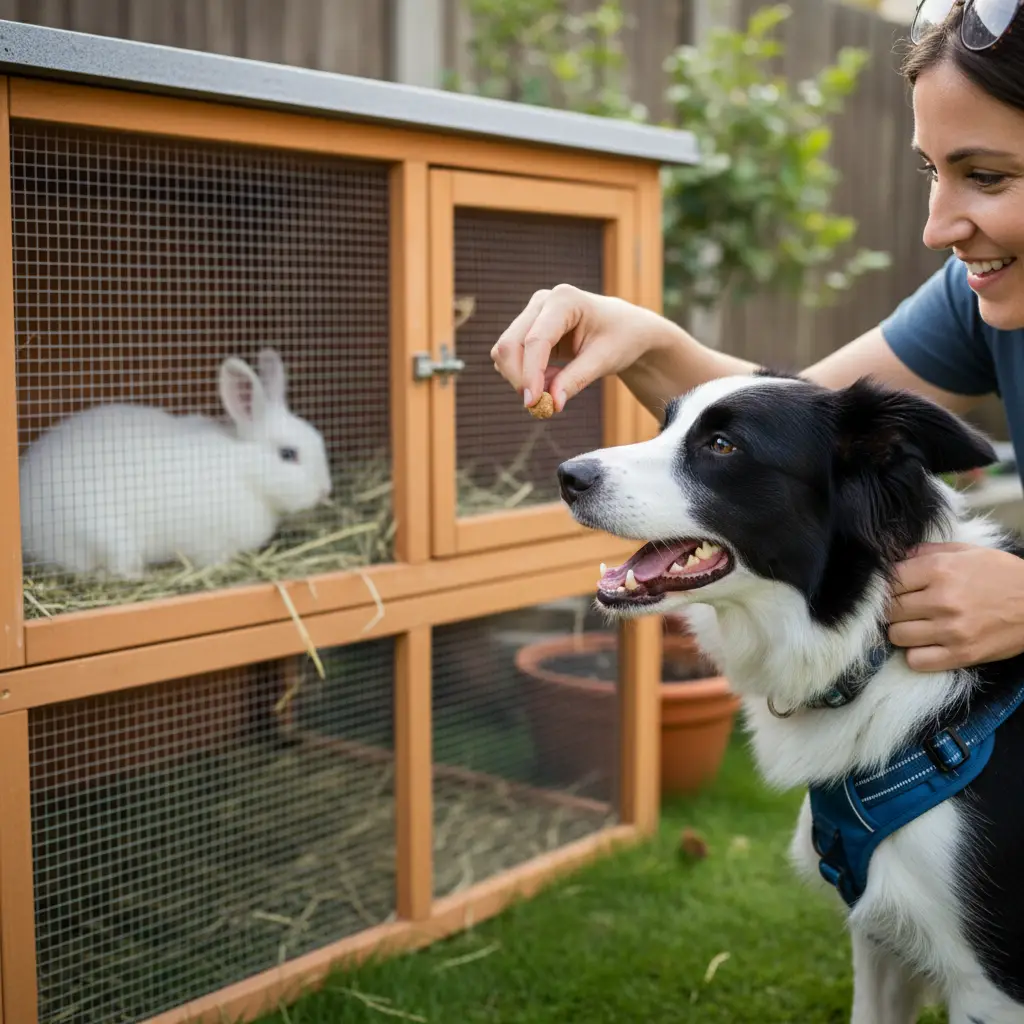
Never leave a dog unsupervised with small animals. The movement of a rabbit or chicken can trigger a predatory drift reflex in even the gentlest dog. Introductions should be done through secure wire mesh (like a hutch or run). Treat the dog for ignoring the small animal. If the dog lunges or cannot be distracted from the small animal, this may indicate that the dog is not suitable for a home with small pets. For wildlife, consider avoidance training. In many parts of NZ, “Kiwi aversion training” is available and highly recommended for dogs living in or near bushland.
Tenant Advocacy: Keeping the Peace
In the current rental market, securing a property with pets is a challenge. Once you have a pet-friendly rental, keeping it is a priority. A chaotic introduction between pets can lead to excessive barking, property damage (scratching doors/floors), and neighbor complaints. As a tenant, it is your responsibility to mitigate these risks.
During the introduction phase, ensure the new dog is crate trained or confined to a secure area when you are not home to prevent destructive behavior caused by separation anxiety or barrier frustration. Use rugs to cover hardwood floors to prevent scratch marks during play. If noise is an issue, provide enrichment activities like frozen Kongs or lick mats to keep the dogs quiet and occupied. Demonstrating to your landlord that you are a responsible owner who manages pet interactions proactively can help you secure good references for future tenancies.
Troubleshooting Common Issues
Even with the best preparation, issues can arise. It is important to distinguish between a minor scuffle and dangerous aggression. A growl is a warning and should be heeded, not punished. If a fight breaks out, do not use your hands to separate the dogs. Use a barrier, a loud noise, or water to interrupt them. If your rescue dog shows persistent aggression toward your cat or other dog despite weeks of slow introductions, it is time to seek professional help.
Consult a certified animal behaviorist or a veterinary behaviorist. They can assess whether the issue is fear-based or predatory. In some unfortunate cases, a specific dog may not be compatible with cats or other dogs. Recognizing this early and contacting the rescue organization is better than waiting for a tragic injury to occur. Responsible rehoming is sometimes the most humane option for all animals involved.
Frequently Asked Questions
How long does it take for a rescue dog to get used to a cat?
There is no set timeline, but it typically takes anywhere from a few weeks to several months. The