
How to Rehome Your Dog in NZ: A Gentle Guide for Owners
Making the decision to find a new family for your dog is one of the heaviest, most heartbreaking choices a pet owner can face. Life changes fast in Aotearoa, and sometimes, love means admitting that you can no longer provide the environment your dog truly needs.
Right now, one in six Kiwi families are considering rehoming a pet due to the severe cost-of-living crisis. People are skipping household essentials just to afford pet food, and the financial pressure is immense. If you are feeling overwhelmed, guilty, or judged, please take a deep breath.
You are not alone, and you are doing the right thing by actively looking for a safe way forward. This is a judgment-free zone. We know that navigating how to rehome your dog in NZ can feel terrifying, especially with the chaos of social media and overcrowded council pounds.
That is exactly why we created a gentle guide for owners to help you take control of your pet’s future. Your dog does not have to end up in a cold shelter kennel. With the right approach, they can transition directly from your couch to their new family’s couch, experiencing zero cage time along the way.
Key Takeaways
Rehoming your dog in NZ safely means avoiding overwhelmed shelters and unmoderated social media. Use a peer-to-peer platform to ensure zero cage time. You retain full control over choosing the adopter, while legally updating council registrations and the NZCAR microchip database.
The Reality of NZ Shelters in 2026
The pet welfare system in New Zealand is currently buckling under unprecedented pressure. Traditional physical shelters and rescue organisations are simply no longer a viable safety net for every animal that needs a home.
Recent data shows that Auckland Council alone impounded over 12,000 dogs in a single 12-month period. Tragically, due to severe overcrowding, unmanageable behavioural issues, and a critical lack of resources, the euthanasia rate for these impounded dogs exceeded 50 percent.
Institutional shelters and the SPCA do incredible, heartbreaking work, but they are physically maxed out. When you surrender a dog to a local pound, you lose all control over what happens to them next.
Furthermore, the stress of a loud, concrete kennel environment can cause perfectly good, loving family dogs to shut down or display defensive aggression. This is exactly why finding an alternative path is so crucial for your pet’s wellbeing.
The “Zero Cage Time” Promise: How Peer-to-Peer Works
Peer-to-peer rehoming is exactly what it sounds like. It is a direct, transparent handover from one loving family to another, entirely removing the shelter as a physical middleman.
At Pet Rescue NZ, we strongly advocate for the “Zero Cage Time” movement. This means your dog stays comfortable at home, sleeping in their own familiar bed, while you review applications and chat with potential adopters online.
You know your dog better than anyone else in the world. You know exactly where they like to be scratched, what loud noises scare them, and what kind of household energy they will thrive in.
Direct adoption empowers you to choose the perfect match. It removes the bureaucratic red tape that often prevents good, capable families (like responsible renters) from adopting through traditional institutional channels.
Unmoderated Facebook groups are chaotic and often attract scammers or bad actors looking for free dogs. Always use a structured, moderated platform to protect your pet from falling into the wrong hands.
| Rehoming Method | Stress Level for Dog | Owner Control | Safety & Moderation |
|---|---|---|---|
| Pet Rescue NZ | Zero (Stays at home) | 100% Control | High (Scam awareness & support) |
| Local Pound | Extreme (Kennel shock) | None | High (Strict institutional rules) |
| Facebook / Trade Me | Zero (Stays at home) | 100% Control | Very Low (High risk of scams) |
Preparing Your Dog for a New Family
When you are ready to create a listing, the first step is capturing the essence of your pet. Understanding how to rehome your dog in NZ effectively starts with presenting them authentically to potential adopters.
Taking Authentic Photos
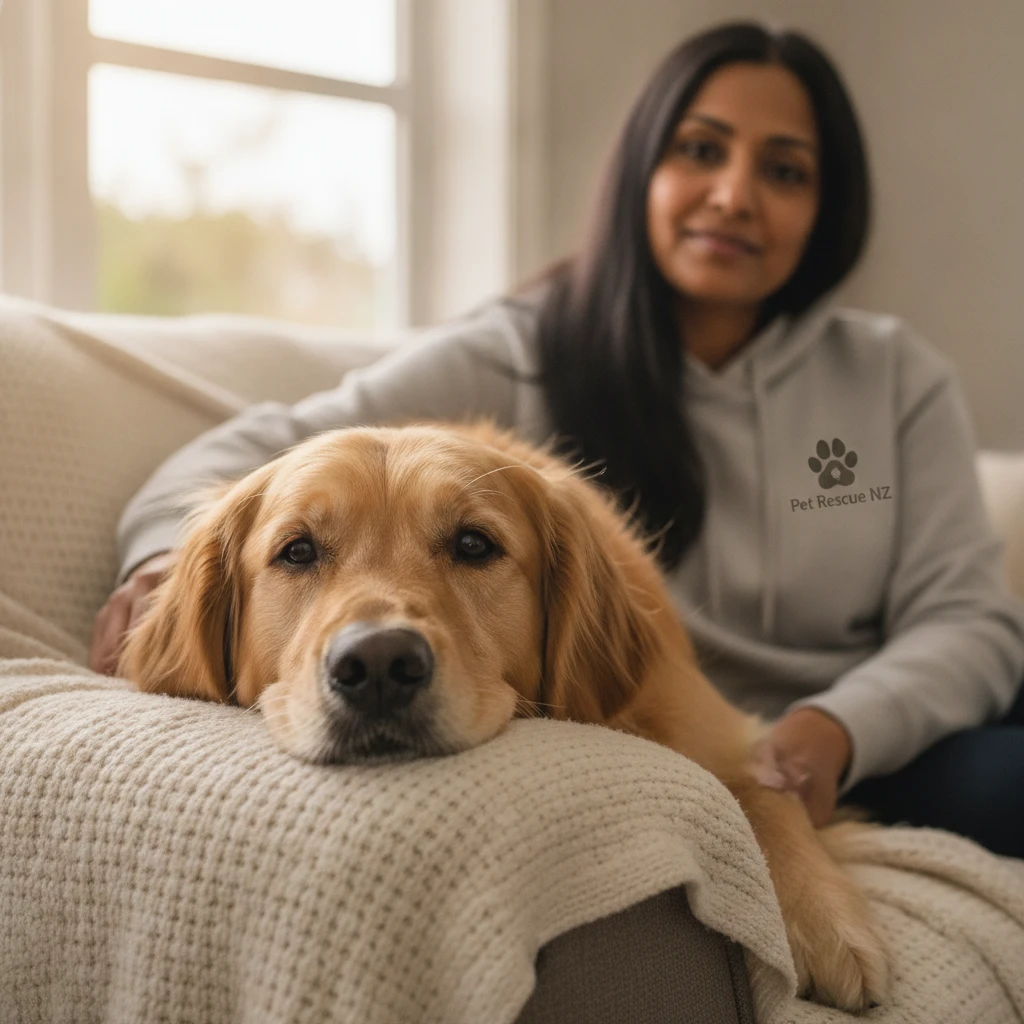
We do not need professional, staged studio shots. We just want to see your dog being themselves in their native, everyday habitat.
A photo of them snoozing on the couch, zooming around the backyard, or holding their favourite chewed-up toy speaks volumes. It proves to adopters that this is a loved, indoor family member, not a piece of commercial inventory.
Writing an Honest Profile
When writing their profile, plain English is always best. Tell their unique story honestly, including their quirky habits and the things they are still learning or struggling with.
Do not try to market them as the “perfect” dog if they are not. Adopters appreciate transparency, and hiding a behavioural issue will only lead to a failed adoption down the line.
If your dog hates cats, barks at the postie, or aggressively steals socks, say so. The right family will appreciate the transparency and be fully prepared to manage it.
Gathering Veterinary Records
Before you list your dog, gather all their veterinary paperwork into a single folder. Having a clear, documented record of vaccinations, flea treatments, and desexing history builds immediate trust.
Serious adopters will want to know the medical history of the dog they are taking on. If your dog is behind on their vaccinations, be upfront about it so the new owner can budget accordingly.
The Legal Side of Rehoming a Dog in NZ
Because Pet Rescue NZ operates as a software platform and not a physical broker, we do not legally transfer dog ownership on your behalf. The legal duty of care remains entirely with you until the physical handover takes place.
Under the Dog Control Act 1996, it is your direct responsibility to notify your local council when ownership changes. You will need to fill out a transfer of ownership form and have the new owner sign it before they leave.
Updating the NZCAR Database
Equally important is updating the national microchip database. The New Zealand Companion Animal Register (NZCAR) is the leading database used by vets, the SPCA, and rescues across Aotearoa.
If the microchip is not updated, the dog will legally still be tied to your name and address if they ever get lost. Updating the NZCAR is a simple online process, but it is a critical step in mastering how to rehome your dog in NZ safely.
As the current owner, you remain legally responsible for your dog under the Animal Welfare Act 1999 until the new family officially takes over the leash.
How to Screen Potential Adopters Safely
Handing over your pet to a stranger requires a massive leap of faith. However, you can significantly reduce the risk by asking the right questions, checking references, and simply trusting your gut.
We strongly recommend asking open-ended questions rather than simple yes-or-no queries. Instead of asking “Do you have a fenced yard?”, ask “Can you describe where the dog will spend their time while you are at work?”
Key Questions to Ask
When reviewing applications, look for detailed, thoughtful responses. Here are a few key things to discuss with potential adopters:
- Their previous experience with dogs, especially your specific breed’s energy levels.
- Whether they rent or own. If they rent, always politely ask to see written permission from their landlord.
- Who their current local vet is. Having an existing relationship with a vet is a great sign of a responsible owner.
- How they plan to handle the initial transition period and any potential separation anxiety.
The Meet-and-Greet Process
Always arrange a meet-and-greet in a neutral location first, like a quiet local park or a secure walking track. This allows the dog to meet the new family without feeling territorial about their own home.
Watch how the potential adopters interact with your dog. Are they patient? Do they listen to your instructions about the dog’s boundaries? If anything feels off, you have every right to politely decline.
The Handover: Saying Goodbye Gently
The day of the handover will be incredibly emotional. Acknowledge the hard realities — saying goodbye is deeply painful, but you are making a brave, selfless choice for your dog’s long-term welfare.
To make the transition easier for your dog, send them with familiar, comforting items. An unwashed blanket, their favourite chew toy, or a worn t-shirt that smells like you can provide immense comfort during their first night.
Sharing the 3-3-3 Rule
Make sure you explain the “3-3-3 rule” to the new owners. It takes a dog 3 days to decompress, 3 weeks to learn the new household routine, and 3 months to truly feel at home.
Setting this expectation prevents the new family from panicking if the dog is shy or anxious during the first week. Patience is the key to a successful rehoming.
Before the new family drives away, ensure both parties have signed the council transfer form. Do not leave it for “later”, as it often gets forgotten.
Keep the actual goodbye short and sweet. Dogs are highly intuitive and will pick up on your anxiety or grief, which can make them panic when you finally walk away.
Every pet has a unique story, and by following this gentle guide for owners, you have just helped write a beautiful next chapter. By using a community-driven platform, you have ensured that your dog goes directly to a loving home.

About the Author: The Pet Rescue NZ Team
Written by the core family team at Pet Rescue NZ. As a community-funded, 100% Kiwi-run platform, our mission is to eliminate shelter stress by facilitating safe, direct home-to-home pet adoptions across Aotearoa. We combine years of animal welfare advocacy with practical, judgment-free support.