
Safe Dog Rehoming in NZ: Compassionate and Trustworthy Process
Life changes. We get it. Sometimes, the most loving thing you can do for your dog is to admit that you can no longer provide the life they need.
It is a gut-wrenching decision. Right now in Aotearoa, the cost of living is pushing good people into impossible corners. Financial strain, housing changes, or sudden illness can mean a family is forced to make a heartbreaking choice.
You are not alone in this. Every pet has a story, and there is no shame in helping them write the next chapter with a new family.
The goal is to navigate this transition without adding stress to your animal. By focusing on safe dog rehoming in NZ, you can ensure a compassionate and trustworthy process that protects everyone involved.
Key Takeaways
Safe dog rehoming in NZ requires a compassionate and trustworthy process. The best approach is home-to-home adoption, which bypasses overwhelmed shelters entirely. This ensures zero cage time, allows owners to screen adopters directly, and deeply reduces stress for the dog during the transition.
The Reality of Rehoming in Aotearoa Right Now
The landscape of pet ownership in New Zealand has shifted dramatically in recent years. We are currently facing what can only be described as a perfect storm for animal welfare.
Recent data suggests that roughly 1 in 6 Kiwi pet owners have considered rehoming their pet due to intense financial strain. Families are actively skipping household essentials just to afford basic pet care.
When money gets tight, the pressure on local communities skyrockets. This isn’t a failure of love — it is a failure of economics [1]. People are desperate for a solution that doesn’t involve abandoning their best friend.
Why Traditional Shelters Are Overwhelmed
For decades, the standard advice for someone needing to rehome a pet was to drop them off at the local pound or SPCA. Today, that system is buckling under the weight of the crisis.
Auckland Council alone impounded over 10,000 dogs in a recent 12-month period. The heartbreak is in the outcome — the euthanasia rate for these impounded dogs reached a devastating 60% [1].
Institutional shelters are physically maxed out. They are doing incredible work, but there simply are not enough cages for the sheer volume of dogs needing homes right now.
Part of this crisis is driven by a massive desexing deficit. It is estimated that roughly 221,000 of New Zealand’s 851,000 known dogs remain un-desexed [3]. This leads to a constant surge of unwanted litters being dumped.
The situation is so severe that Auckland Council recently introduced ‘Afterpay’ for impound release fees. This desperate measure was put in place just to prevent financially stretched owners from walking away and leaving their pets to be put down [1].
The Zero Cage Time Movement: A Better Way
This is where the concept of peer-to-peer rehoming steps in. We call it the ‘Zero Cage Time’ movement.
Instead of surrendering your dog to a concrete kennel where they will be terrified and confused, they stay exactly where they are. Your pet stays home until the right family says yes.
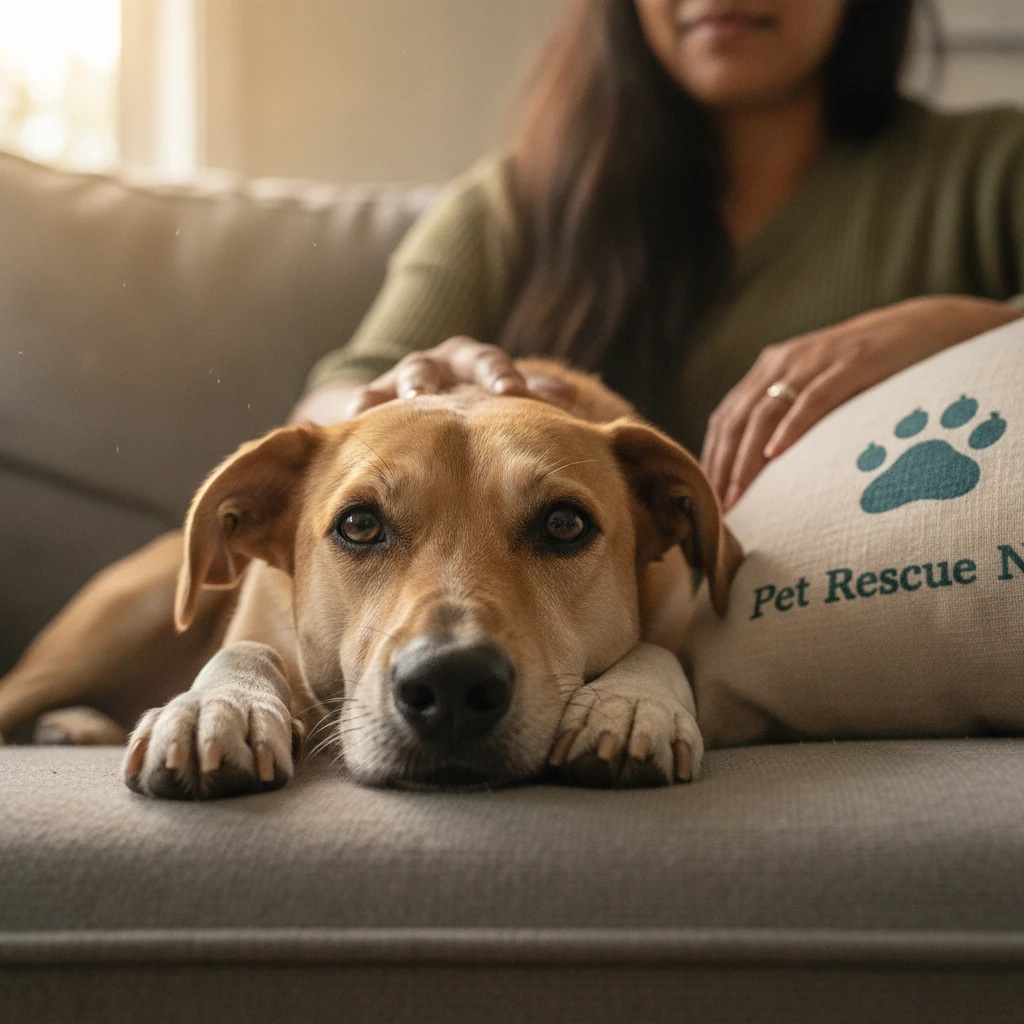
By facilitating direct home-to-home adoptions, we remove the shelter middleman entirely. There are no waitlists, no surrender fees, and most importantly, no risk of euthanasia due to overcrowding.
This method guarantees that safe dog rehoming in NZ remains a deeply personal, compassionate and trustworthy process. You maintain 100% control over who adopts your dog.
How to Ensure a Compassionate Process
Taking control of your dog’s future is empowering, but it requires diligence. You are the best judge of character when it comes to finding the perfect match.
A successful transition relies on honesty. You must be completely transparent about your dog’s quirks, medical history, and behavioural issues. No dog is perfect, and adopters appreciate the truth.
- Ask the hard questions: Inquire about their fencing, working hours, and previous pet experience.
- Meet on neutral ground: Arrange the first meet-and-greet at a quiet local park to see how the dog reacts to the new people.
- Request a trial period: A weekend sleepover can quickly reveal if the new home is a genuine fit.
- Trust your gut: If something feels off during the conversation, politely decline. You will know when it is right.
Never feel guilty for asking for a veterinary reference or asking to see photos of their backyard. Good adopters will gladly provide this information to prove they are prepared.
Spotting the Red Flags: Protecting Your Dog
The internet can be a wild place. While most people are genuinely looking for a furry companion, there are bad actors out there.
This is why finding a compassionate and trustworthy process for safe dog rehoming in NZ is critical. You need a platform that prioritises welfare over quick transactions.
Facebook groups are often unmoderated and chaotic. Trade Me, while popular, treats pets like used furniture and has become a hotspot for advance-fee scams.
| Platform Type | Safety Level | Vibe & Experience |
|---|---|---|
| Facebook Groups | Very Low (Unmoderated) | Chaotic, judgmental comments, high scam risk. |
| Trade Me Pets | Medium (Transactional) | Treats pets like commodities. High risk of puppy mill listings. |
| Pet Rescue NZ | High (Community Moderated) | Empathetic, structured, zero cage time, user-controlled. |
Always meet the adopter in person before handing over your dog. Never ship a pet unseen, and be wary of anyone who refuses to answer basic lifestyle questions.
The Legal Side of Rehoming
Rehoming a dog is not just an emotional handover; it is a legal transfer of responsibility. In New Zealand, the Animal Welfare Act 1999 dictates that the duty of care remains with you until the physical handover occurs.
Furthermore, the Dog Control Act 1996 requires strict adherence to registration rules. You cannot simply hand over a leash and walk away.
It is your legal responsibility to ensure the local council is notified of the change of ownership. You must also update the New Zealand Companion Animal Register (NZCAR) so the microchip reflects the new family’s contact details.
Pet Rescue NZ provides the platform to connect you with adopters, but we do not broker the legal transfer. Both the rehomer and adopter must handle the council paperwork directly.
The Emotional Toll: You Are Doing the Right Thing
Let’s talk about the guilt. It is heavy, and it is entirely normal. Society often places an unfair stigma on people who need to rehome their pets.
But keeping a dog in an environment where they cannot thrive — whether due to financial lack, space constraints, or time poverty — is not an act of love. Recognising your limits is.
By choosing a compassionate and trustworthy process for safe dog rehoming in NZ, you are putting your dog’s needs first. You are giving them the chance at a beautiful second act.
Take a deep breath. No shelters. No judgment. Just good people helping each other find the best possible outcome for a good dog.